
Fractions on a Number Line: Definition, Method, and Examples
To place a fraction on a number line, divide each whole interval into the denominator's number of equal parts and count numerator-sized parts from the starting whole; the marked point represents the fraction as a number.
What are fractions on a number line?
A fraction number line is a visual representation where fractions are plotted as specific points along a straight path. Just as whole numbers can be placed on a line to show their order and value, fractions are placed between whole numbers to show parts of a whole.
On a standard horizontal number line, values increase from left to right. The position of a fraction shows its exact size relative to , , and other numbers.
Partition one whole into equal parts
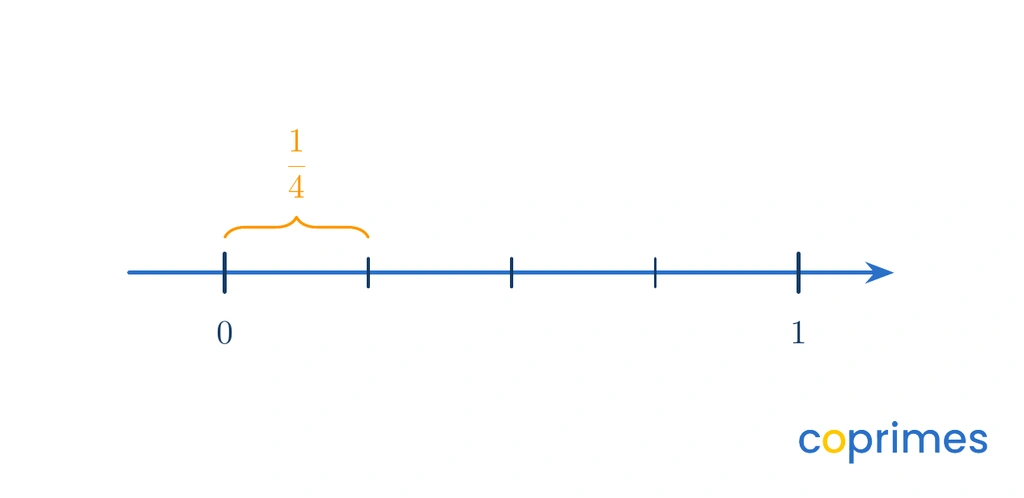
To plot fractions accurately, you must first divide the space between consecutive whole numbers into equal intervals. The denominator (the bottom number) determines how many equal parts make up one whole.
Each individual interval represents one piece of the whole, known as a unit fractions. For example, if the denominator is , you divide the space between and into four equal intervals. Each interval represents .
Plot proper fractions
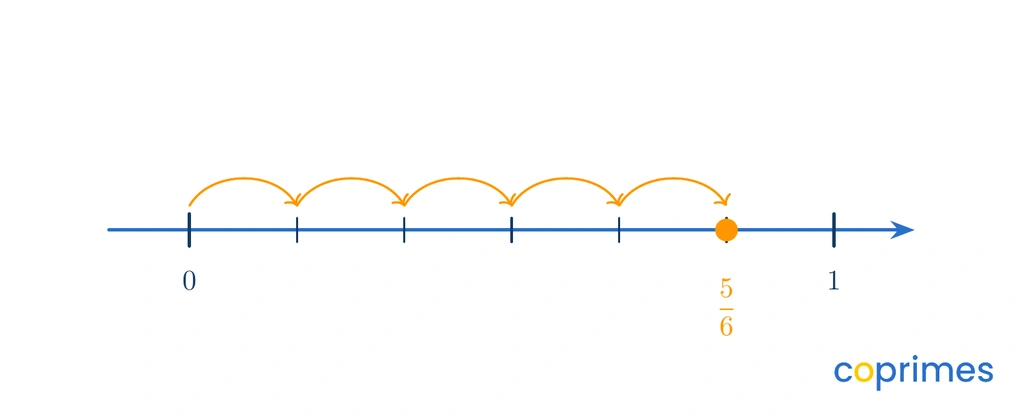
Because proper fractions have a numerator that is smaller than their denominator, their value is always less than . They are found on the number line between and .
To plot a proper fraction, divide the space between and into equal intervals matching the denominator. Then, starting from , count forward to the right. The number of intervals you count is equal to the numerator.

Plot fractions greater than one
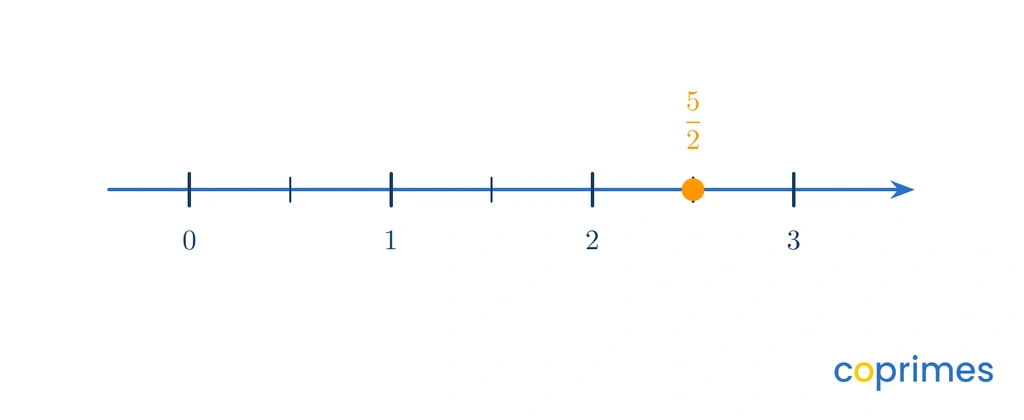
Fractions with a numerator equal to or larger than the denominator represent a value of or more.
When plotting improper fractions, the denominator still determines how many intervals make up a single whole. You must partition every whole number section (from to , to , to ) into that same number of intervals. Then, count the total numerator spaces starting from .
Plot mixed numbers
Mixed numbers combine a whole number and a proper fraction. They provide a direct map to their location on the number line.
The whole number part tells you exactly which whole number to start from. You then partition the interval between that whole number and the next integer into the denominator's number of pieces. Finally, count forward by the numerator to place the point.
For example, to plot , go to the whole number , partition the space between and into thirds, and plot the point on the first mark after .
Use the number line to compare
The number line makes it simple to compare the size of different fractions. A fraction located further to the right is always greater than a fraction located to the left.
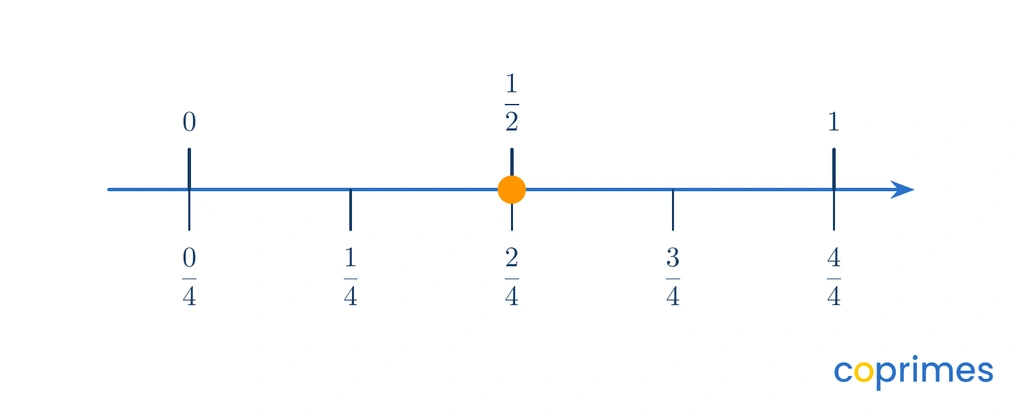
The number line also reveals equivalent fractions. When two fractions have different numerators and denominators but occupy the exact same point on the line, they represent the same value.
A learning plan shaped by your child, not the class
State-aligned Math plus our own Logic and English curriculum. An adaptive baseline test finds the gaps and fills them.
Worked examples
Review these step-by-step examples of placing different types of fractions on a number line.
Example 1: Plotting a proper fraction
Question: Represent on a number line.
Method:
- Mark and on the number line because is a proper fraction.
- Divide the interval between and into equal spaces.
- Start at and count spaces to the right.
Answer: Plot the point on the fourth mark after .
Check: There should be exactly empty intervals remaining between the point and the whole number , confirming a total of intervals.
Example 2: Plotting a mixed number
Question: Represent on a number line.
Method:
- Identify the whole number part, which is . The point will lie between and .
- Divide the interval between and into equal spaces.
- Start at and count spaces to the right.
Answer: Plot the point on the third mark after .
Check: The next interval immediately to the right of the plotted point should land precisely on the whole number .
Example 3: Plotting an improper fraction
Question: Represent on a number line.
Method:
- Draw a number line with whole numbers starting from .
- Divide every whole number interval (from to , to , etc.) into equal spaces.
- Start at and count forward spaces.
Answer: Plot the point on the fourth mark after the whole number .
Check: The whole number is equal to . Counting more spaces from results in , confirming the position is correct.
Common mistakes
When creating or reading a number line, watch out for these frequent errors that lead to incorrect fraction placement.
Mistake: Counting the tick marks instead of the intervals
Many learners mistakenly count the vertical lines (the tick marks) when finding the denominator. You must count the empty spaces or intervals between the marks. If you draw lines between and , you have actually created intervals, meaning you are working with fifths, not fourths.
Mistake: Partitioning the entire visible line
When the denominator is , you must divide one single whole (like the space between and ) into parts. A common mistake is dividing the entire visible line, from the start arrow to the end arrow, into parts, ignoring where the whole numbers are placed.
Practice questions
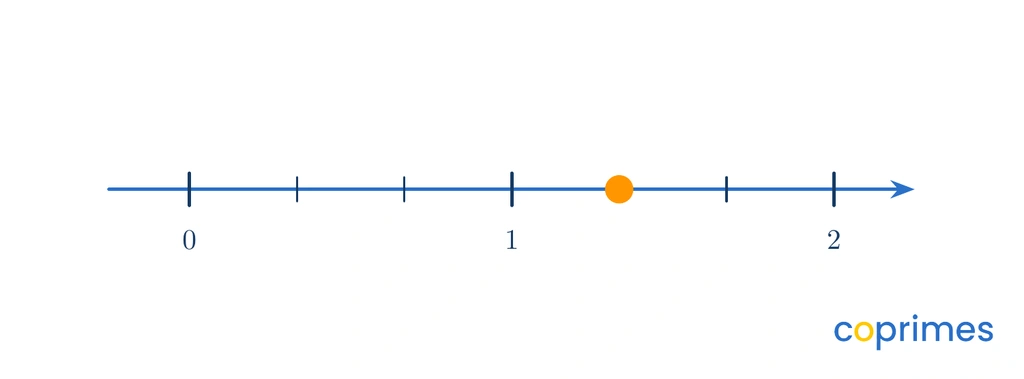
Which fraction is represented by the plotted point on this number line?
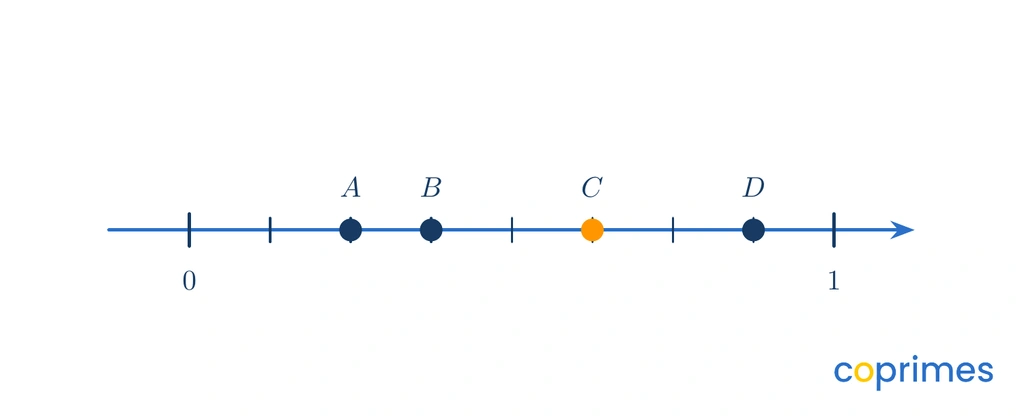
Which point correctly represents the fraction ?
Point
Point
Point
Point
Point
How many equal intervals should the space between and be divided into to plot the fraction ?
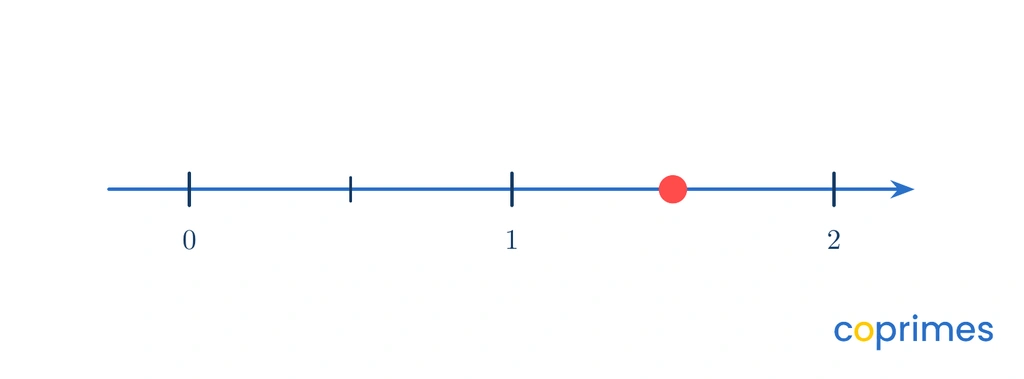
A student wanted to accurately plot on this number line but made a mistake. What did they do wrong?
They divided the entire visible line into intervals instead of dividing each whole into intervals.
They counted the vertical tick marks instead of counting the spaces between them.
They started counting spaces from instead of starting the count from .
They accidentally plotted an improper fraction instead of a proper fraction.
They divided the entire visible line into intervals instead of dividing each whole into intervals.
Point is located at on a number line. Point is located at on the same number line. Based on their positions, which statement must be true?
is greater than because Point is closer to .
is greater than because Point is positioned further to the right.
is equal to because they are both proper fractions between and .
is greater than because the denominator is greater than the denominator .
is greater than because Point is positioned further to the right.