
Greater Than, Less Than and Equal To
The symbols , , and compare two values by showing that the first is greater than, less than, or equal to the second. These mathematical signs allow you to construct statements that describe the exact relationship between different numbers, quantities, or expressions.
What Is Greater Than, Less Than and Equal To?
When analyzing two numbers, they can relate to each other in exactly three basic ways. The values might be identical, the first value might be larger, or the first value might be smaller.
To express these relationships quickly, mathematics uses three specific comparison symbols. The equal to sign means both amounts represent the exact same quantity. The greater than sign and the less than sign are used when the values are unequal.
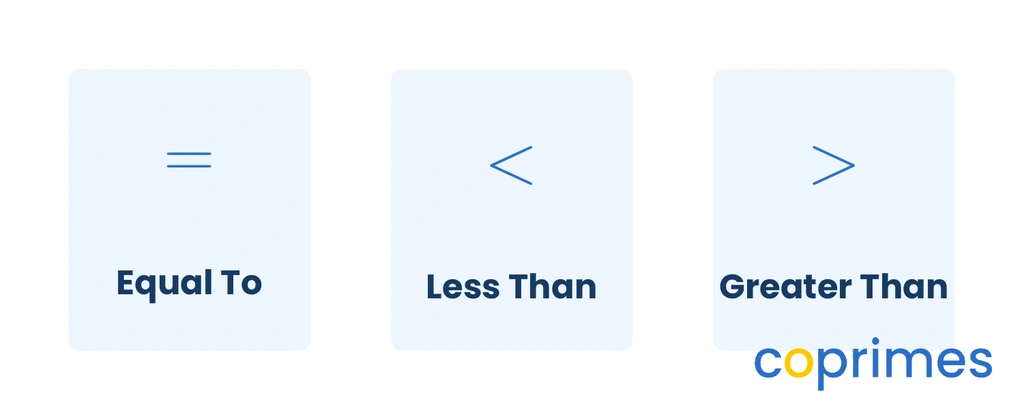
These symbols form equations when values are equal, and inequalities when values are unequal. Learning to interpret these symbols is a necessary step before comparing whole numbers or fractions in more complex problems.
Key Ideas and Vocabulary
The symbols for greater than and less than share a single geometric principle. Instead of trying to memorize the direction of the arrow by itself, you can look at the physical shape of the symbol.
The inequality symbol is wide open on one side and narrows to a single point on the other.
The wide open end always faces the greater value, and the point always faces the lesser value.
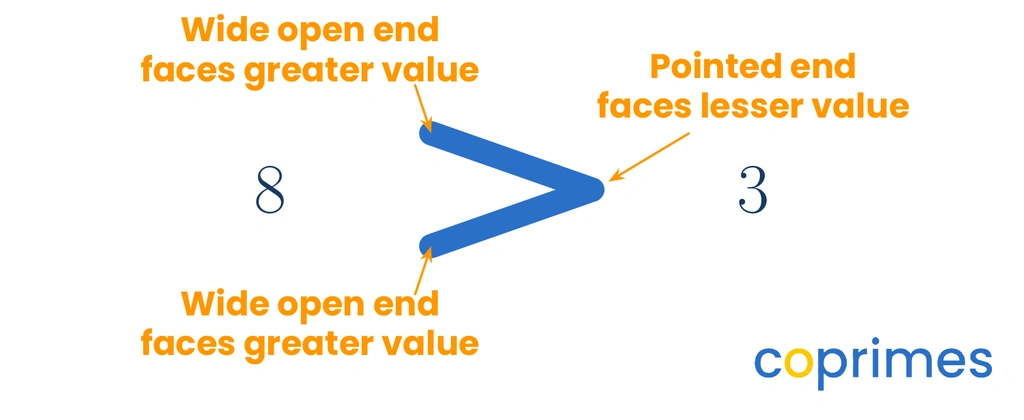
Because we read from left to right, the name of the symbol depends on which end you encounter first. If you read a statement and see the wide end first, you say "greater than". If you see the small point first, you say "less than".
Visual Explanation
A number line is one of the most reliable ways to visualize comparison symbols. On any standard horizontal number line, values always increase as you move toward the right.
This direction rule stays consistent regardless of the types of numbers involved, making it especially helpful when comparing integers or working with decimals.
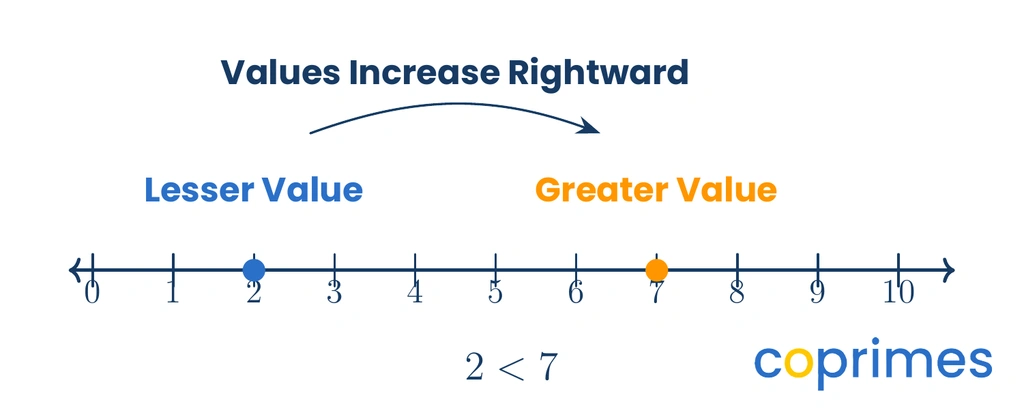
Any number positioned to the left is strictly less than any number positioned to its right. Conversely, any number positioned to the right is strictly greater than any number to its left.

Worked Examples
Using comparison symbols correctly requires checking the values carefully before placing the symbol.
Example 1: Comparing quantities with place value
Question: Compare the numbers and using the correct symbol (, , or ).
Method:
- Look at the largest place value first. Both numbers have a in the hundreds place ().
- Move one place value to the right to check the tens place.
- Compare the tens: tens is greater than tens.
- Because is greater than , the first number is larger overall.
- Place the symbol so the wide end faces the larger number.
Answer:
Check: Read the statement aloud left to right: "Four hundred sixty-five is greater than four hundred twenty-eight." The statement is mathematically true.
Example 2: Comparing decimals on a scale
Question: Which symbol belongs between and ?
Method:
- Identify the whole numbers. Both values start with .
- Look at the tenths place. The first number has tenth, and the second has tenths.
- Visualize a number line. The number is further to the left than .
- A number to the left is smaller. Place the point of the symbol toward the smaller number.
Answer:
Check: Since tenth is smaller than tenths, is less than . The statement correctly points to the lesser value.
Example 3: Translating word statements
Question: Write the following statement using mathematical symbols: "Seventy-two is less than eighty."
Method:
- Identify the first number: .
- Identify the phrase "is less than". This corresponds to the symbol pointing leftward.
- Identify the second number: .
- Combine them in exact order.
Answer:
Check: Ensure the narrow point faces , the smaller quantity. The symbol is correct.
Common Mistakes and Non-Examples
A very common mistake happens when comparing numbers that have different amounts of digits. Sometimes a student will see a large digit and immediately think that number is greater, without checking the total place value.
For example, comparing and . Even though is a large digit, contains zero hundreds, while contains one hundred.
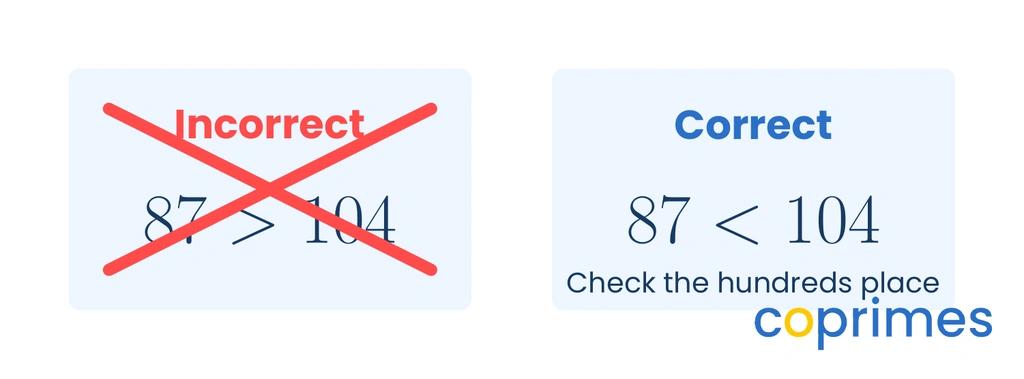
Always align numbers by their place value before deciding which comparison sign to use.
If you write , the mathematics is false. The wide open end points to , incorrectly claiming that zero hundreds is larger than one hundred. The valid statement is .
Real-World Connections
These comparison symbols are not restricted to worksheets; they accurately describe daily situations where limits matter.
When passing a speed limit sign that reads " max", the law means your speed must be less than or equal to . In advanced mathematics, a combined symbol () handles situations where a value can be strictly less than or perfectly equal to a boundary.
Similarly, buying an item depends entirely on whether the cash you carry is greater than or equal to () the final price. Understanding how to compare numbers precisely creates a bridge to estimation in math, where you often seek answers that are greater or less than a target range.
A learning plan shaped by your child, not the class
State-aligned Math plus our own Logic and English curriculum. An adaptive baseline test finds the gaps and fills them.
Practice questions
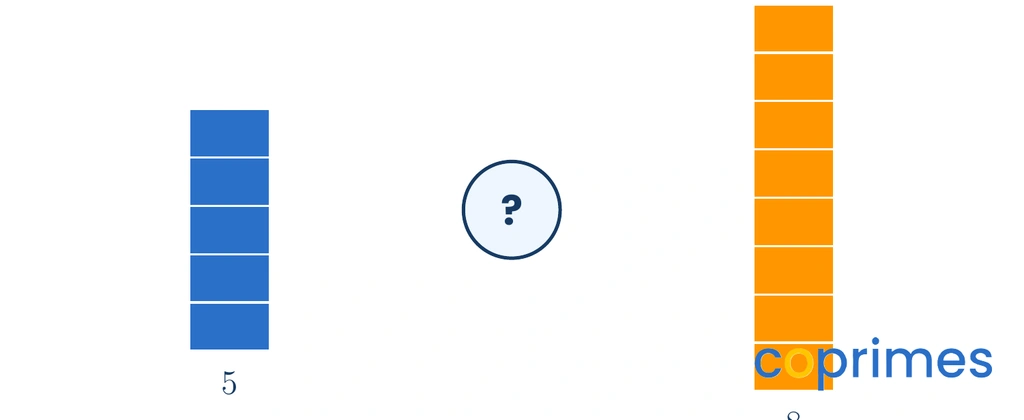
Based on the visual model above, which symbol belongs in the center circle?
Which of the following mathematical statements is entirely true?
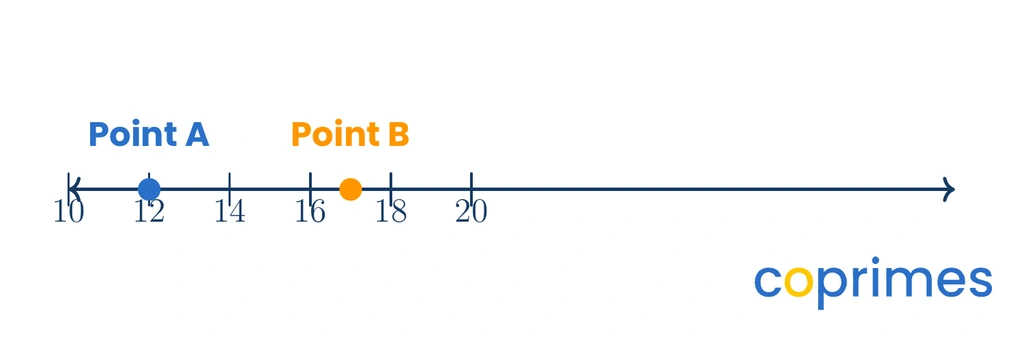
Using the number line above, which statement correctly compares Point A and Point B?
How is the sentence "Twenty-four is greater than fourteen" written mathematically?
If a missing digit is represented by the blank in the statement , which digit makes the statement true?