
Numerator: Definition, Method, and Examples
The numerator is the number placed above the fraction bar; it tells you how many equal parts of a named size are being counted. When working with fractions, the numerator acts as the specific number of selected parts out of a given whole.
What is a numerator?
In any fraction, the upper number of a fraction is called the numerator. It sits directly above the fraction bar and represents the active count of the pieces you are focusing on.
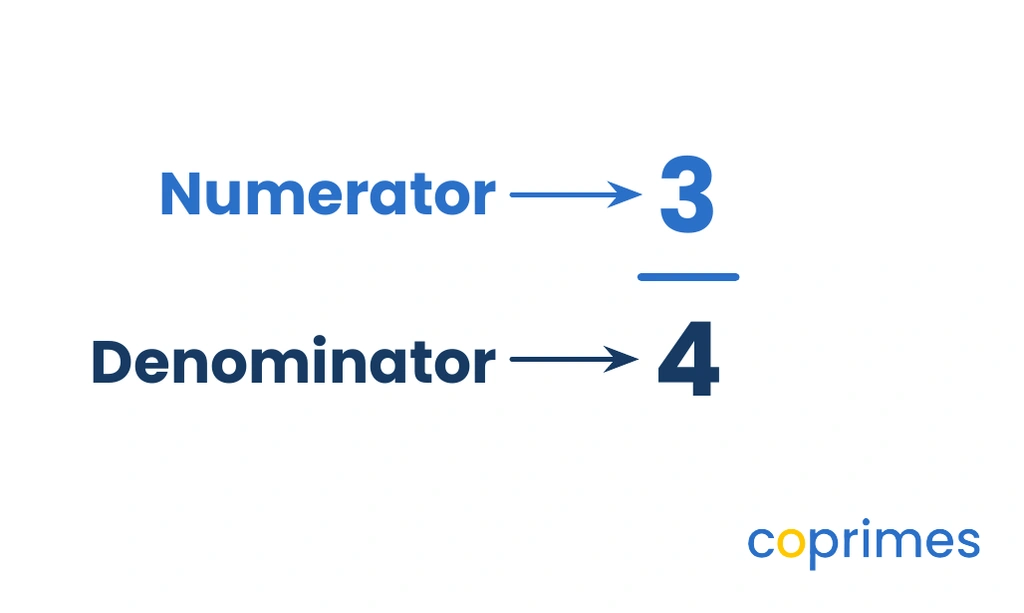
The top number determines the value you hold, while the bottom number determines the size of the pieces. If you have the fraction , the numerator is .
Find the numerator in a fraction
You can find the numerator in any written fraction simply by looking at its position. The layout of a standard fraction always follows the same structure.
- Locate the horizontal fraction bar that divides the numbers.
- Identify the number written on top of that bar.
For example, in the fraction , the number is written above the bar, so is the numerator.
In the fraction , the number is written on top, so is the numerator.
What the numerator means
The numerator represents the count of the equal parts you are focusing on. If a cake is sliced into equal pieces and you serve of them, you are counting pieces. The numerator of the fraction served is .
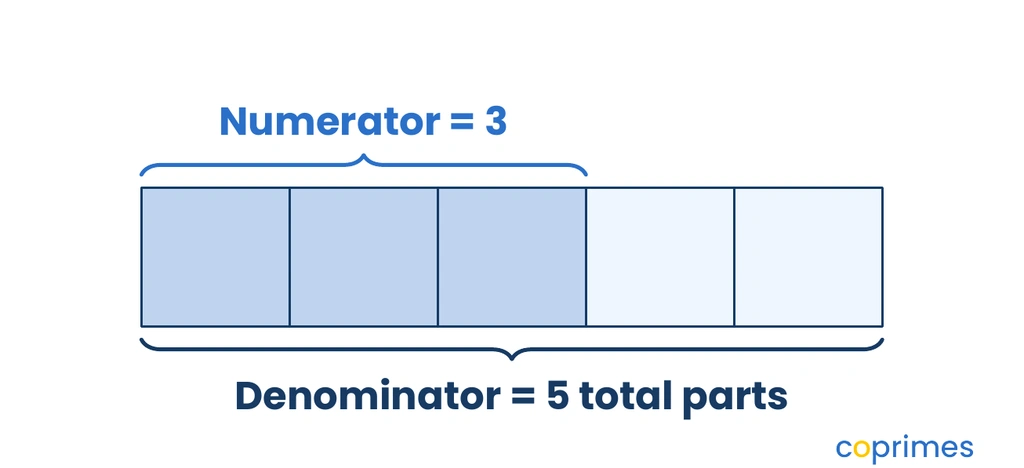
The numerator can be any whole number. When a fraction has a numerator of , such as , it is known as a unit fraction. If no pieces are selected, the numerator is .
When the number of pieces you have equals the number of pieces in one whole, the numerator equals the denominator, such as , which equals . The numerator can also be larger than the denominator, representing a value greater than one whole.
A learning plan shaped by your child, not the class
State-aligned Math plus our own Logic and English curriculum. An adaptive baseline test finds the gaps and fills them.
Numerator and denominator compared
The numerator and the denominator work together to give a fraction its total value, but they represent entirely different concepts.
Feature | Numerator | Denominator |
Position | Top number | Bottom number |
Meaning | How many parts are being counted | How many equal parts make one whole |
Can it be zero? | Yes, meaning zero pieces | No, a whole cannot have zero parts |
The numerator counts the parts you have, while the denominator defines the size of the parts.
Numerator in models and number lines
When working with visual models, you can find the numerator by counting the specific items or intervals that match the description you need.
- In an area model: Count the number of shaded shapes.
- In a set model: Count the number of individual objects in the group that share the specified trait.
- On a number line: Count the number of equal-sized jumps starting from zero to reach your point.
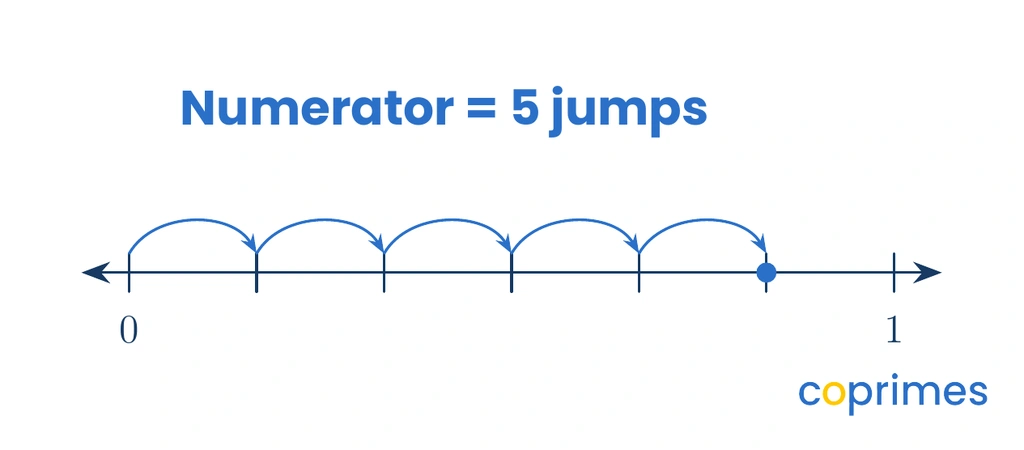
In the number line above, the space between and is divided into equal parts. The point plotted is jumps away from , meaning parts are being counted. Therefore, the numerator is .
Worked examples
You can apply these rules to find the numerator in different contexts, whether you are examining a shape, reading a word problem, or plotting a value.
Example 1: Identifying the numerator from an area model
Question: A circular pie is cut into equal slices. If slices are eaten, what is the numerator of the fraction that represents the eaten slices?
Method:
- Identify the specific items being counted. The question asks for the eaten slices.
- Count the eaten slices. There are eaten slices.
- The count becomes the numerator.
Answer: The numerator is .
Check: The fraction of eaten slices is , and is the top number.
Example 2: Finding a numerator from a set
Question: A box contains markers. There are red markers, blue markers, and green markers. What is the numerator for the fraction of markers that are blue?
Method:
- Determine the trait being counted. The question asks for blue markers.
- Count the number of markers that match the trait. There are blue markers.
- Write this count as the top number of the fraction.
Answer: The numerator is .
Check: The total number of markers is , which is the denominator. The fraction is . The numerator is correct.
Example 3: Numerator in an improper fraction
Question: What is the numerator of the fraction ?
Method:
- Locate the fraction bar.
- Identify the number written directly above the fraction bar.
Answer: The numerator is .
Check: The number on top is , representing quarter-sized pieces.

Common mistakes
Thinking the numerator must be the smaller number
It is a common misunderstanding to assume the top number must always be smaller than the bottom number. While this is true for proper fractions, the numerator can be larger than the denominator in improper fractions, indicating a value greater than one whole.
Counting the wrong attribute
When answering a question based on a visual model, carefully read whether the question asks for the shaded parts or the unshaded parts. If a shape has shaded parts and unshaded part, the numerator for the shaded fraction is , but the numerator for the unshaded fraction is .
Frequently asked questions
Can a numerator be zero?
Yes. A numerator of means that zero parts are being counted or selected. For example, means zero fifths, which equals .
Can a numerator and a denominator be the same number?
Yes. When the numerator equals the denominator, it means you have all the parts that make up exactly one whole. For example, .
Does the numerator tell you the size of the pieces?
No. The denominator tells you the size of the pieces. The numerator only tells you how many of those pieces you have.
Practice questions
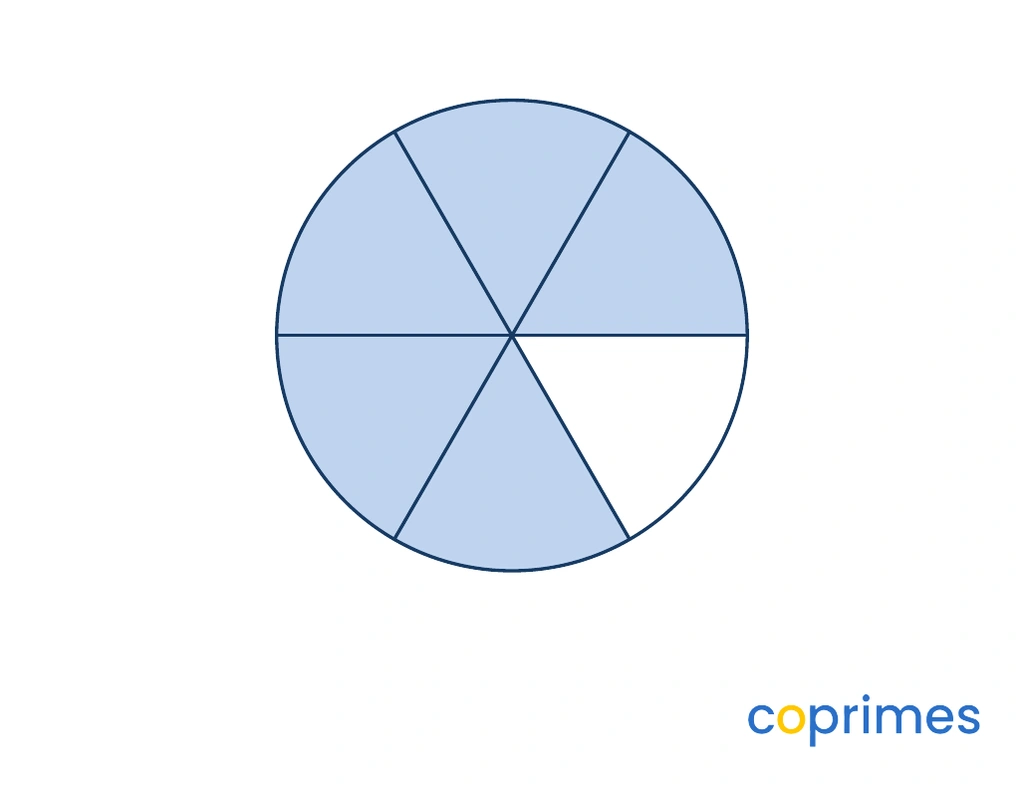
What is the numerator of the fraction that represents the shaded area?
Which statement correctly describes the numerator in a fraction?
It is the bottom number and tells the total number of parts.
It is the top number and tells how many equal parts make one whole.
It is the top number and tells how many parts are being counted.
It is the bottom number and tells how many parts are being counted.
It is the top number and tells how many parts are being counted.
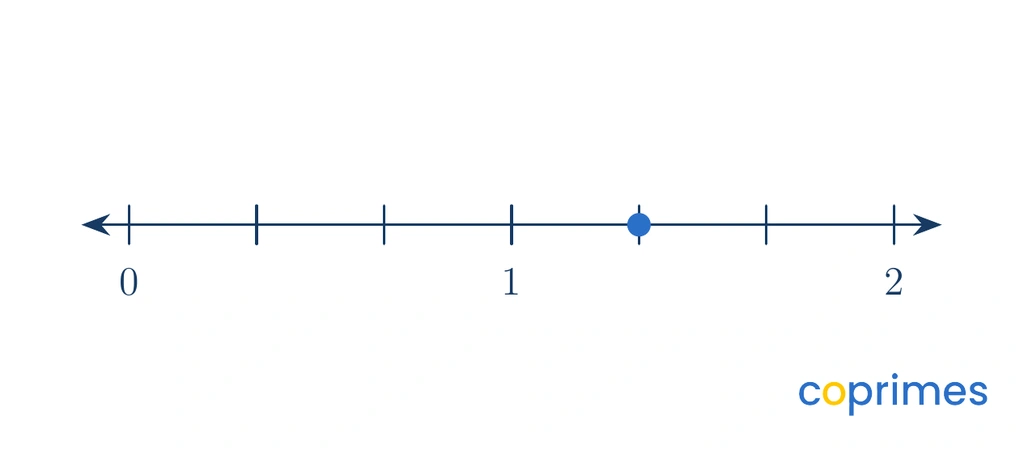
The number line represents fractions that divide each whole unit into thirds. What is the numerator of the fraction plotted?
A gardener plants flower bulbs. Out of the total, bulbs are tulips, and the rest are daffodils. What is the numerator for the fraction of bulbs that are daffodils?

What is the numerator for the fraction of stars that are yellow?