
Minuend, Subtrahend and Difference in Subtraction
In a subtraction equation, the minuend is the starting number, the subtrahend is the number taken away, and the difference is the result.
Knowing the names of these parts helps you set up calculations correctly, understand subtraction concepts, and solve equations with missing numbers.
What are the minuend, subtrahend and difference?
Every standard subtraction sentence contains three essential parts. Each part has a specific name based on its role in the calculation.
- Minuend: The total or starting amount. It is the number you subtract from.
- Subtrahend: The amount being removed or taken away. It is the number you subtract.
- Difference: The final answer. It tells you how much is left or how far apart the two numbers are.
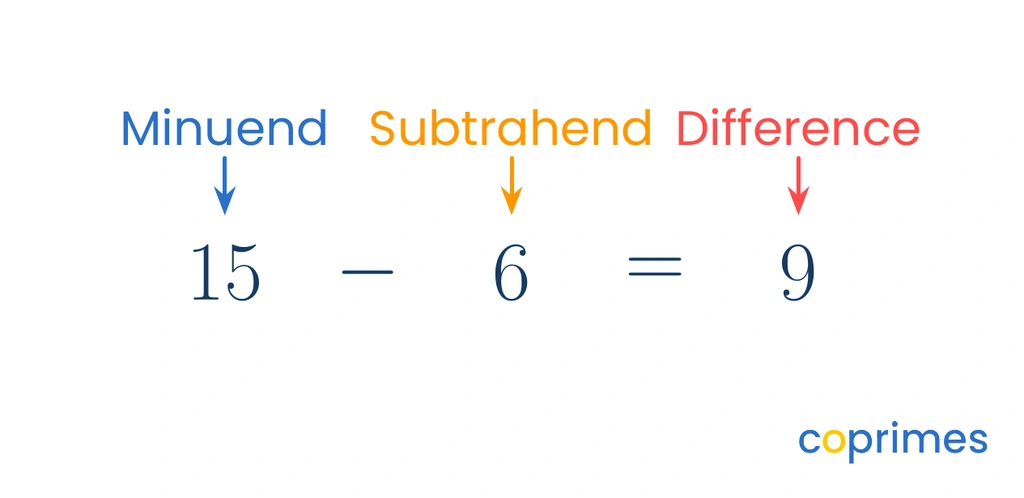
The minuend is always the first number in a horizontal subtraction equation.
Parts of a subtraction sentence
Subtraction sentences can be written horizontally or stacked vertically in columns. The names of the parts stay exactly the same in both formats.
When subtracting in columns, the minuend is always placed on top, the subtrahend is placed underneath it, and the difference is written at the bottom below the equals line.
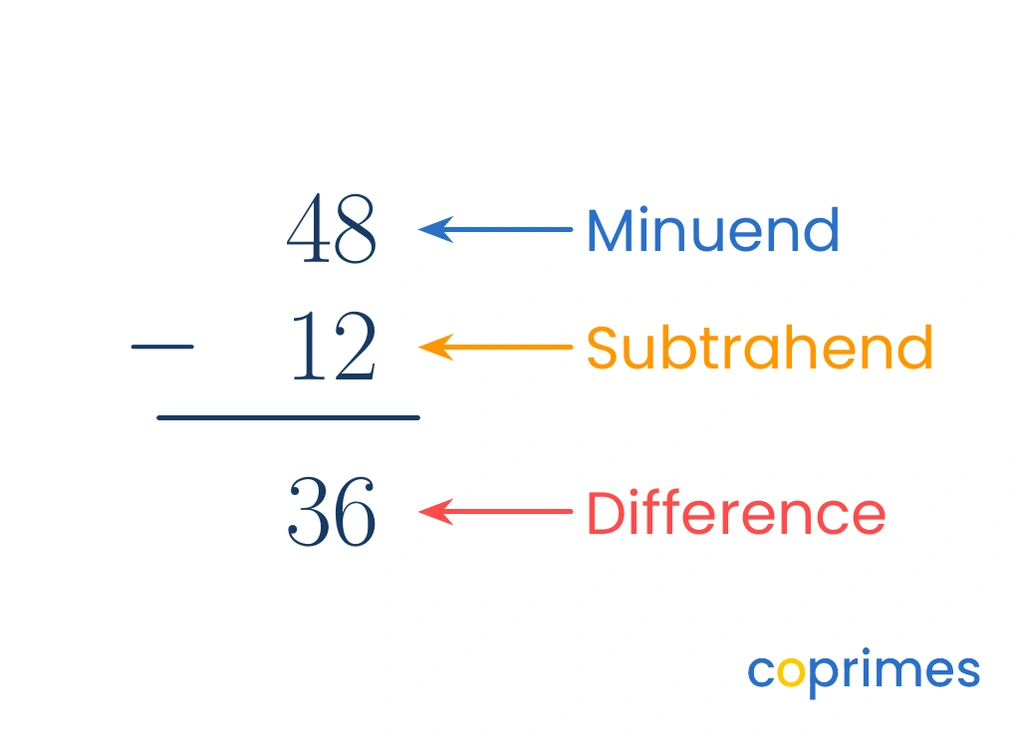
Writing numbers in a vertical stack is especially helpful when working with larger numbers that require regrouping. Keeping the minuend on top ensures that the place values remain correctly aligned.
How the order changes the difference
In addition, you can swap the numbers and get the same answer. Subtraction does not work this way. Changing the order of the minuend and the subtrahend completely alters the difference.
If you reverse the numbers, you are no longer finding the same value.
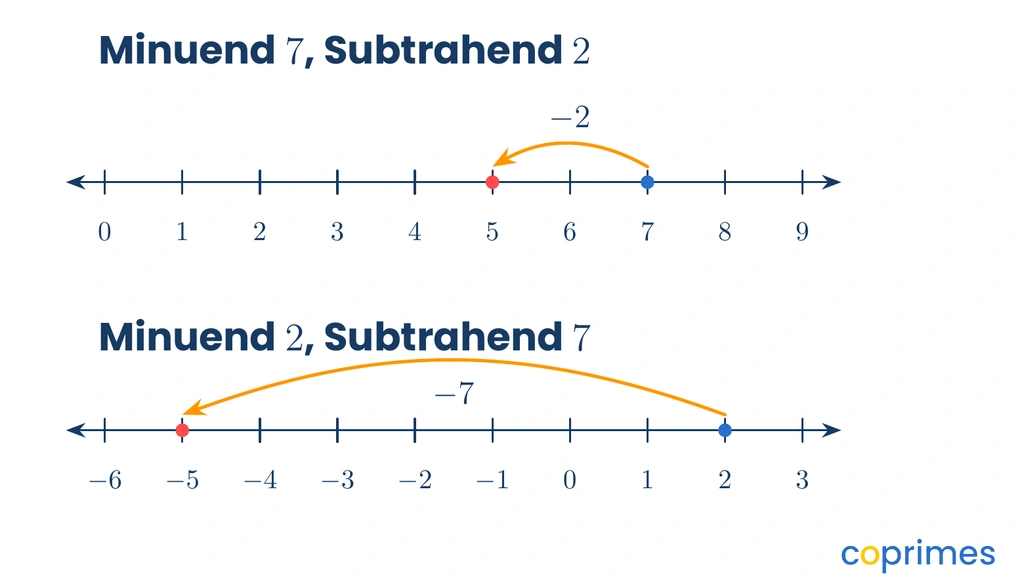
For example, . The minuend is and the subtrahend is . If you swap them to make , the minuend is now . Subtracting from results in . The answers are not equal.
Always ensure the correct starting amount is set as the minuend.

How to find a missing part
Because subtraction and addition are inverse operations, you can use one to find missing parts in the other.
A part-whole model clearly shows how the minuend, subtrahend, and difference are connected. The minuend represents the whole, while the subtrahend and difference represent the two parts.
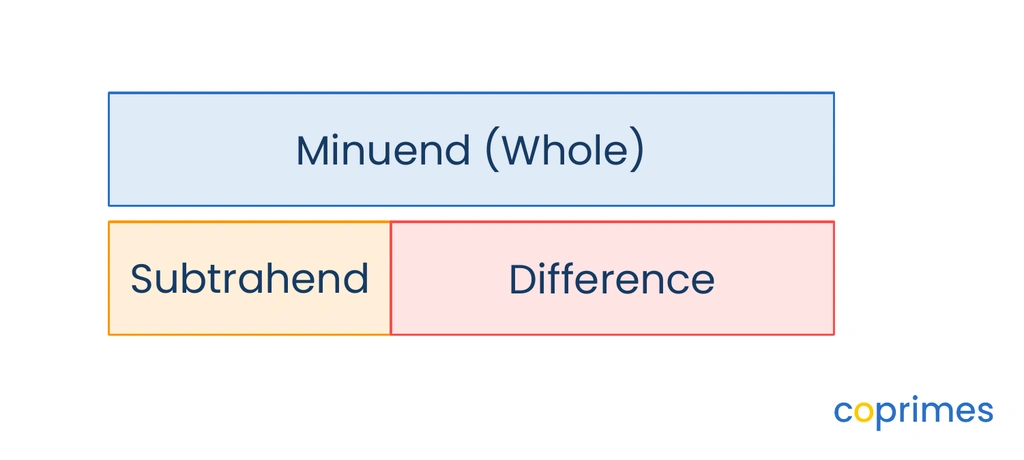
- To find a missing minuend: Add the subtrahend and the difference together.
- To find a missing subtrahend: Subtract the difference from the minuend.
Using these rules makes it straightforward to work backward when a number in the equation is unknown.
Worked examples
These examples show how to find a missing minuend and a missing subtrahend, which is a key skill for solving subtraction word problems.
Example 1: Finding a missing minuend
Question: Find the missing number in the equation .
Method:
- Identify the given parts. The subtrahend is and the difference is .
- The minuend represents the total. To find the missing minuend, add the subtrahend and the difference.
- Calculate the sum: .
Answer: The missing minuend is .
Check: Substitute the answer back into the equation: . The calculation is correct.
Example 2: Finding a missing subtrahend
Question: Find the missing number in the equation .
Method:
- Identify the given parts. The minuend is and the difference is .
- The subtrahend represents a missing part. To find the missing subtrahend, subtract the difference from the minuend.
- Calculate the new difference: .
Answer: The missing subtrahend is .
Check: Substitute the answer back into the original equation: . The equation is complete and correct.
Common mistakes
One of the most frequent errors is mixing up the subtrahend and the minuend when setting up a vertical calculation. If a question asks you to "subtract from ", the starting number is . The is the minuend and must go on top, while the is the subtrahend that goes underneath.
Another common mistake is attempting to check a subtraction result using subtraction instead of addition. Checking subtraction requires adding the subtrahend and the difference. If they do not add up perfectly to the minuend, a calculation error was made.
A learning plan shaped by your child, not the class
State-aligned Math plus our own Logic and English curriculum. An adaptive baseline test finds the gaps and fills them.
Frequently asked questions
Is the minuend always larger than the subtrahend?
When working with positive differences, the minuend must be larger than the subtrahend. However, if the subtrahend is larger than the minuend, the difference will simply become a negative number.
Can the minuend and subtrahend be the same number?
Yes. When the minuend and the subtrahend are exactly the same number, the difference is always zero. For example, .
What is the difference between a difference and a sum?
A difference is the result of subtraction, which measures the mathematical gap between two numbers. A sum is the result of addition, which combines two or more numbers together into a total.
Practice questions
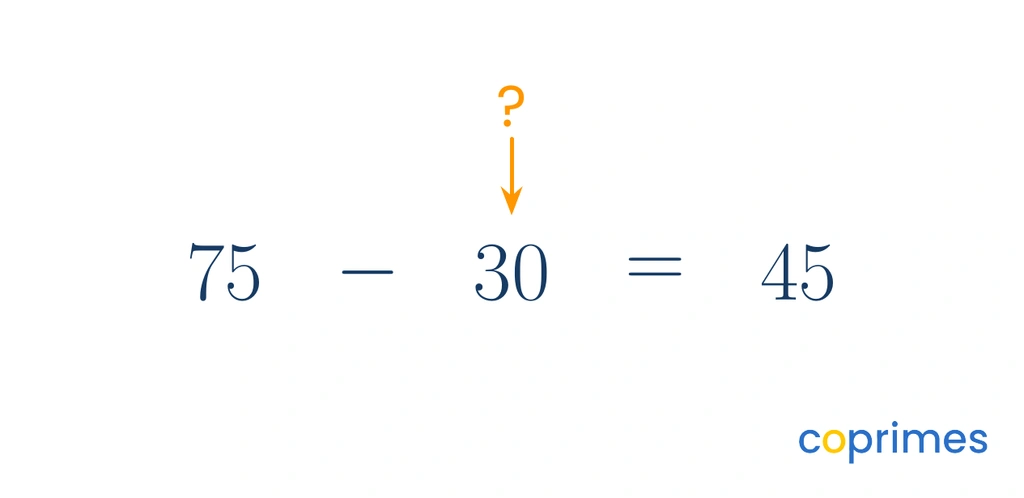
What is the name of the highlighted part in the subtraction sentence?
Minuend
Subtrahend
Difference
Sum
Subtrahend
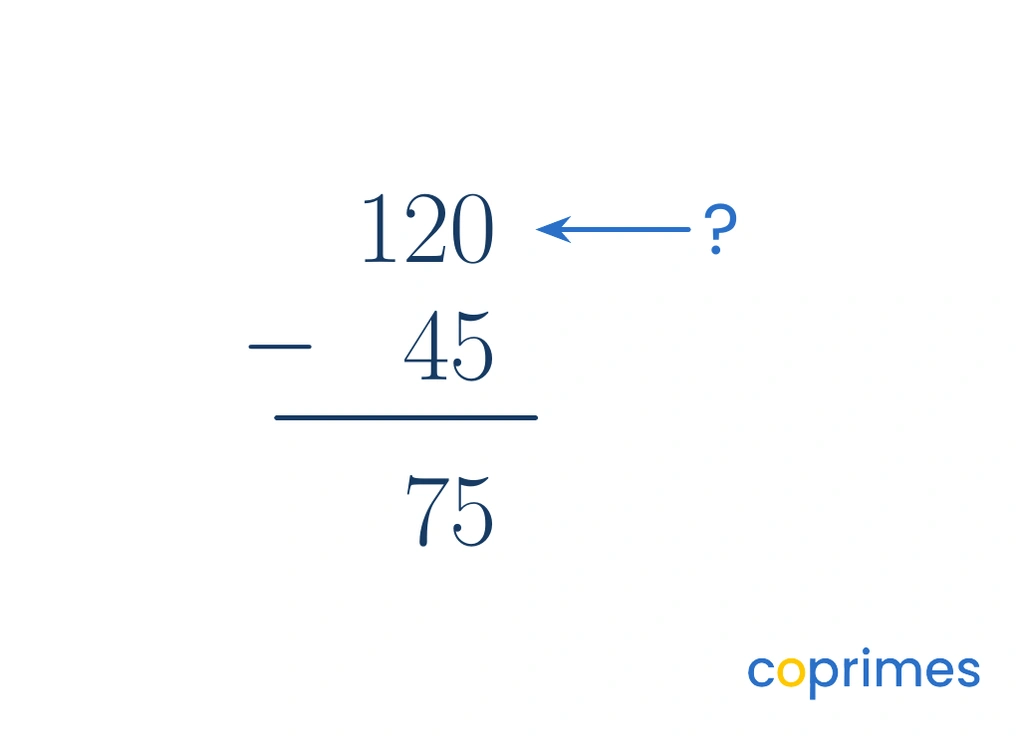
In this vertical equation, which number is the minuend?
How do you find the missing subtrahend in the equation ?
Add and .
Subtract from .
Subtract from .
Add to the difference.
Subtract from .
A student needs to calculate "subtract from ". Which number is the minuend?
If the difference is and the subtrahend is , what is the minuend?