
Checking Addition and Subtraction
To check addition and subtraction, use inverse operations. Check subtraction by adding the difference and the subtrahend to see if they equal the original number. Check addition by subtracting either addend from the sum.
How do you check addition and subtraction?
Addition and subtraction are inverse operations, meaning they mathematically undo each other. When you perform an arithmetic calculation, you can verify the result by applying the opposite operation. This process ensures the answer is correct and helps catch minor calculation errors.
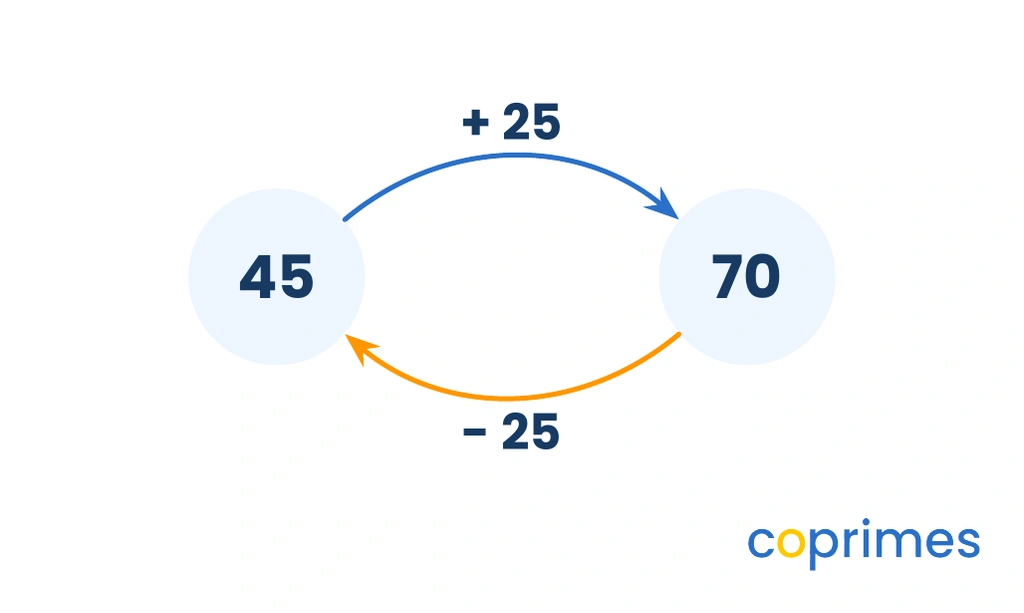
Using inverse checks consistently builds confidence in mathematics. Instead of relying solely on an initial calculation, checking provides immediate feedback on whether the steps were followed correctly.
Check addition using subtraction
To check an addition problem, take the sum and subtract one of the addends. If the arithmetic is correct, the result will exactly match the other addend.
For example, to check , subtract from . Since , the addition is correct. Alternatively, subtracting from also yields , confirming the answer. This inverse checking process is highly recommended when performing column addition, as it quickly identifies any missed regrouping steps.
Check subtraction using addition
To verify a subtraction answer, add the difference to the subtrahend (the number that was subtracted). If the initial calculation is correct, the sum will equal the minuend (the starting number).
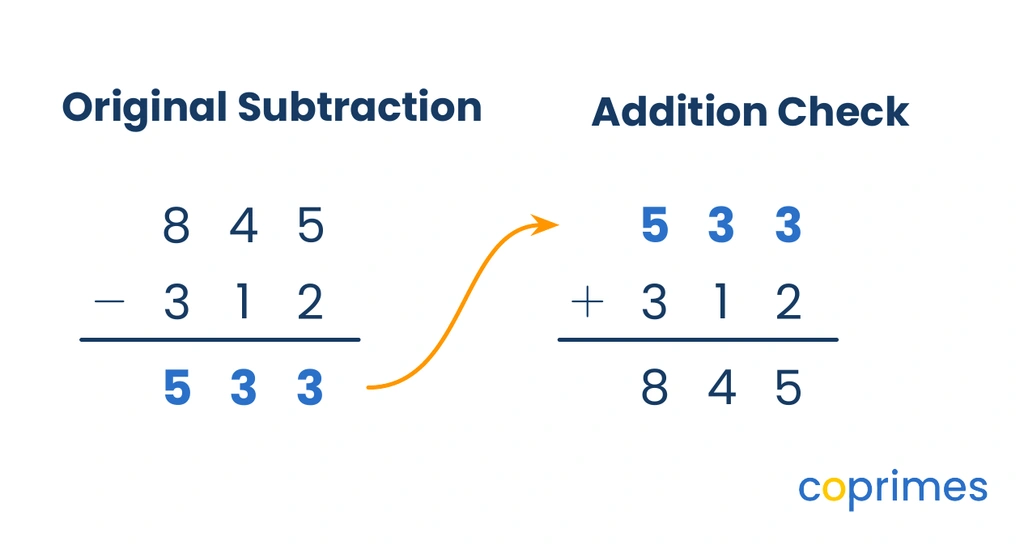
Checking subtraction with addition is generally faster and less prone to errors because addition rarely involves the complex borrowing needed in column subtraction.

Estimate before checking
Before performing a complete inverse check, use estimation to see if an answer is reasonable. Rounding whole numbers to the nearest ten, hundred, or thousand provides a quick approximate result that can instantly flag major calculation errors.
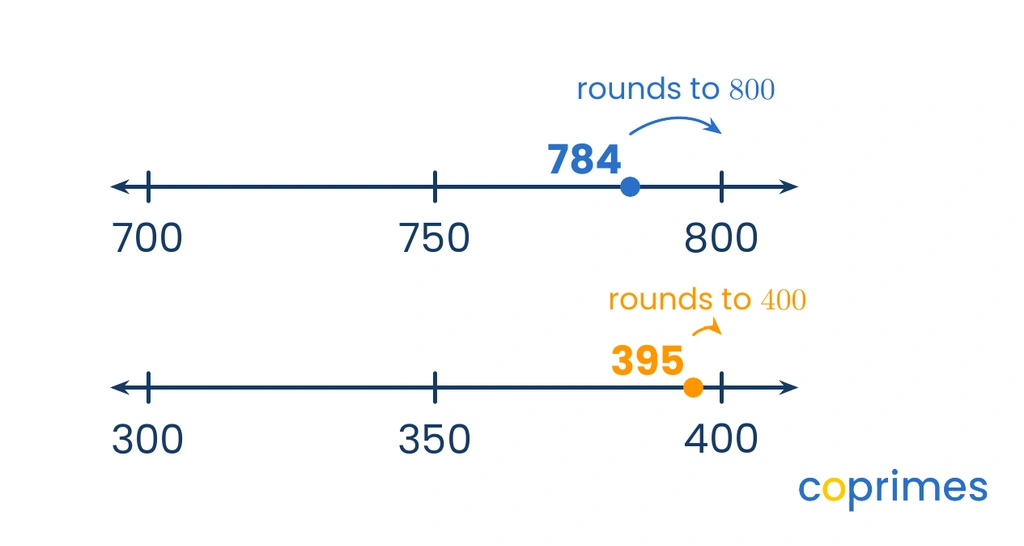
If a calculation is , round both numbers to the nearest hundred: . Since is very close to , the answer is mathematically reasonable. If the calculated answer had been , estimation would immediately reveal the error, saving time before executing the full inverse addition check.
Find and correct an error
When an inverse check produces a number different from the original value, an error has occurred in either the initial calculation or the check itself. Revisit both calculations to locate the mistake.
Consider a student who calculates . To check their work, they evaluate .
The check yields: .
Since does not match , the original subtraction is incorrect. Reviewing the initial setup reveals that the student forgot to adjust the tens digit downward after regrouping. The correct subtraction is . The new check, , confirms the correct answer.
Worked examples
Review these examples to see how addition and subtraction checks diagnose both correct and incorrect calculations.
Example 1: Verifying a correct subtraction
Question: Calculate and check the answer.
Method:
- Perform the original subtraction calculation: .
- Set up the check by adding the difference () to the subtrahend ().
- Calculate the sum: .
Answer: The initial answer is .
Check: The sum matches the original minuend (), verifying that the subtraction is perfectly correct.
Example 2: Diagnosing an incorrect subtraction
Question: A student calculated . Check this answer and correct it if necessary.
Method:
- Set up the check by adding the student's difference to the subtrahend: .
- Calculate the sum: .
- Compare the sum to the minuend. Since , the subtraction is incorrect. The student subtracted the smaller digits from the larger digits instead of regrouping correctly across the zeros.
- Perform the correct subtraction with regrouping: .
Answer: The correct difference is .
Check: Add the new difference to the subtrahend: . The calculation is now verified.
Example 3: Diagnosing an incorrect addition
Question: A student calculated . Verify the answer and correct it.
Method:
- Check the addition by subtracting one addend from the sum: .
- Calculate the difference: .
- Compare the result to the other addend. Since , the original addition contains an error. The student forgot to carry the when adding the hundreds column ().
- Perform the correct addition: .
Answer: The correct sum is .
Check: Verify the new sum: . The calculation is correct.
A learning plan shaped by your child, not the class
State-aligned Math plus our own Logic and English curriculum. An adaptive baseline test finds the gaps and fills them.
Common mistakes
When verifying calculations, avoid these common errors that can make a correct answer seem wrong or hide a genuine mistake.
- Checking with the wrong numbers: Students occasionally add the two original numbers in a subtraction problem instead of adding the difference and the subtrahend.
- Making an error in the check: A calculation mistake during the checking process will create a false mismatch. Always review both the original calculation and the checking steps before deciding the original answer is wrong.
- Forgetting to regroup: When adding to check a subtraction problem, forgetting to carry digits will lead to an incorrect sum, causing unnecessary confusion.
- Relying solely on estimation: While estimation is excellent for finding obvious mistakes quickly, it cannot guarantee that an answer is perfectly precise. Always perform the exact inverse operation when accuracy is required.
Frequently asked questions
Can you subtract by adding?
Yes, a technique called the complements method allows you to perform subtraction using only addition. To subtract, you find the s complement of the number you are subtracting. You then add this complement to the starting number, and finally discard the extra on the far left.
What is the s complement?
The s complement is the number needed to reach the next full power of ten, such as , , or . A quick way to calculate it is to subtract the rightmost non-zero digit from , and subtract all other digits to its left from .
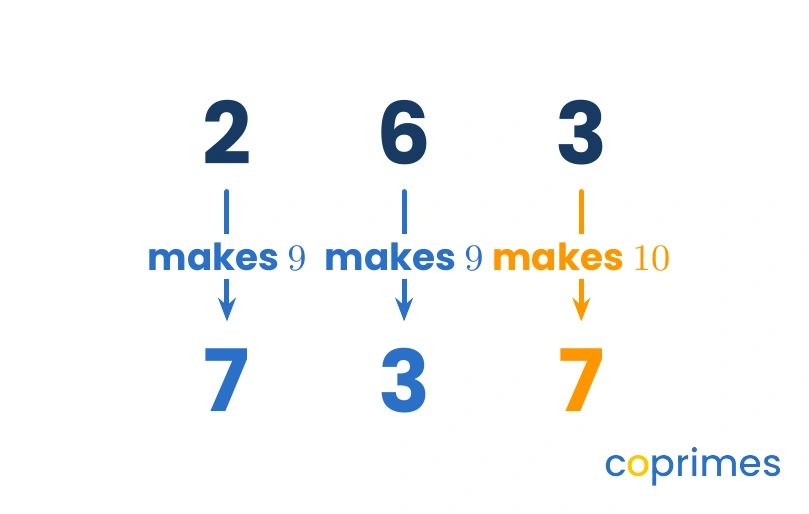
For example, to find the complement of , calculate , , and , giving .
How does the complements method work in practice?
To calculate , first find the complement of , which is . Next, add . Finally, discard the leading to get the true answer: . This method works because adding the complement and discarding the leading is mathematically equivalent to adding and then subtracting .
Practice questions
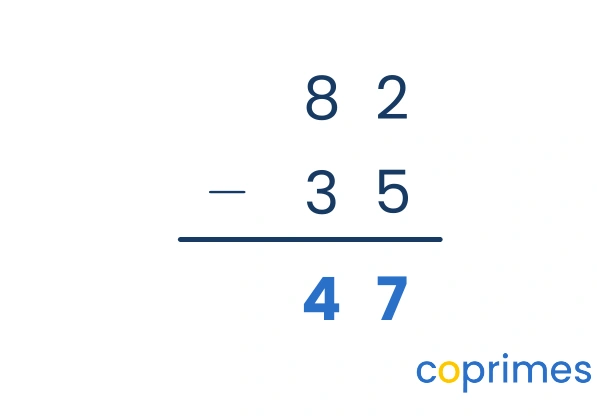
Which equation correctly checks the calculation shown in the image?
A student added . Which of the following is a correct way to check their answer?
Add and
Subtract from
Subtract from
Add and
Subtract from
A student is using the s complement method to calculate . They find the complement of is . What is the next step?
Subtract from
Add and
Add and
Discard the extra on the left
Add and
A student checked the calculation by writing . Why is this check mathematically incorrect?
They should have subtracted from .
They added the minuend and subtrahend instead of the difference and subtrahend.
They forgot to regroup when adding the numbers.
They should have subtracted the difference from the subtrahend.
They added the minuend and subtrahend instead of the difference and subtrahend.
Using estimation to check , which rounded calculation best shows if an answer near is reasonable?