
Understanding Flow Rate: Formula and Applications
Flow rate is the volume of a substance moving per unit time. Calculate it with flow rate equals volume divided by time, then rearrange the relationship to find volume or time and use consistent units.
A flow rate tells us how quickly a fluid moves or how fast a container fills. It is a rate that compares a change in volume to a corresponding change in time.
Understanding this concept helps in many practical situations, from designing irrigation systems to determining how long it takes to drain a reservoir. It builds on the idea of finding a unit rate, but applies specifically to a volumetric capacity.
What is flow rate?
Flow rate measures how much volume of a liquid or gas passes a specific point in a given amount of time.
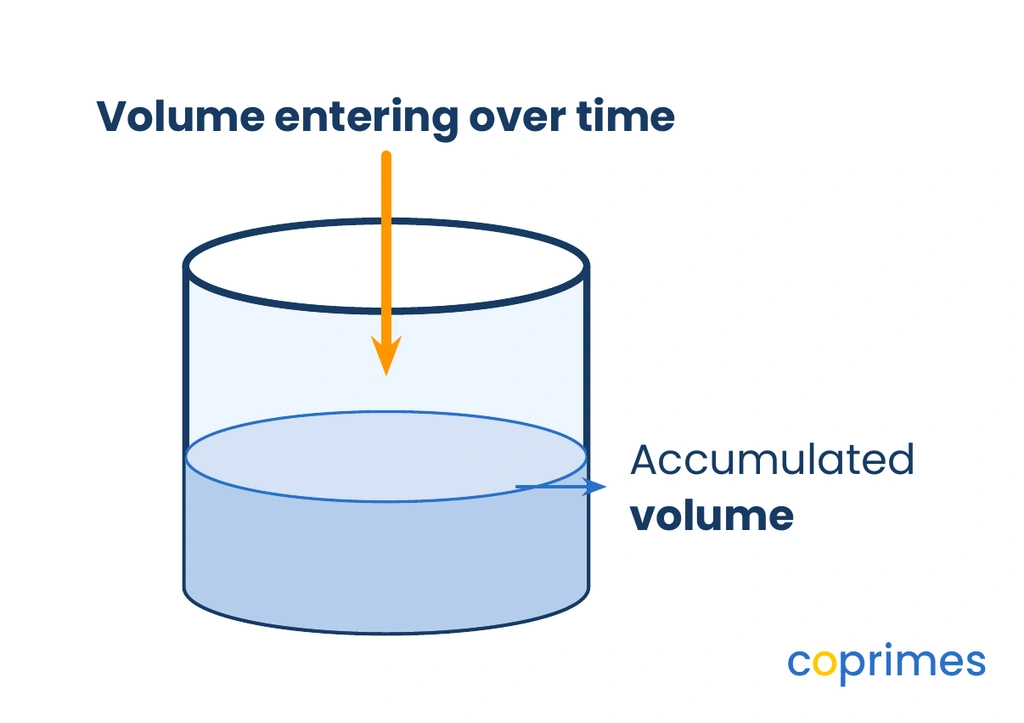
We typically express this measurement using a combined unit, such as liters per minute, gallons per hour, or cubic meters per second.
Whenever you know the total volume transferred and the time it took to transfer it, you can determine the flow rate.
Use volume divided by time
To calculate the volumetric flow rate, divide the total volume of fluid by the time it takes to move.
This relationship gives us the standard formula for flow rate, often denoted by :
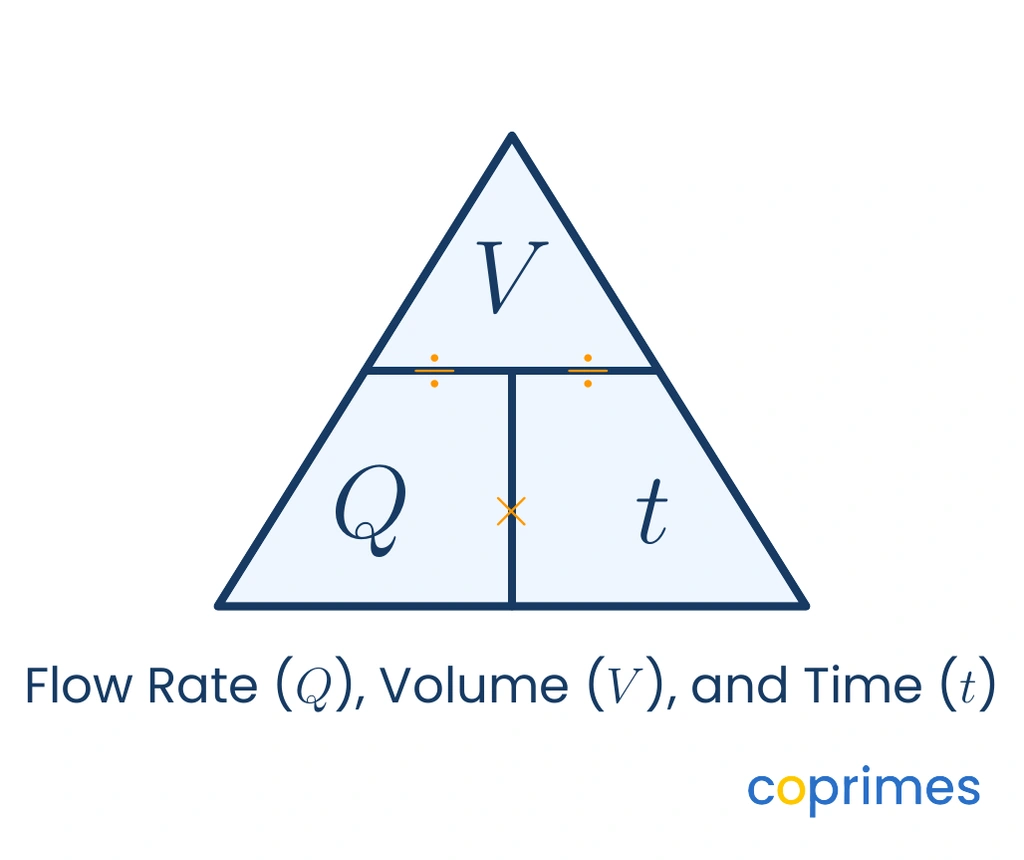
In this formula, represents the volume and represents the time. Much like the density formula connects mass and volume, the flow rate formula links volume and time to create a single compound measure.
Find flow rate, volume or time
You can rearrange the core formula to find any missing value, provided you know the other two.
Similar to how we use the relationships in speed distance time, we can manipulate the flow rate equation:
- To find flow rate:
- To find volume:
- To find time:
Always check which two values are given before choosing your formula.
Example 1: Finding the required time
Question: A pump operates with a flow rate of liters per minute. How long will it take to pump liters of water?
Method:
- Identify the known values: and .
- Choose the rearranged formula for time: .
- Substitute the values and divide.
Answer: . It will take minutes.
Check: Multiply the required time by the flow rate: liters. This matches the target volume perfectly.
A learning plan shaped by your child, not the class
State-aligned Math plus our own Logic and English curriculum. An adaptive baseline test finds the gaps and fills them.
Convert volume and time units
Before calculating, you must ensure that all units are compatible. If the flow rate is given in liters per minute but the time is given in hours, you must convert the units to match.
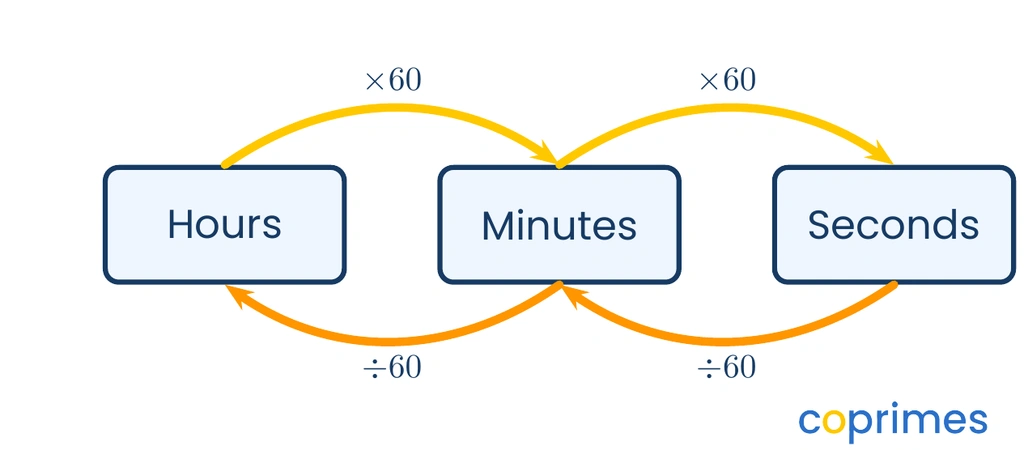
Always verify the requested final unit. Converting time or volume units at the beginning of your method prevents unit mismatch errors during the calculation.
Example 2: Converting unit measures first
Question: A garden hose delivers water at a rate of liters per second. What is the total volume delivered in minutes?
Method:
- Identify the flow rate is in seconds, but the time is in minutes.
- Convert the time to seconds: .
- Multiply the flow rate by the compatible time to find the volume: .
Answer: . The total volume is liters.
Check: If liters flow in seconds, the rate is liters per second, which confirms the initial statement.
Solve filling and emptying problems
When multiple sources add or remove fluid from the same container, you must find the combined net flow rate before calculating the final volume or time.
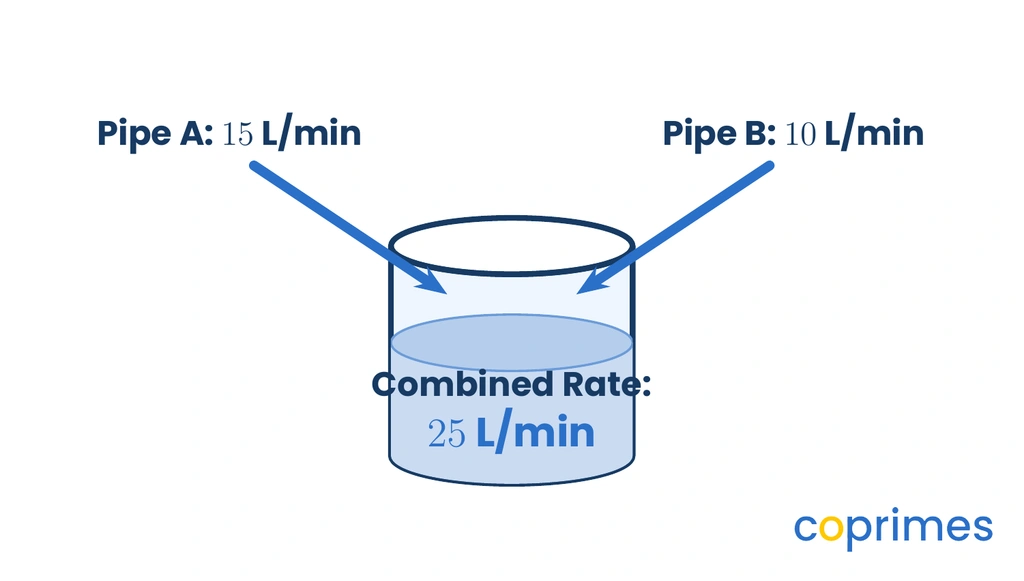
These scenarios often appear as practical math word problems. To find the net flow rate, add the rates of pipes filling the container and subtract the rates of any drains emptying it.
Worked examples
When facing multiple pipes or drains, calculating the combined net flow rate is always your first step.
Example 3: Filling and draining simultaneously
Question: A tank has a capacity of liters. A hose fills the tank at liters per minute, but a drain at the bottom simultaneously leaks water at liters per minute. How long will it take to fill the empty tank completely?
Method:
- Calculate the net flow rate entering the tank by subtracting the drain rate from the fill rate.
- . The net flow rate is liters per minute.
- Use the formula to find the total time.
Answer: . It will take minutes to fill the tank.
Check: In minutes, the hose adds liters (). The drain removes liters
(). liters, which confirms the capacity.

Common mistakes
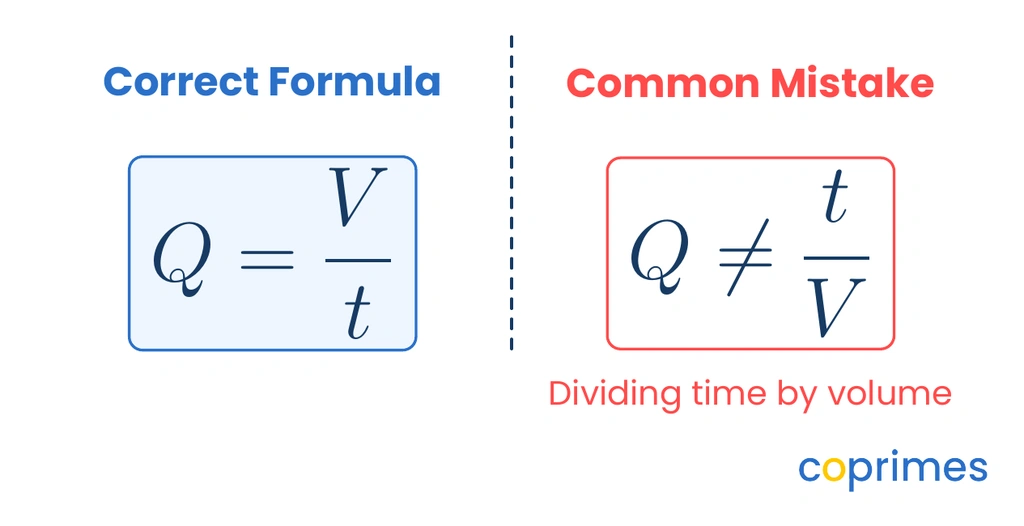
The most frequent error is reversing the division when calculating flow rate or time. Always divide the volume by the time to find the rate.
Another common mistake is forgetting to match the units before calculating. Using a volume unit and a time unit without checking their compatibility will result in the wrong numerical answer. For instance, if you substitute a volume in milliliters but your time is in hours, your resulting rate will not match a requested rate in liters per minute.
Frequently asked questions
What are the most common units of flow rate?
Flow rates are commonly measured in liters per minute (L/min), cubic meters per second
(m/s), or gallons per hour, depending on the scale of the system.
Does flow rate only apply to liquids?
No, volumetric flow rate applies to gases as well. For example, ventilation systems calculate the flow rate of air moving through ducts using cubic meters per minute.
How do I calculate flow rate if I am only given the speed of the fluid?
If you know the speed of the fluid (velocity) and the cross-sectional area of the pipe it travels through, you can multiply the area by the velocity to find the volumetric flow rate.
Practice questions
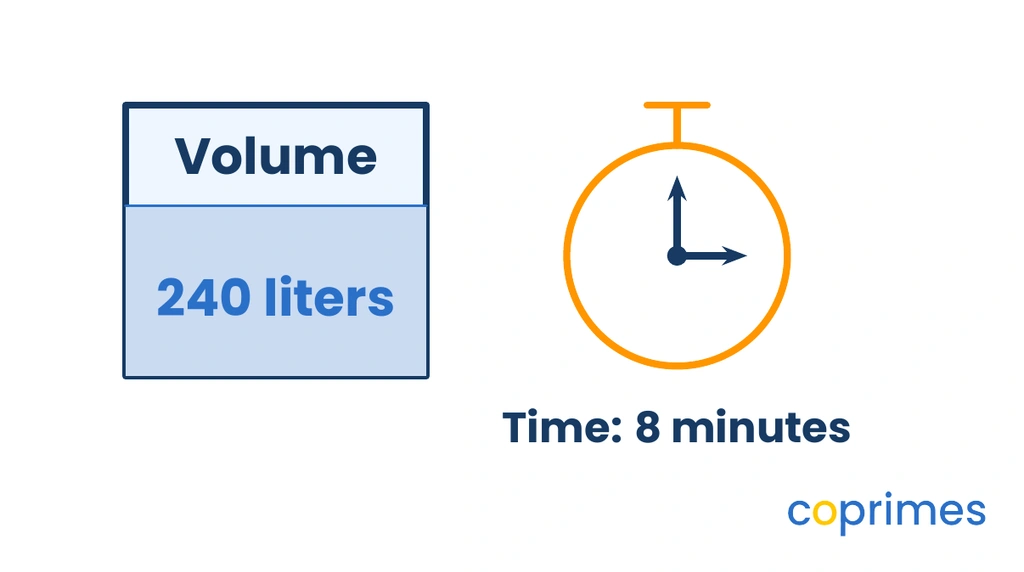
What is the flow rate of the water entering the tank?
L/min
L/min
L/min
L/min
L/min
A river has a steady flow rate of cubic meters per second. What total volume of water flows past a point in seconds?
A supply pipe operates with a flow rate of liters per second. How many liters will flow through the pipe in minute?
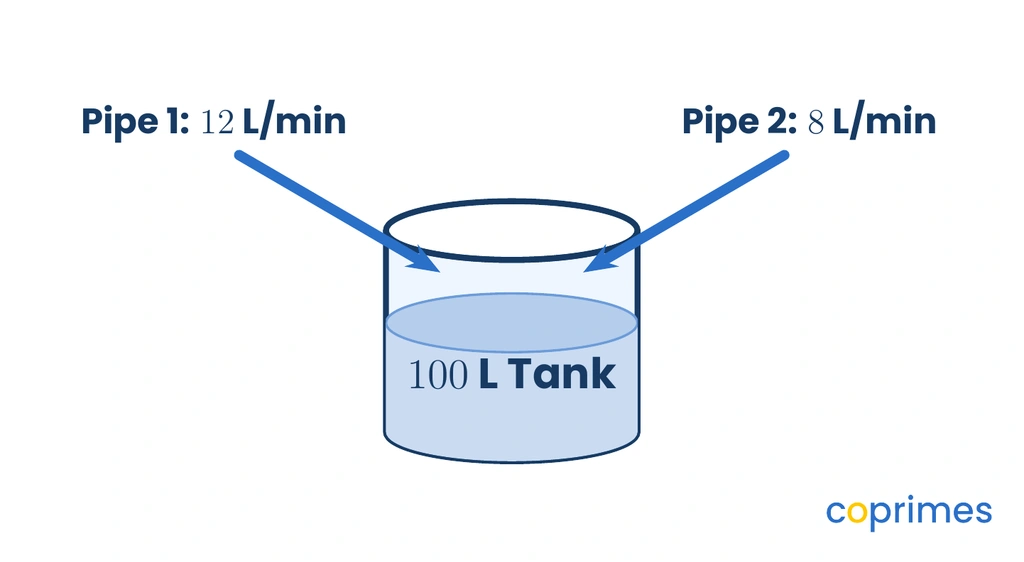
Two pipes fill a -liter tank at the same time. Pipe 1 supplies liters per minute, and Pipe 2 supplies liters per minute. How long will it take to fill the tank completely?
A -liter tank is completely full. A drain opens and empties the water at a rate of liters per minute. How long does it take to empty the tank?