
Prime Factorization: Methods and Examples
Prime factorization writes a whole number greater than 1 as a product of prime numbers. This mathematical process breaks a number down into its absolute smallest building blocks. Finding these fundamental components helps you simplify fractions, analyze number relationships, and solve advanced arithmetic problems.
What Is Prime Factorization?
Prime factorization is the method of expressing a composite number as a sequence of prime numbers multiplied together.
To understand this concept, you must first understand factors. A factor is a whole number that divides into another number exactly, leaving no remainder.
A prime number has exactly two factors: and itself. This rule separates prime vs composite numbers. The numbers , , , , and are prime because they cannot be divided evenly by any other whole number.
Prime factors are simply the prime numbers that multiply together to build a specific given number. You can think of prime factors as the atoms of mathematics because they cannot be broken down any further.
Every whole number greater than 1 has exactly one unique prime factorization.
When to Use It
Finding the prime components of a number is a highly useful skill in mathematics, especially when working with multiple numbers at once.
You will use prime factorization to find the Greatest Common Factor and the Least Common Multiple of two or more numbers. Comparing the prime factorizations makes it easy to identify their common factors.
It is also the most reliable method for simplifying large fractions. By breaking the numerator and denominator into their prime components, you can instantly see which shared primes can be cancelled out.
Step-by-Step Method
There are two standard methods for finding prime factors. Both methods will always give you the exact same final result.
The first approach is the factor tree method. You split the starting number into any two factor branches, and continue splitting any composite factors until only prime numbers remain at the ends of the branches.
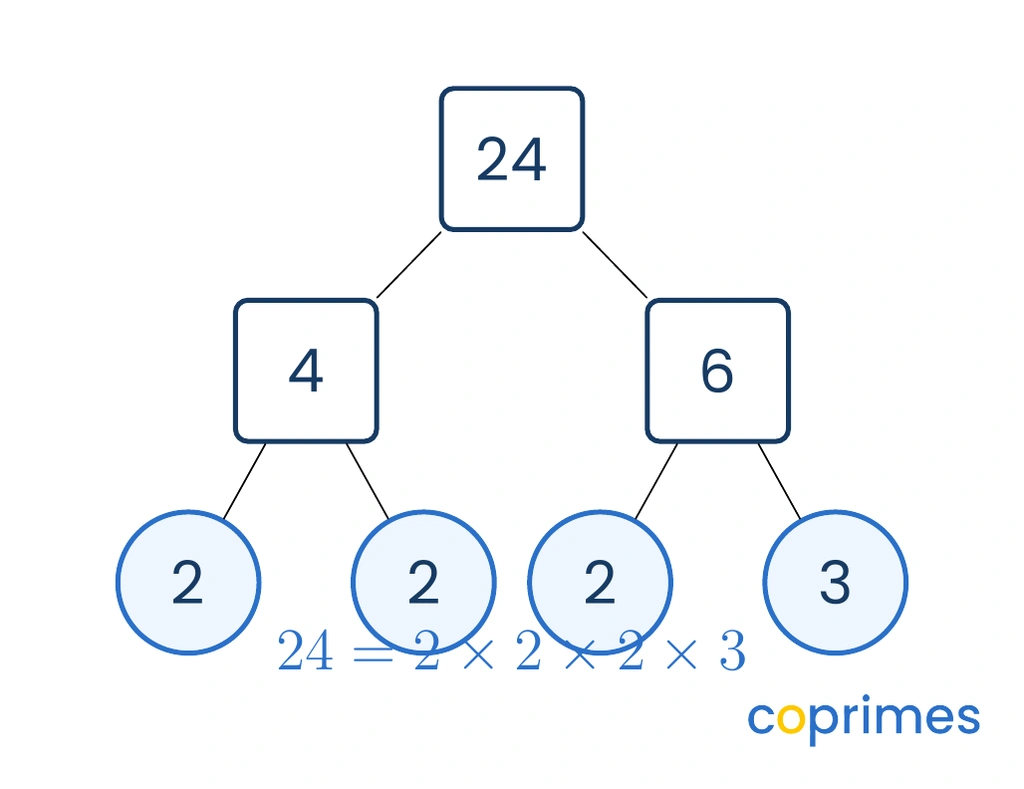
The second approach is the repeated division method. You divide the starting number by its smallest possible prime factor, and continue dividing the new quotients by prime numbers until you reach a final quotient of . Knowing your divisibility rules makes this method much faster.
Once you have found all the prime factors, group identical numbers together and write them using exponents. This simplified format is called exponent form. For example, is written as .
A learning plan shaped by your child, not the class
State-aligned Math plus our own Logic and English curriculum. An adaptive baseline test finds the gaps and fills them.
Visual Worked Examples
Example 1: Using the factor tree method
Question: What is the prime factorization of ?
Method:
- Choose any two numbers that multiply to make , such as and .
- Split into . Both numbers are prime, so these branches stop.
- Split into . Both numbers are prime, so these branches stop.
- Collect all the prime numbers located at the ends of the branches.
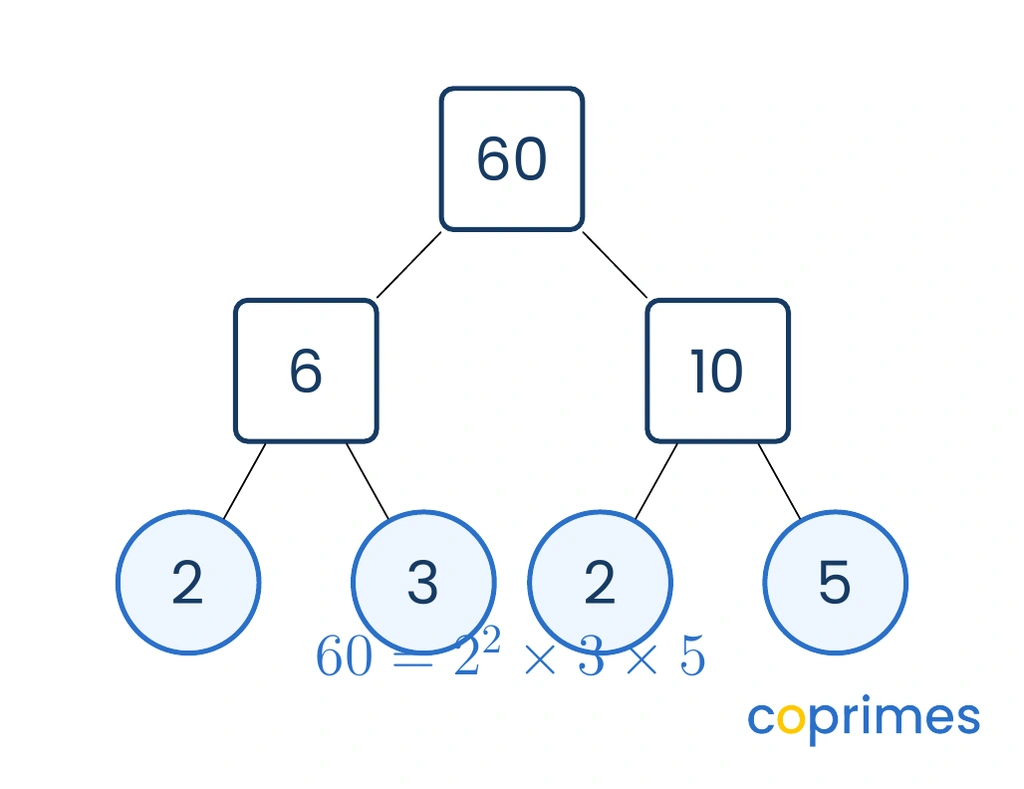
Answer: , which is written as .
Check: Multiply the values to verify the result: .
Example 2: Using the repeated division method
Question: What is the prime factorization of ?
Method:
- Divide by the smallest prime, which is . The quotient is .
- Since is not divisible by , move to the next smallest prime, which is . Divide by to get .
- Divide by to get .
- The number is prime. Divide by to get .
- The divisors used on the outside of the division steps form the prime factors.
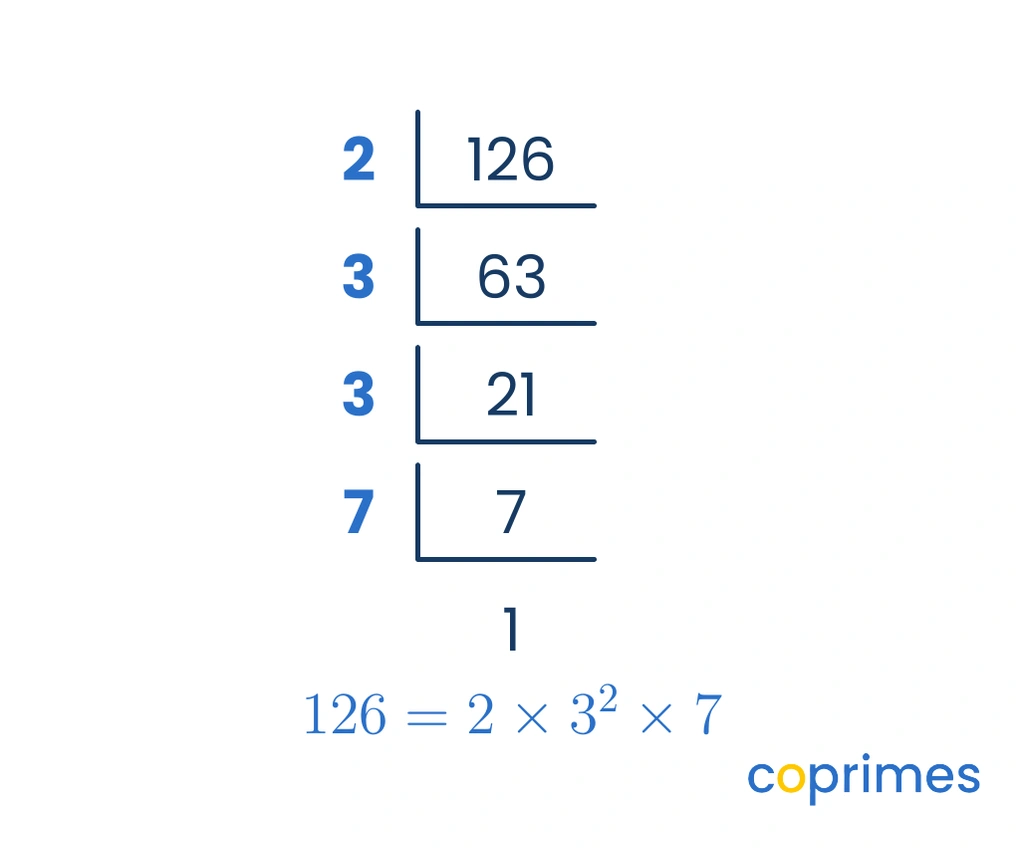
Answer: , which is written as .
Check: Multiply the values to verify the result: .
Example 3: Identifying a counterexample
Question: Is the correct prime factorization of ?
Method:
- Check if the product equals the target number: . The total is correct.
- Check if every factor is a strictly prime number.
- The number is prime, and the number is prime.
- The number is composite because it can be divided evenly by .
Answer: No. The composite number must be broken down further into . The correct factorization is , which is written as .
Check: .
How to Check the Answer
You can easily verify any prime factorization by multiplying the expanded factors back together. If the product matches your original starting number, and you confirm that every base number is strictly prime, your answer is completely correct.
Always evaluate any exponents first before multiplying. For example, if you want to check the factorization , first expand to . Then, multiply to confirm the final result is .
Common Mistakes
Avoid these frequent errors when finding prime factors:
- Including 1 in the final answer: The number is neither prime nor composite because it has only one factor. It should never appear anywhere in a prime factorization.
- Stopping before all factors are prime: It is easy to leave a number like or at the end of a factor tree branch. Always check carefully that every final leaf is a true prime number.
- Confusing addition with multiplication: Prime factorization requires multiplying the factors, not adding them. Writing instead of is incorrect and changes the mathematical meaning.

Practice questions
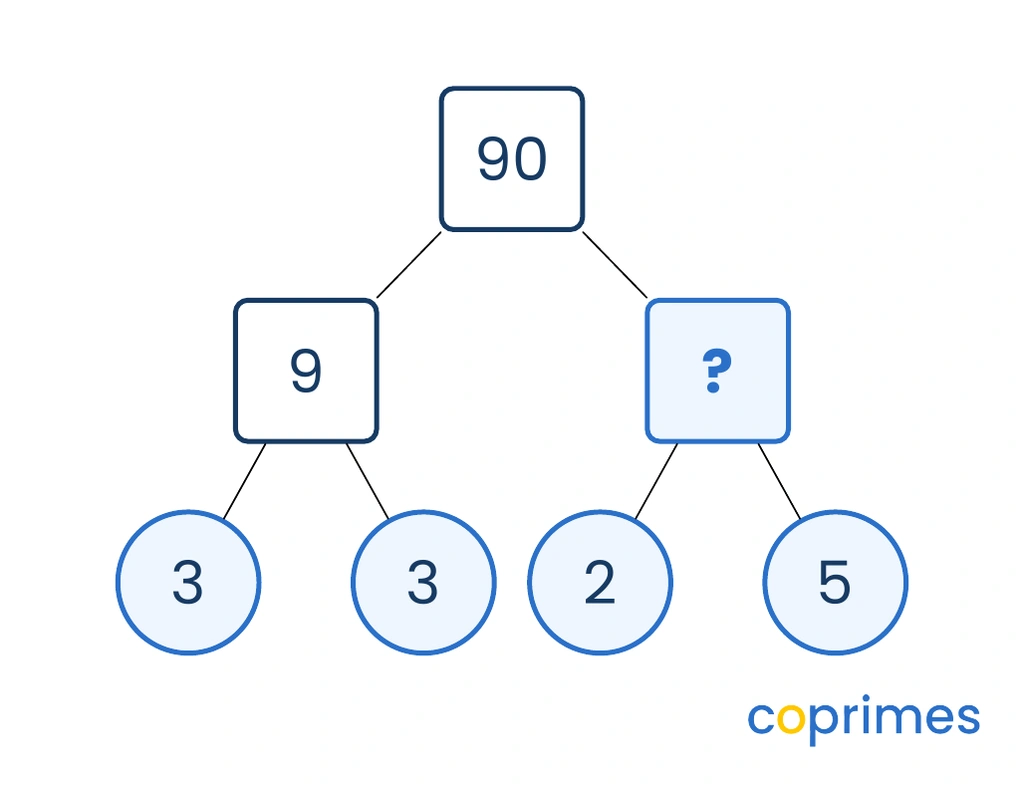
What is the missing value in the factor tree?
What is the prime factorization of ?
Which expression shows the prime factorization of in exponent form?
Why is NOT a correct prime factorization for ?
Because the factors add up to instead of .
Because the number is a composite number.
Because and are not prime numbers.
Because the numbers do not multiply to .
Because the number is a composite number.
A number has the exact prime factorization . What is the original number?