
Addition With Regrouping: Definition, Method and Examples
Addition with regrouping is the process of exchanging ten units in one place-value column for one unit in the next column. This method is used when the sum of a column is or greater, requiring the extra value to be carried over to the next highest place.
What is addition with regrouping?
Addition with regrouping, sometimes called addition with carrying, is a technique used when evaluating the sum of large numbers. When the sum of any single column in standard addition reaches or more, a single digit cannot hold the entire value.
The total is split into tens and ones. The ones digit stays in the current column, and the tens digit is moved over to the column immediately to its left.
Addition with regrouping is required whenever the sum of the digits in any column exceeds 9.
Why regrouping works
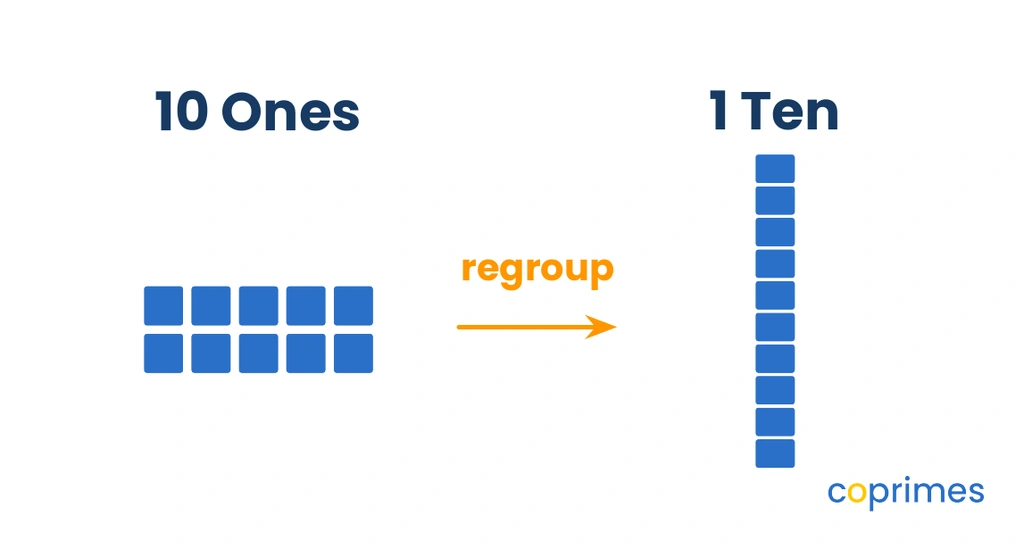
Regrouping is mathematically sound because the standard number system is based on groups of ten. In a base-ten place value system, ten identical units in any position are exactly equal to one unit in the position to the left.
For example, ten ones make one ten, and ten tens make one hundred. When a column total is , it actually represents ten and ones. The remains in the ones column, and the ten shifts into the tens column.
Place-value model
Using a place-value model helps visualize the regrouping process before writing numbers in standard columns. It separates the addition problem into distinct place-value units.
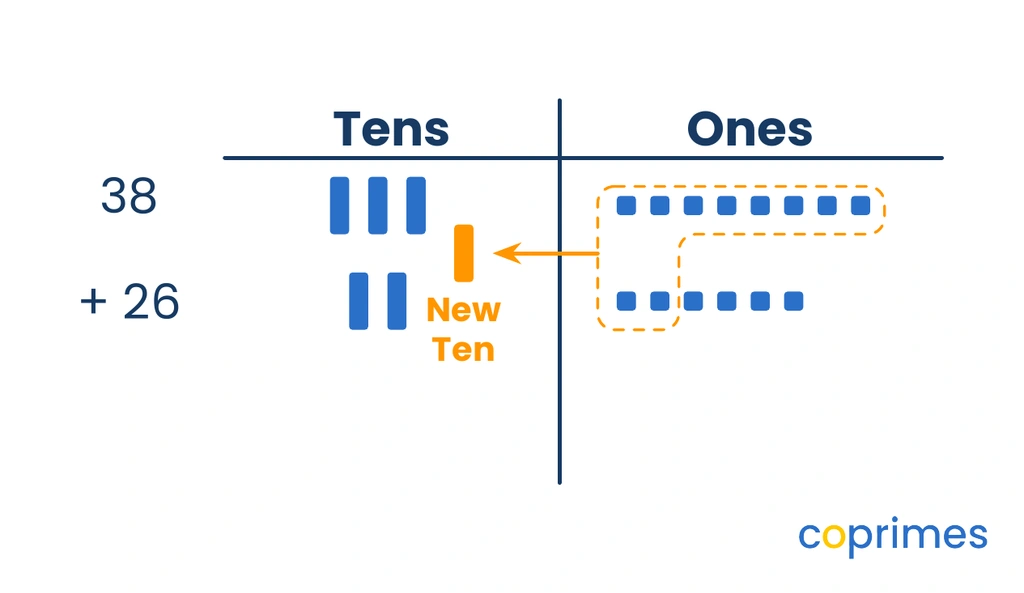
When adding numbers such as and , you can model the ones and tens separately. The ones column totals . Because is greater than , ten of the ones are physically grouped together and moved to the tens column as one new ten, leaving ones behind.
A learning plan shaped by your child, not the class
State-aligned Math plus our own Logic and English curriculum. An adaptive baseline test finds the gaps and fills them.
Step-by-step method
The standard method for column addition with regrouping follows a consistent, repeated procedure.
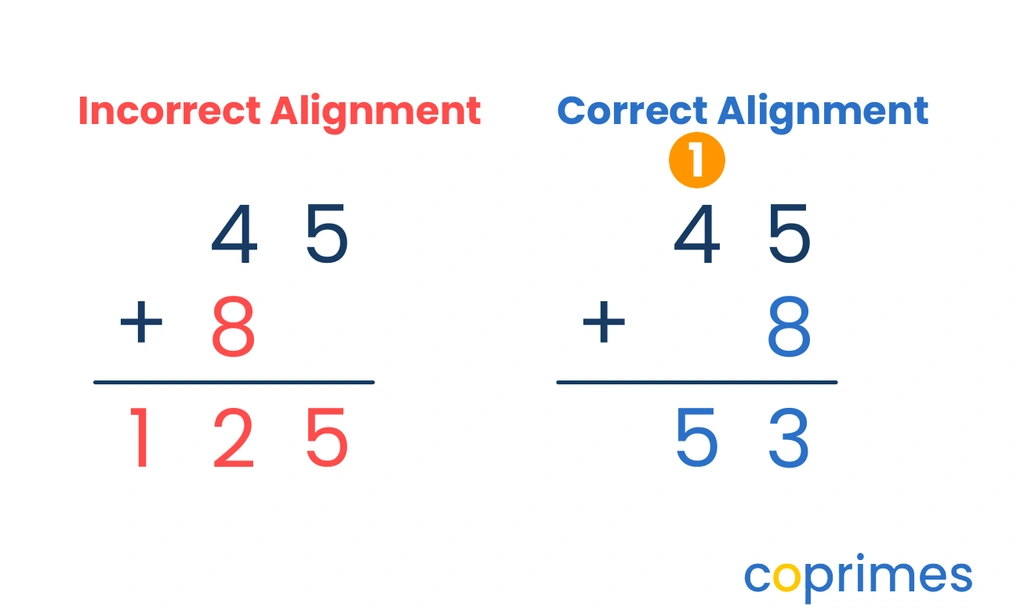
- Line up the numbers vertically by their place value, aligning the ones, tens, and hundreds.
- Add the digits in the ones column first.
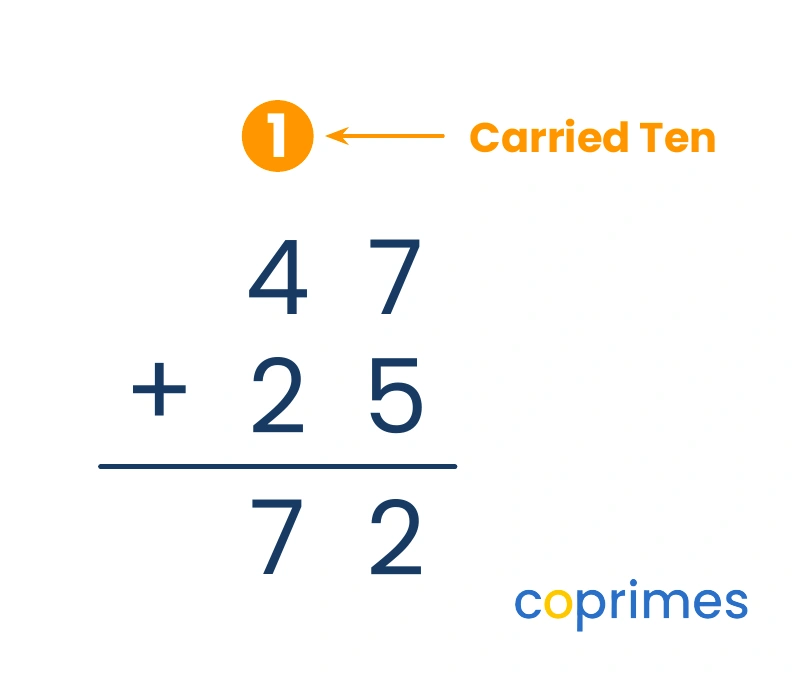
- If the sum is or less, write the total below the line. If the sum is or greater, write the ones digit below the line and carry the tens digit to the top of the next column.
- Move left to the tens column and add the digits, including the carried number.
- Repeat the process for all remaining columns until every column is added.
Regrouping across several places
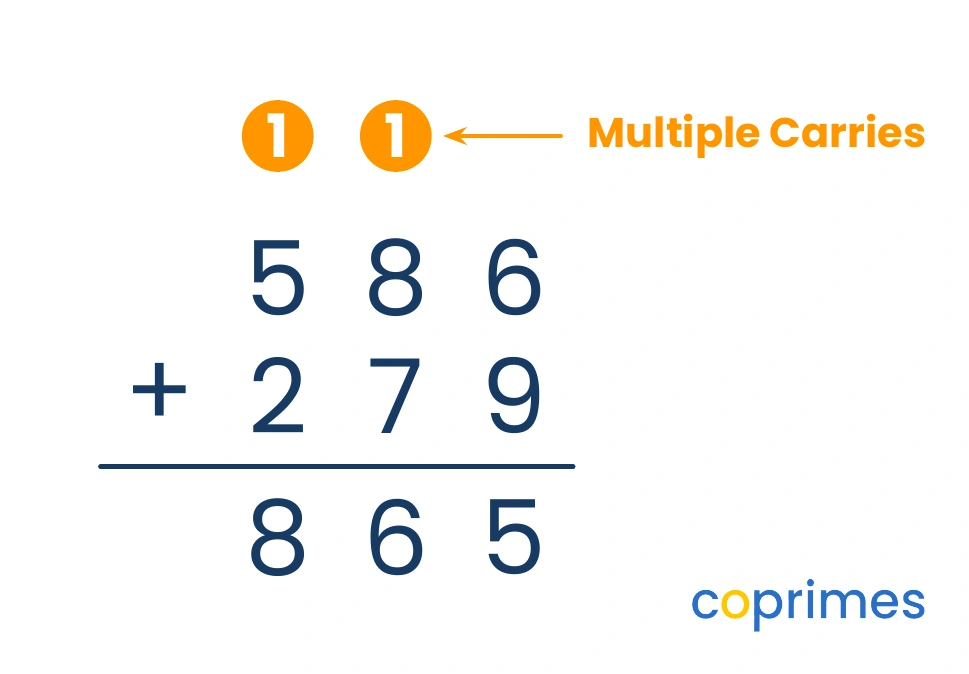
When adding larger numbers, such as three-digit or four-digit values, you may need to regroup more than once in the exact same problem.
The process remains exactly the same. You work from right to left, carrying the extra value to the next column each time a sum exceeds . A carry from the tens column moves to the hundreds column, and a carry from the hundreds column moves to the thousands column.
Worked examples
Here are three examples of addition with regrouping, ranging from two-digit numbers to multi-step regrouping.
Use checking addition techniques, such as subtracting one addend from the sum, to verify the final result.
Example 1: Two-digit addition with one regrouping
Question: Evaluate .
Method:
- Align the numbers vertically by place value.
- Add the ones: . Write in the ones place and carry the to the tens place.
- Add the tens: . Write in the tens place.
Answer: The sum is .
Check: .
Example 2: Three-digit addition with one regrouping
Question: Find the sum of and .
Method:
- Align the numbers vertically.
- Add the ones: . Write and carry to the tens column.
- Add the tens: . Write .
- Add the hundreds: . Write .
Answer: The sum is .
Check: .
Example 3: Regrouping across multiple columns
Question: Evaluate .
Method:
- Align the numbers vertically.
- Add the ones: . Write and carry to the tens column.
- Add the tens: . Write and carry to the hundreds column.
- Add the hundreds: . Write .
Answer: The sum is .
Check: .

Common mistakes
When learning multi digit addition regrouping, certain errors frequently lead to incorrect answers.
- Forgetting to add the carried digit: A common mistake is writing the carry at the top of the column but forgetting to include it when adding the digits in that column.
- Carrying the wrong digit: When a sum is , the must go at the bottom and the is carried. Reversing this places the at the bottom and incorrectly carries the .
- Misaligning the columns: If numbers are not lined up neatly by place value, you might accidentally add ones to tens, or tens to hundreds.
Frequently asked questions
What is the difference between addition with and without regrouping?
Addition without regrouping occurs when the sum of every column is or less, meaning no extra values need to be carried to the next column. Addition with regrouping is required whenever any column sum reaches or more.
What is another name for addition with regrouping?
In many regions, addition with regrouping is known as addition with carrying. Both phrases describe the exact same mathematical process of moving a place value up to the next column.
Can you regroup when adding decimals?
Yes. The process for adding decimals with regrouping is identical to adding whole numbers. You must align the decimal points vertically, which naturally lines up the tenths, hundredths, and other place values, before adding from right to left.
Practice questions
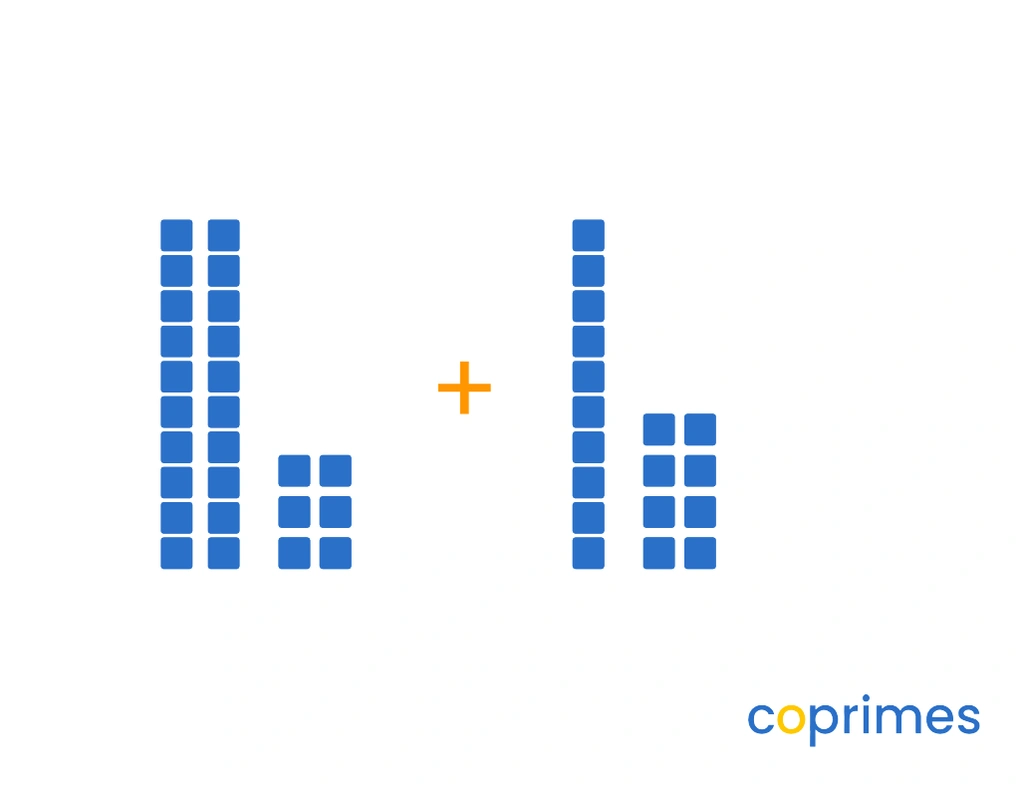
Which addition problem with regrouping is shown by the base-ten model?
What is the sum of and ?
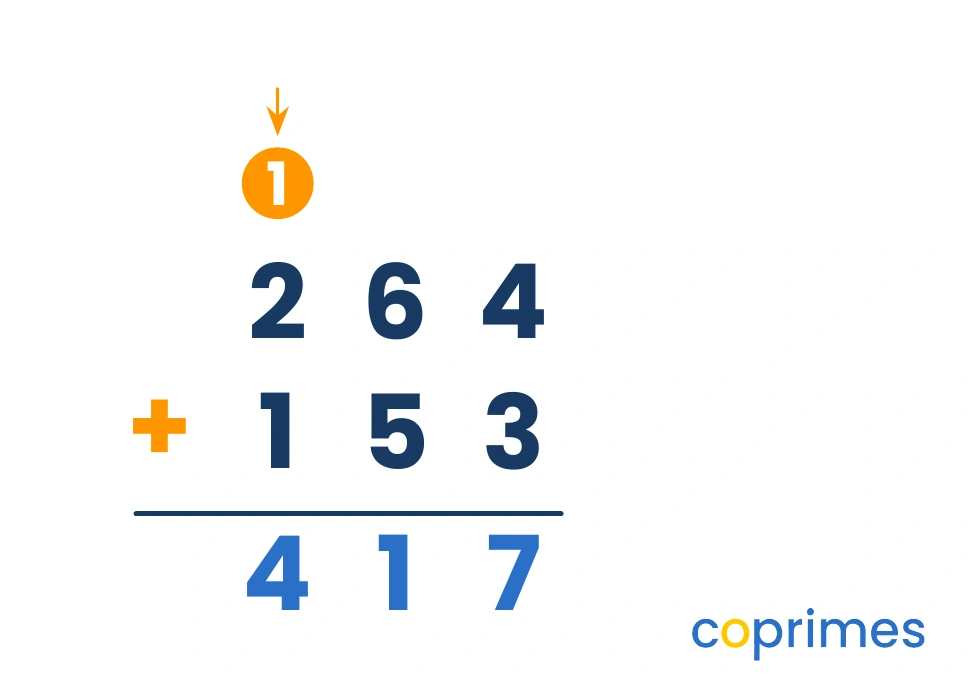
In the addition problem shown, a is carried to the top of the hundreds column. What value does this actually represent?
one
ten
hundred
hundreds
hundred
A student calculated and got a final sum of . What common mistake did the student most likely make?
They added the ones column incorrectly.
They forgot to add the carried ten.
They subtracted the tens instead of adding.
They carried the wrong digit from the ones column.
They forgot to add the carried ten.
Evaluate the sum of and .