
Place Value: Guide and Examples
Place value is the value a digit has because of its position in a number; each place in the base-ten system is ten times the place to its right. Understanding place value allows us to read, write, and compare numbers accurately, from the smallest decimals to the largest whole numbers.
What Is Place Value?
Place value tells us how much a digit is worth based on where it sits within a number. The digits we use are , , , , , , , , , and . By themselves, these digits have a fixed meaning, but when combined, their position changes their overall value.
For example, look at the digit in the numbers and . In , the is in the hundreds position, so its value is . In , the is in the ones position, so its value is just .
This positional system makes it possible to write numbers of any size using only ten digits. Without place value, we would need a new symbol for every single quantity we wanted to express.
Key Ideas and Vocabulary
To master place value, you need to understand the difference between a digit, its position, and its true value.
- Digit: One of the ten basic symbols ( to ) used to build numbers.
- Position: The specific location of a digit in a number, such as the tens place or thousands place.
- Value: How much the digit is actually worth. We find this by multiplying the digit by its positional value.
- Placeholder: The digit is used to hold a position empty, ensuring that all other digits stay in their correct columns.
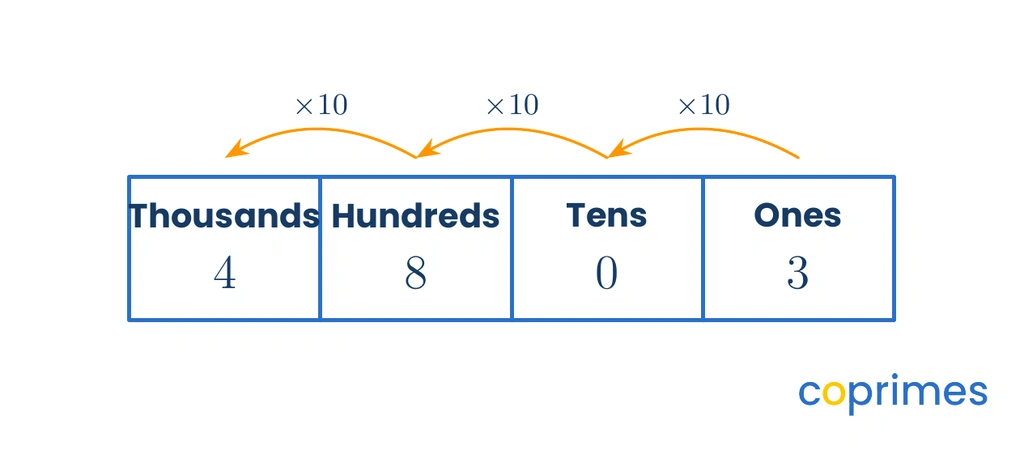
The base-ten system is built on powers of ten. Every time you move one position to the left, the value becomes ten times greater.
This structure applies to all numbers. When you learn about standard word and expanded form, you rely on these place values to break a number apart into its individual positional components.
Visual Explanation
We can visualize how numbers are built using a place value chart. The chart organizes numbers into columns, making the relationship between positions clear.
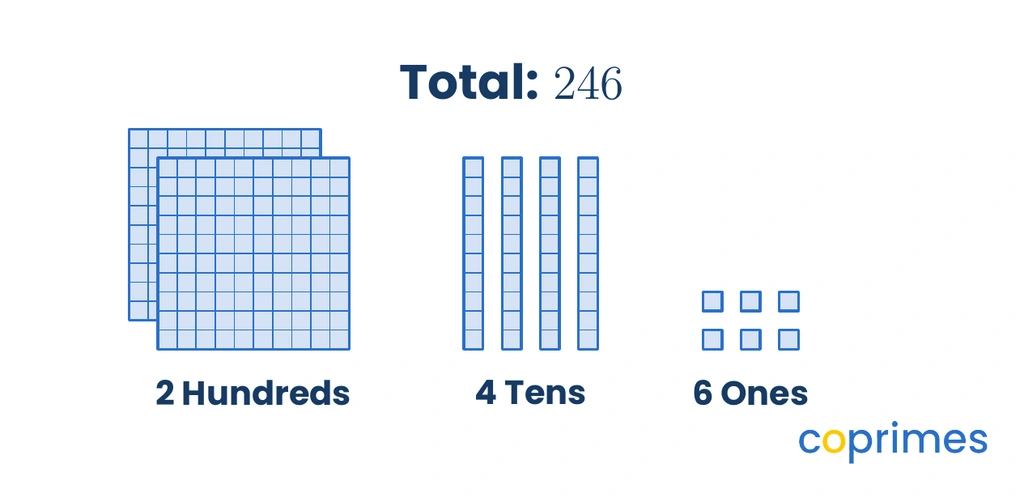
Another way to visualize place value is using base-ten blocks. These models physically show that one hundred is made of ten tens, and one ten is made of ten ones.
A learning plan shaped by your child, not the class
State-aligned Math plus our own Logic and English curriculum. An adaptive baseline test finds the gaps and fills them.
Worked Examples
Practicing with different number formats builds strong number sense. When comparing whole numbers, you must always look at the highest place value column first.
Example 1: Identifying digit value
Question: What is the value of the digit in the number ?
Method:
- Write the number and identify the column containing the digit .
- The is in the ones place, the is in the tens place, the is in the hundreds place, and the is in the thousands place.
- Multiply the digit by its column value: .
Answer: The value is .
Check: Read the number aloud. "Forty-eight thousand, ninety-two." Hearing "eight thousand" confirms the positional value is correct.
Example 2: Arranging digits to form the greatest number
Question: Using the digits , , , and exactly once, what is the greatest four-digit number you can create?
Method:
- To make the greatest number, place the largest available digit in the column with the highest value (the thousands place).
- The largest digit is , so the thousands digit is .
- The next largest digit is . Place it in the hundreds column.
- The next largest digit is . Place it in the tens column.
- Place the smallest digit, , in the ones column.
Answer: The greatest number is .
Check: Compare this to another arrangement, like . Since hundreds is greater than hundreds, is indeed larger.
The base-ten system also extends to the right of the ones column using a decimal point, creating fractions of a whole.
Example 3: Place value with decimals
Question: What is the value of the digit in the number ?
Method:
- Locate the decimal point. The column immediately to its right is the tenths place.
- The next column to the right is the hundredths place. The digit is located here.
- The value is hundredths.
Answer: The value is or .
Check: We can add the decimal parts together: . This confirms the represents five hundredths.
Common Mistakes and Non-Examples
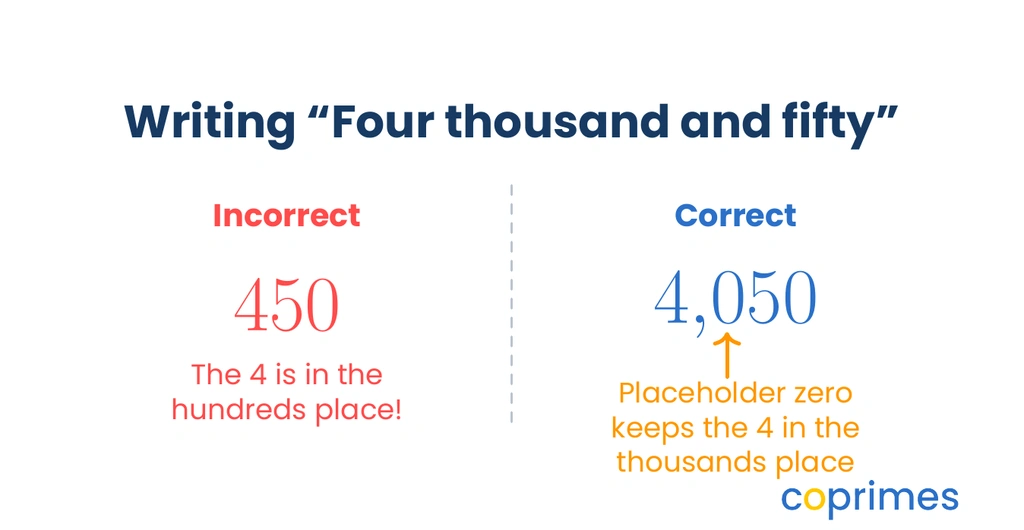
A frequent mistake is dropping zeros that are acting as placeholders. If a student is asked to write "three thousand and forty", they might write instead of the correct number, . The zero in the hundreds column is mandatory because it forces the into the thousands position.
Another common error occurs when rounding whole numbers. Students might look at the wrong positional column to make their rounding decision because they have not securely memorized the column order.
It is also important to recognize when a sequence of numbers is a non-example of place value. A telephone number or a computer password contains digits, but their positions do not hold mathematical weight. If a telephone number begins with , it does not mean the user has "nine million" of anything. It is merely a string of separate symbols used for identification.
Real-World Connections
Our numerical system is used universally in everyday life, and a firm grasp of place value prevents costly mistakes.
If you are reading an odometer in a car to see how far it has traveled, knowing the difference between kilometers and kilometers is essential. The position of the digits completely changes the magnitude of the distance.
Similarly, metric measurements rely heavily on base-ten positional concepts. A length of meters and centimeters can be written as meters, where the is in the tenths position and the is in the hundredths position.
Finally, while cardinal and ordinal numbers describe quantities and order, place value provides the structured engine that lets us write those quantities systematically, no matter how large they grow.

Practice questions
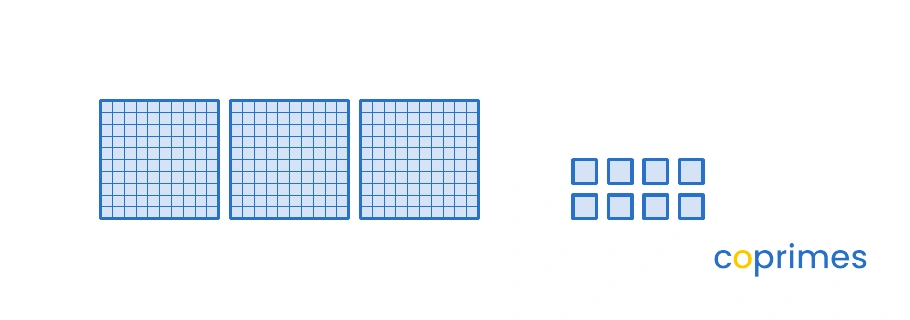
What number is represented by the base-ten blocks in the visual?
What is the value of the digit in the number ?
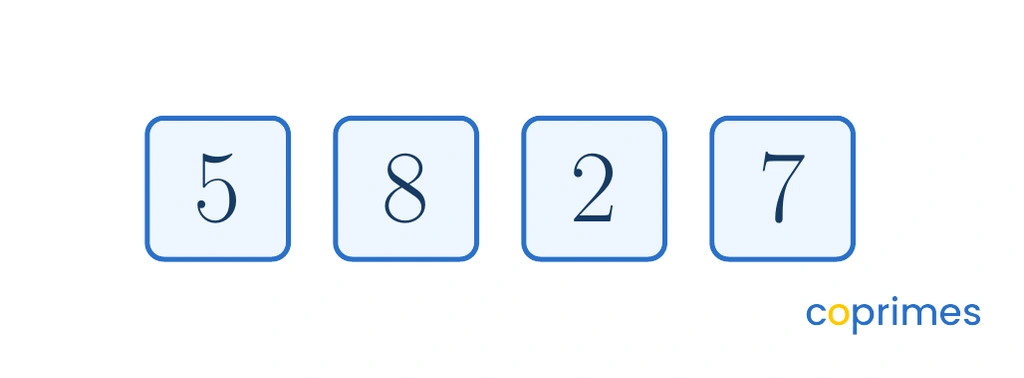
Using each of the number cards in the visual exactly once, what is the smallest four-digit number you can create?
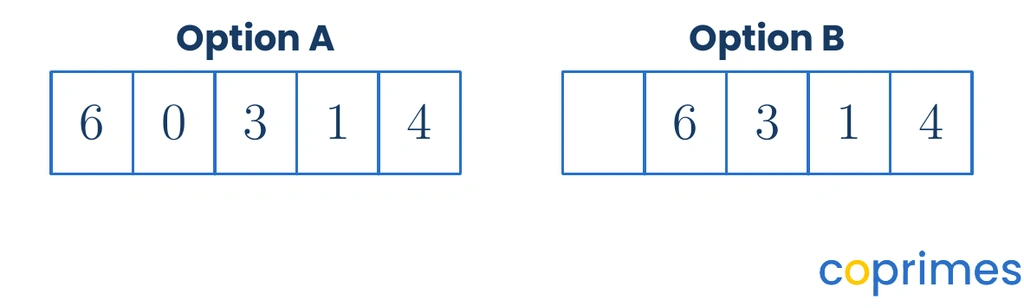
How should the number "sixty thousand, three hundred and fourteen" be written?
Option B is correct because the zero has no value and can be dropped.
Option A is correct because the zero acts as a placeholder in the thousands column.
Option B is correct because numbers do not use zero in the middle.
Option A is correct because the zero represents the tens column.
Option A is correct because the zero acts as a placeholder in the thousands column.
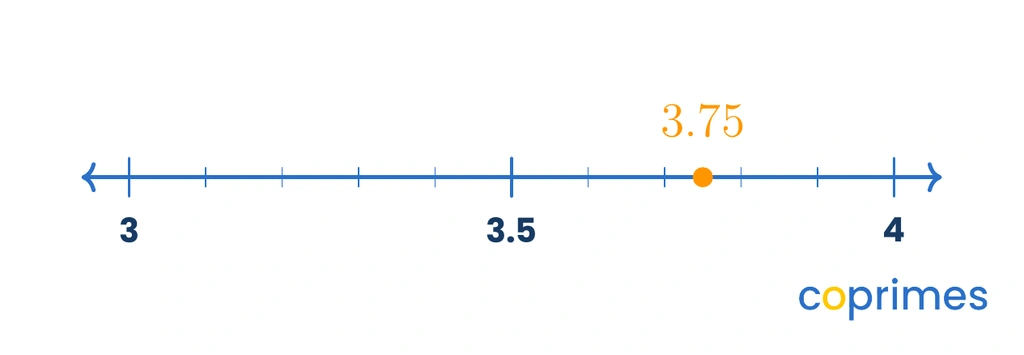
In the decimal number , what does the digit represent?
tens
tenths
hundredths
thousands
hundredths