
Decimals on a Number Line
To place a decimal on a number line, first identify the interval and its scale, divide it into equal parts that match the place value needed, then locate the decimal by its value.
Working with decimal numbers on a continuous scale helps us understand their exact size and relationships. This visual method extends the way we count whole numbers to accurately include fractional parts.
What is a decimal number line?
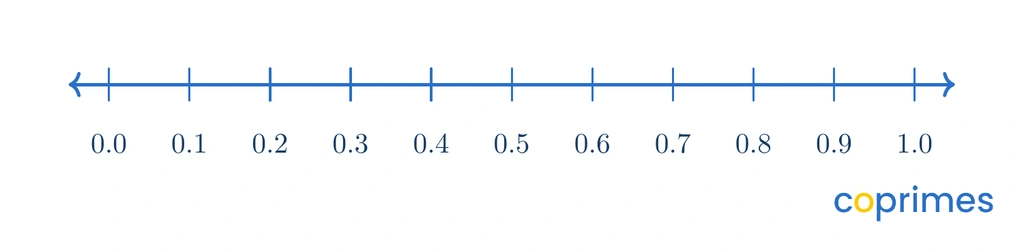
A decimal number line is a visual model that represents the position and value of decimal numbers. It shows the continuous distance between integers by dividing the space into smaller, equal intervals.
Placing decimals on a number line follows the same logic as plotting fractions on a number line, but the divisions always use base-ten grouping. Creating a decimal line plot allows us to see exactly how close a decimal is to the next whole number.
Read the scale first
Before locating decimal values, always determine the scale of the number line. The scale tells you the value of each equal space between the marks.
Always determine the value of a single space before placing a point.
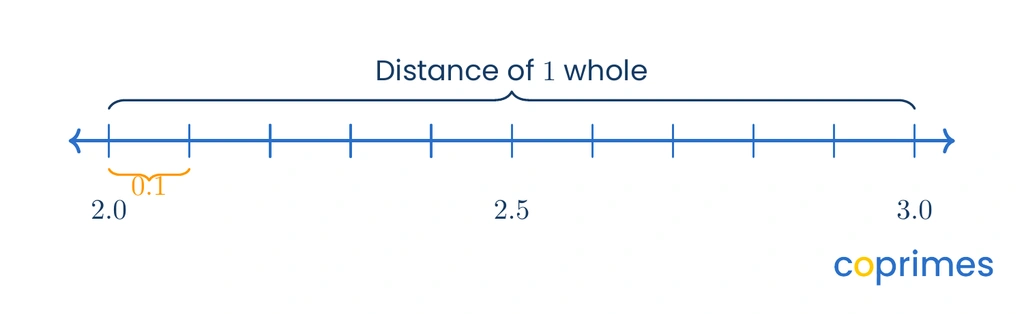
To find the scale, find the difference between two labeled numbers and divide that difference by the number of equal spaces between them. If the space between and is divided into ten equal parts, each part represents one tenth.
Locate tenths
Decimals with one digit after the decimal point represent tenths. To locate a tenth, focus on the decimal place value and the two whole numbers the decimal falls between.
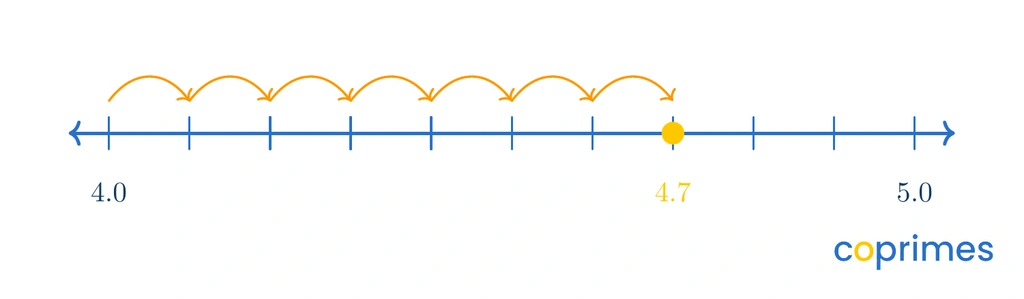
First, identify the whole number part. Then, start at that whole number and move to the right by the number of tenths indicated. For example, to plot , start at and count seven spaces to the right.
A learning plan shaped by your child, not the class
State-aligned Math plus our own Logic and English curriculum. An adaptive baseline test finds the gaps and fills them.
Locate hundredths
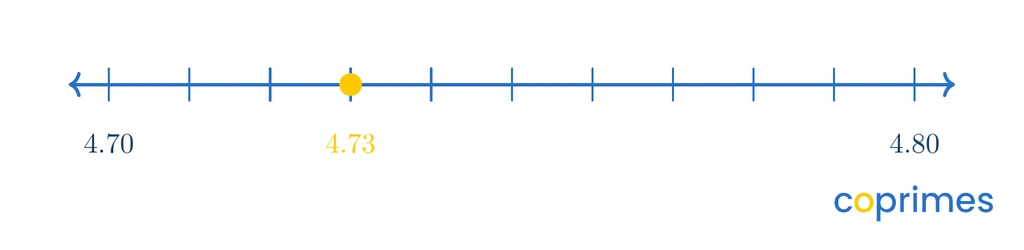
When a decimal has two digits after the point, it includes hundredths. These values require dividing a single tenth into ten smaller equal parts.
To plot , find the interval between and . Divide this tiny space into ten equal sections. Start at and count three small spaces to the right to reach .
Compare distance and value
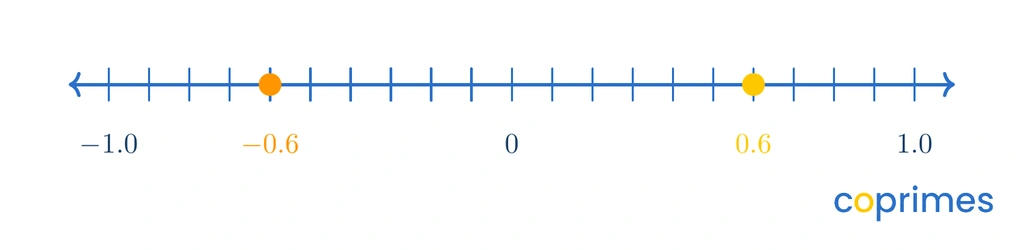
A number line makes comparing decimals clear by organizing them by distance and direction from zero. Values always increase as you move to the right and decrease as you move to the left.
This visual arrangement is useful for ordering decimals, especially negative ones. A negative decimal like is located by starting at zero and moving six tenths to the left.
Visual worked examples
These examples show how to read scales and plot both positive and negative decimals step by step.
Example 1: Plotting a negative decimal
Question: Plot on a number line.
Method:
- Identify the integers the decimal lies between.
- Divide the space into ten equal intervals.
- Start at and move four tenths to the left.
Answer: The point is located exactly four marks to the left of .
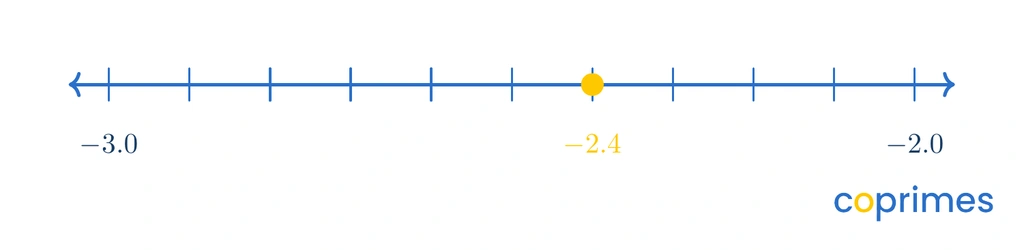
Check: Count right from by four tenths to verify it returns to .
Example 2: Identifying an unknown decimal
Question: A point is placed on the third mark past on a number line where marks represent hundredths. What is the value of the decimal?
Method:
- Identify the starting value.
- Determine the value of each mark on the scale.
- Add the value of three marks to the starting value.
Answer: The value is .
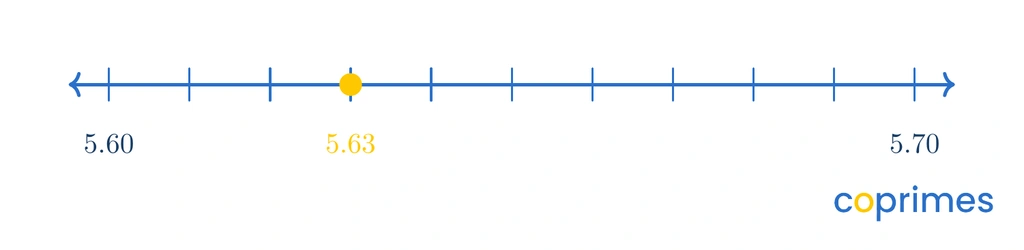
Check: Add the hundredths mathematically: .

Common mistakes
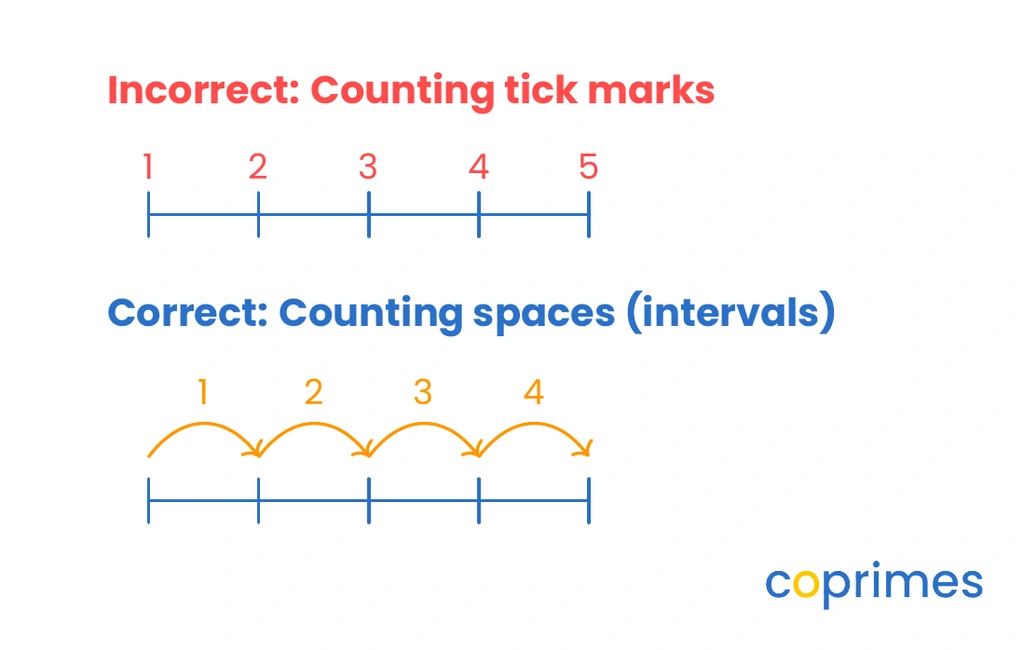
A frequent error is counting the tick marks instead of the spaces between them. Always count the intervals, because ten intervals require eleven tick marks including the start and end points.
Another mistake is assuming every interval on every number line represents one tenth. Always verify the scale before plotting, as an interval might represent one hundredth, one half, or another value entirely depending on the distance and the number of divisions.
Frequently asked questions
How do you find the midpoint between two decimals on a number line?
Add the two decimal values together and divide by two. Visually, you can count the total number of equal spaces between the two points and step exactly half that distance from either starting point.
Can a single number line show both tenths and hundredths?
Yes. A number line can display tenths as the primary labeled marks and have ten smaller subdivisions between each tenth to represent hundredths.
Practice questions
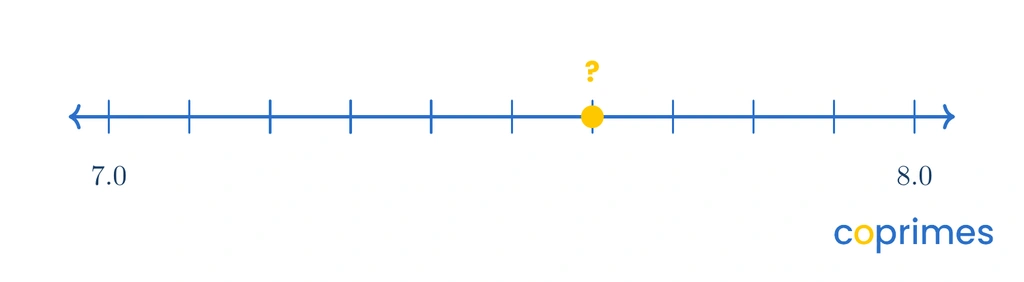
Which decimal is represented by the plotted point?
Which two whole numbers does the decimal lie between on a number line?
and
and
and
and
and
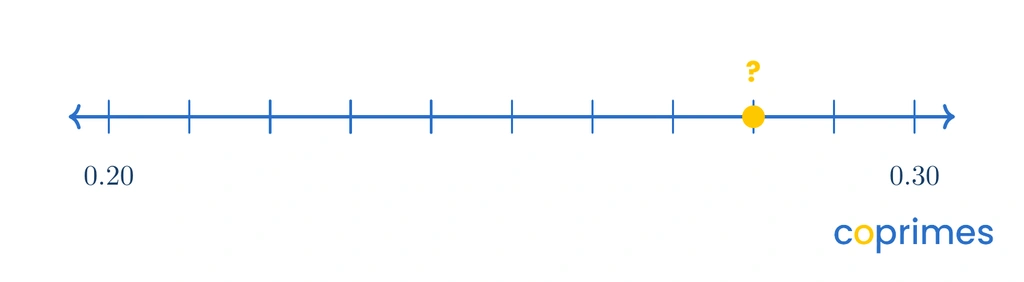
What is the value of the plotted point on this number line?
A number line segment spanning between and has exactly equal spaces. What is the value of the first mark after ?
Point A is located at and Point B is located at . What decimal is exactly halfway between Point A and Point B?