
Multiplication Arrays: Definition, Method and Examples
A multiplication array arranges equal objects in rows and columns so the total can be found by multiplying the number of rows by the number in each row.
These regular, uniform grid structures provide a clear visual model for mathematical operations, making it easy to see how equal groups combine to form a product.
What is a multiplication array?
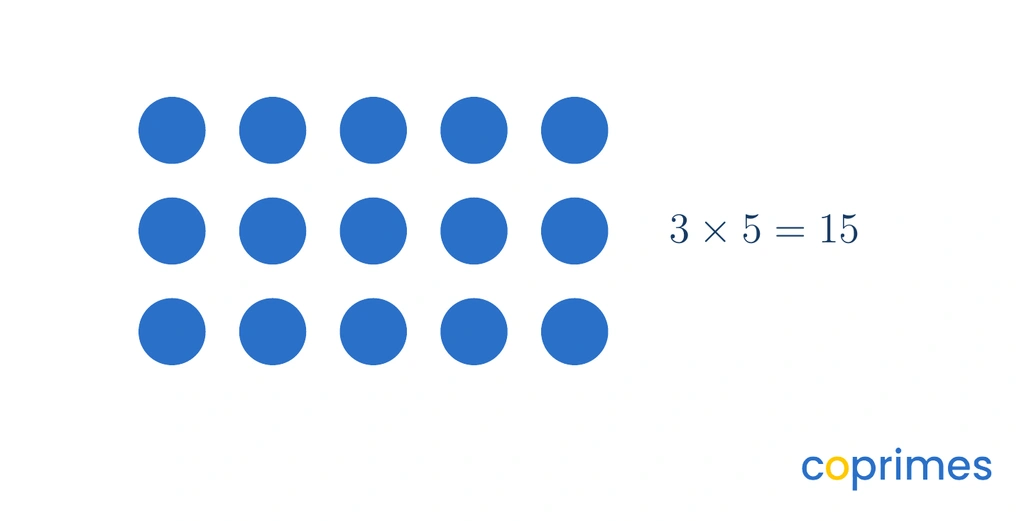
A multiplication array is a rectangular arrangement of items, such as objects, numbers, or symbols, organized into equal lines.
Because the structure is perfectly regular, it allows you to calculate the total number of items using multiplication instead of counting them one by one.
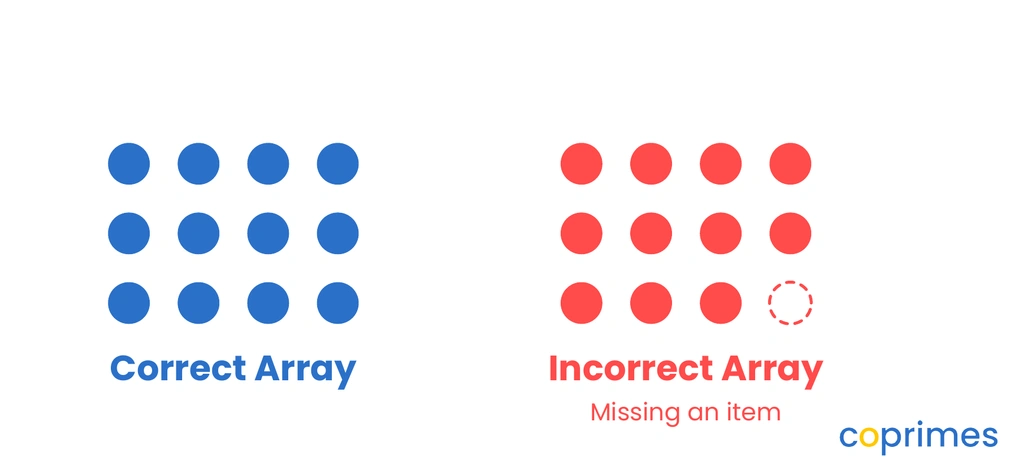
Every array must have a uniform structure with no gaps or missing items.
Rows, columns and total
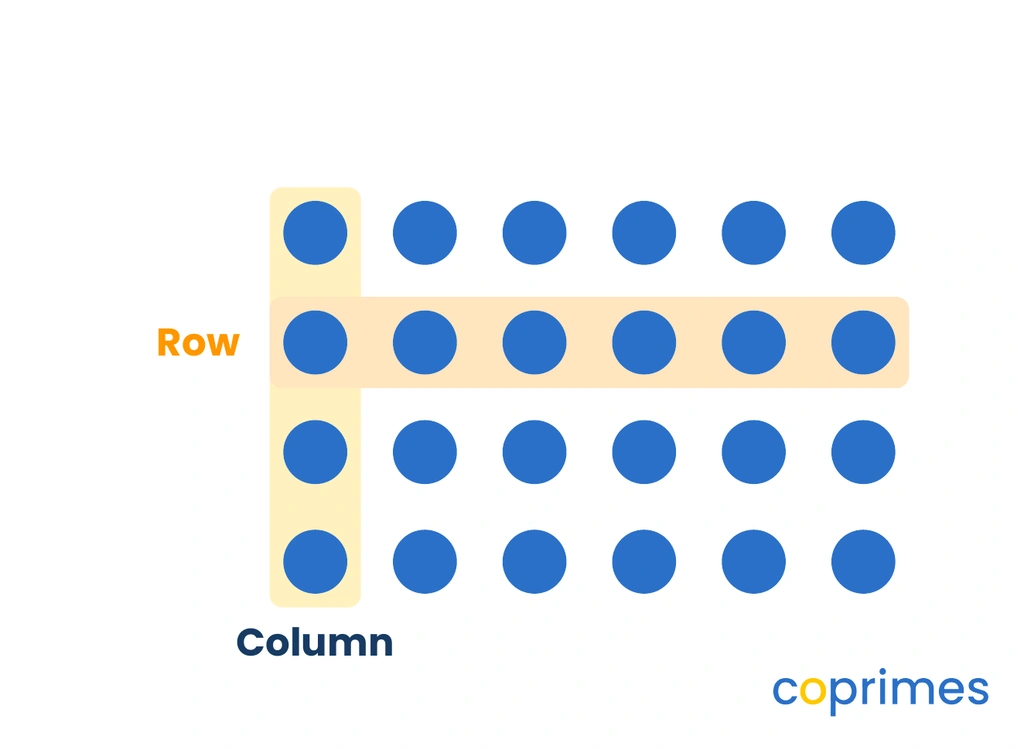
Every multiplication array is built using rows and columns.
Rows run horizontally from left to right. Columns run vertically from top to bottom.
The relationship between these parts replaces the need for basic repeated addition and equal groups. When you multiply the number of rows by the number of columns, the result is the total number of items in the array.
Write equations from arrays
To write a mathematical equation from an array, count the number of rows and the number of items in each row.
The first factor in the equation represents the rows, and the second factor represents the columns. The product is the total.
For an array with rows and columns, the multiplication sentence is .
A learning plan shaped by your child, not the class
State-aligned Math plus our own Logic and English curriculum. An adaptive baseline test finds the gaps and fills them.
Turn-around facts
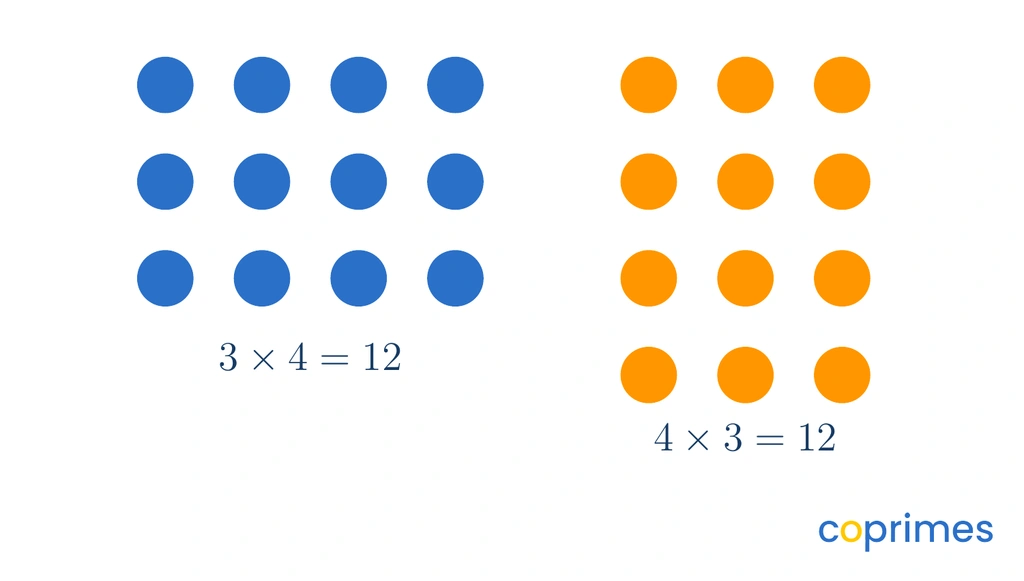
Turn-around facts show that you can multiply numbers in any order and still get the same total.
If you rotate an array by ninety degrees, the rows become columns and the columns become rows, but the total number of items does not change. This concept is formally known as the commutative property of multiplication.
Arrays and factor pairs
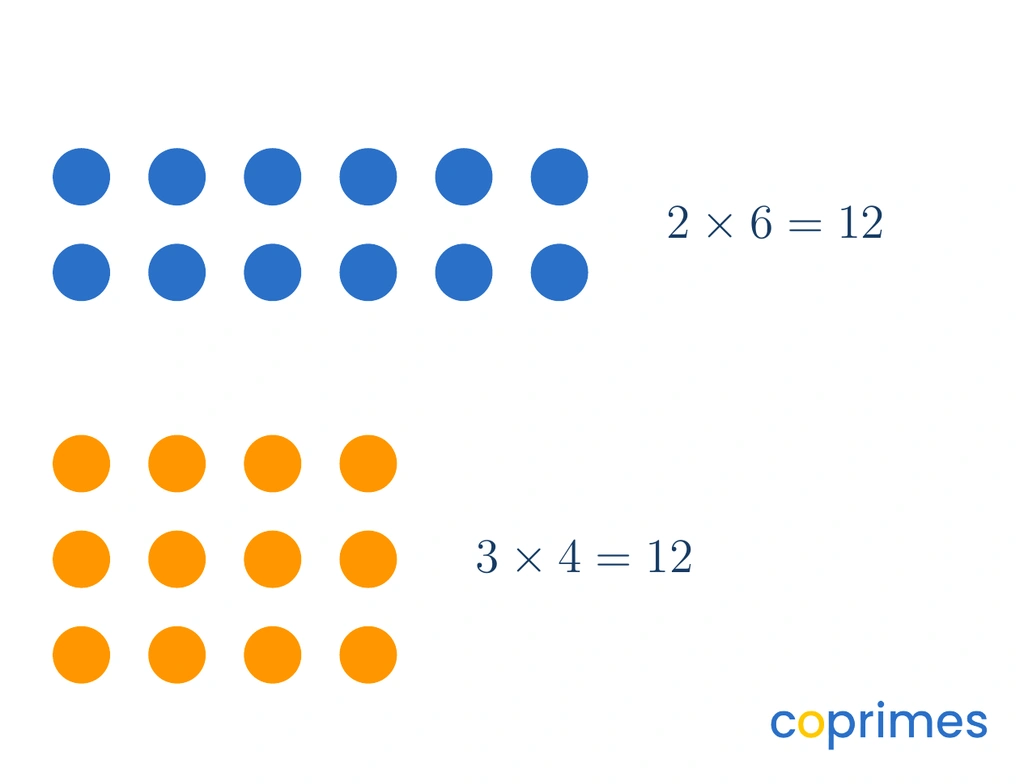
Different arrays can sometimes share the exact same total number of items.
When you build all possible rectangular arrays for a specific number, you discover all the factors of that number. For instance, items can form a array, a array, or a array.
Understanding how to arrange these dimensions prepares you to use the area model for multiplication with larger numbers.
Worked examples
Review these examples to see how to build and interpret multiplication arrays.
Example 1: Identifying the equation
Question: An array has horizontal lines with dots in each line. What multiplication equation represents this structure?
Method:
- Identify the number of rows, which is .
- Identify the number of columns, which is .
- Multiply the rows by the columns.
Answer: .
Check: Add seven times: .
Example 2: Applying a turn-around fact
Question: A garden is arranged in an array of rows and columns. What is the turn-around fact for this arrangement?
Method:
- Write the original multiplication equation: .
- Swap the order of the factors to represent the rotated array.
Answer: The turn-around fact is .
Check: Verify that both calculations result in .
Example 3: Building arrays for a given total
Question: How many different arrays can you build using exactly identical blocks?
Method:
- Find all pairs of whole numbers that multiply to .
- The pairs are and , and and .
- List the corresponding arrays: , , and .
Answer: You can build different arrays.
Check: Each arrangement contains exactly blocks and forms a complete rectangle.

Common mistakes
One of the most frequent errors is confusing the direction of rows and columns. Always remember that rows go across, and columns go up and down.
Another common mistake is creating an incomplete shape. A true multiplication array must form a complete rectangle. If there is an empty space or a missing item at the end of a row, you cannot use multiplication to find the total.
Frequently asked questions
Can an array be a single line?
Yes. An arrangement with row and columns is a array. It is still a rectangle, so it is a perfectly valid array.
Does an array have to be a rectangle?
Yes, all multiplication arrays must form a rectangle because they must have equal rows and equal columns. Remember that a square is a special type of rectangle, so a square grid is also a valid array.
Practice questions

Which multiplication equation correctly describes the array shown above?
What is the turn-around fact for the multiplication equation ?
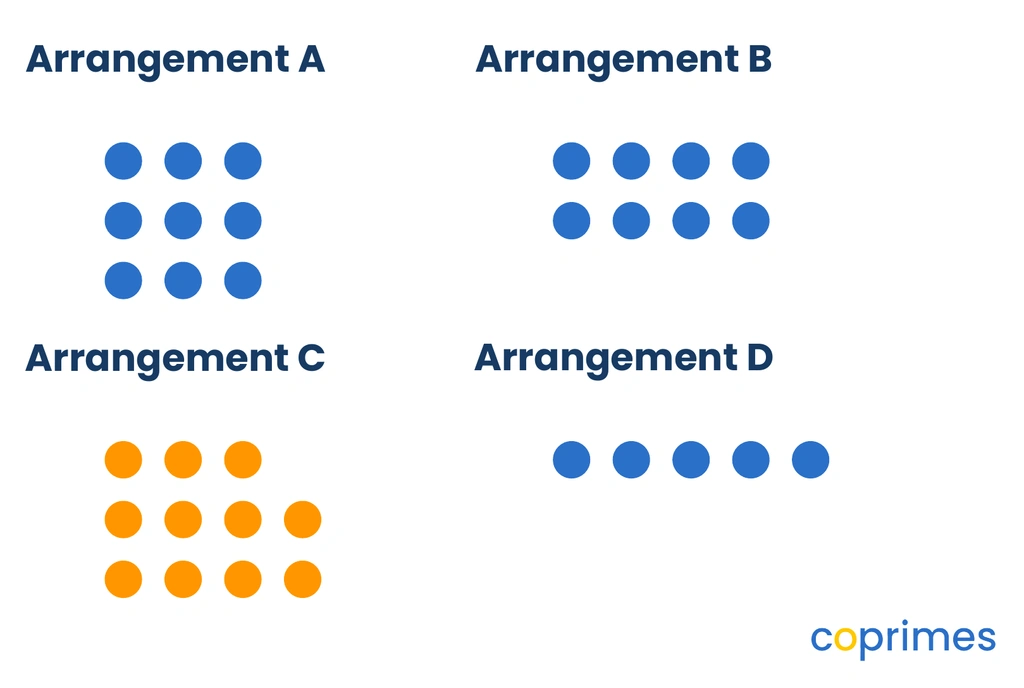
Which of the labeled arrangements is NOT a valid multiplication array?
Arrangement A
Arrangement B
Arrangement C
Arrangement D
Arrangement C
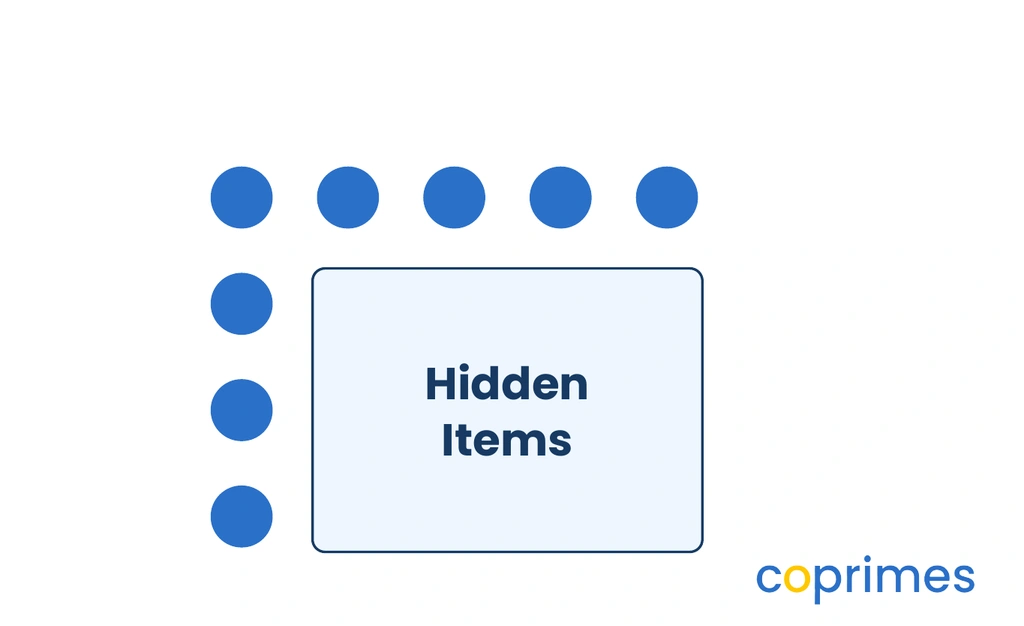
An array is partially hidden. The visible parts show that it has rows and columns. What is the total number of items in the full array?
How many different rectangular arrays can be built using exactly identical items?
array
arrays
arrays
arrays
arrays