
Multiplication: Definition, Method, and Examples
Multiplication is an operation that finds the total in equal groups and can represent repeated addition of the same amount. It provides a faster way to count items when they are arranged in sets of the exact same size, forming one of the most essential skills in early mathematics.
What is multiplication?
Multiplication is one of the four primary arithmetic operations, alongside addition, subtraction, and division. Instead of adding items one by one, multiplication allows you to calculate the combined size of multiple identical groups instantly.
When you multiply, you scale a number by a specific amount. Because the operation follows predictable patterns, learning multiplication facts and times tables allows you to solve complex math problems quickly without counting from zero every time.
Parts of a multiplication equation
Every multiplication equation consists of specific parts. The numbers you are multiplying are called factors. The final answer obtained after multiplying is called the product.
In formal mathematics, the two factors have distinct names: the multiplicand, multiplier and product make up the complete relationship. The multiplicand is the number of items in each group, while the multiplier tells you how many equal groups there are.

Equal groups and repeated addition
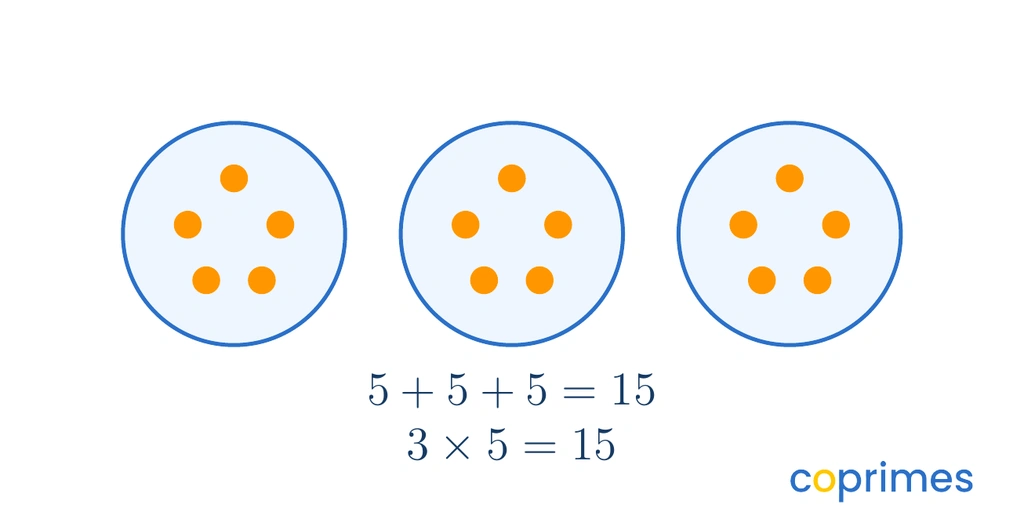
Multiplication is closely linked to repeated addition and equal groups. When you add the exact same number multiple times in a row, you are performing a multiplication.
For example, if you have baskets and each basket holds apples, you can add them: . Writing this as communicates the same total much faster and takes up less space.
A learning plan shaped by your child, not the class
State-aligned Math plus our own Logic and English curriculum. An adaptive baseline test finds the gaps and fills them.
Multiplication symbols
The most familiar symbol for multiplication is the cross (). However, as you study more advanced mathematics, you will encounter other ways to write a multiplication equation.
- Cross: . This is the standard symbol used in arithmetic.
- Dot: . This is common in algebra to avoid confusing the cross symbol with the variable letter .
- Asterisk: . This symbol is frequently used in computer programming and spreadsheets.
- Parentheses: or . Placing a number directly next to parentheses automatically indicates multiplication.
Ways to represent multiplication
To solve a multiplication problem, it helps to represent the numbers visually. Different models are useful for different mathematical situations.
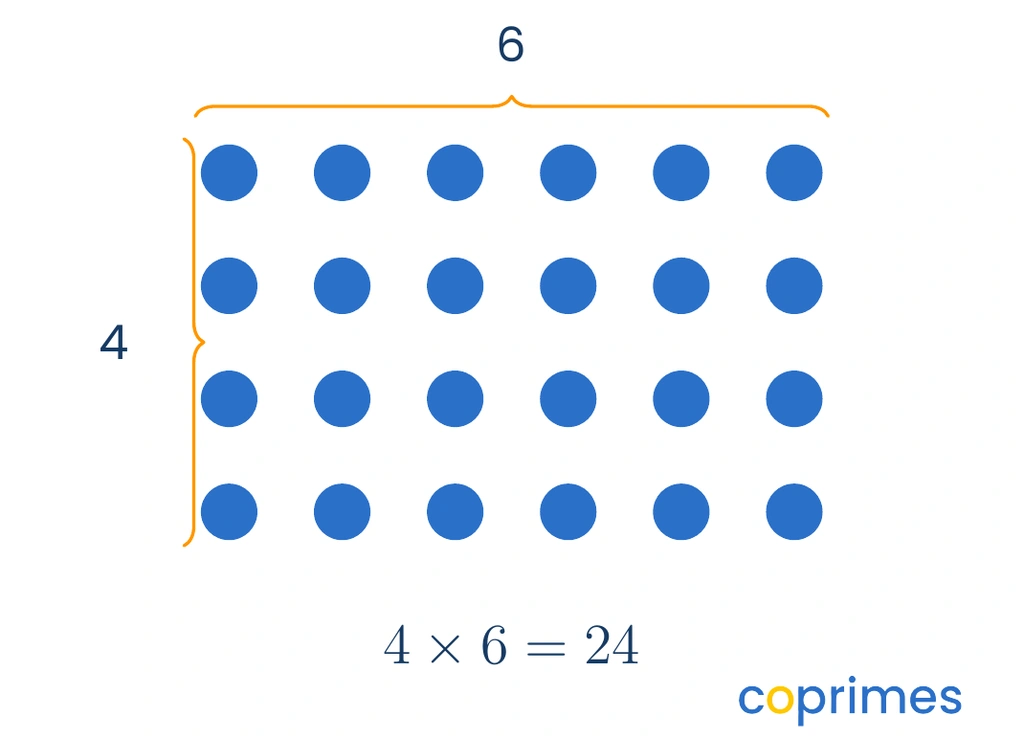
An array organizes items into straight rows and columns. The number of rows represents one factor, and the number of columns represents the other factor. Arrays make it easy to see how a large block can be broken down into smaller pieces.
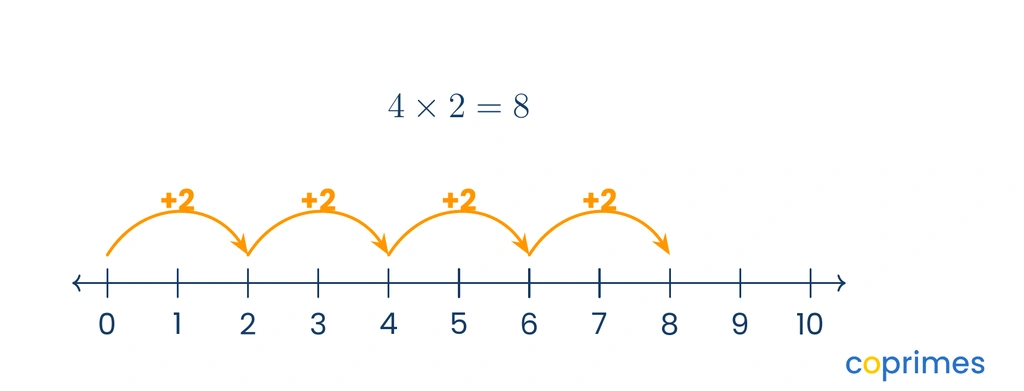
A number line shows multiplication as a series of equal forward jumps. Starting from zero, each jump represents one group, and the size of the jump represents the amount contained in that group.
When multiplying larger numbers, area models are very effective. An area model splits the factors based on their place value, breaking a difficult multiplication problem into smaller, manageable rectangles that are later added together.
Worked examples
Here are three examples of how to multiply using different strategies.
Example 1: Using equal groups
Question: A baker places muffins into each of boxes. Write a multiplication equation to find the total number of muffins.
Method:
- Identify the number of equal groups.
- Identify the number of items inside each group.
- Multiply the groups by the items to find the product.
Answer: . The baker has muffins in total.
Check: Add four times: .
Example 2: Multiplying larger numbers
Question: Multiply using an expanded method.
Method:
- Break the larger factor into tens and ones.
- Multiply each part by the single digit.
- Add the resulting parts together to find the final product.
Answer: First, . Next, . Adding the results gives .
Check: Add three times: , and .
Example 3: Multiplying by zero and one
Question: Find the products of and .
Method:
- Apply the identity property of one: any number multiplied by stays exactly the same.
- Apply the zero property: any number multiplied by becomes zero.
Answer: , and .
Check: Nine groups of one item equals nine. Nine groups of zero items equals zero.

Common mistakes
When first learning multiplication, it is easy to confuse the operation with addition. For instance, a learner might mistakenly write instead of . Always remember that multiplication requires counting multiple groups, not simply adding the two numbers together.
Another frequent error is misunderstanding the role of zero. Adding zero leaves a number unchanged, but multiplying by zero always results in zero. For example, is , not .
When using traditional multiplication methods on paper, a common mistake is misaligning the columns. Always keep your ones, tens, and hundreds aligned vertically to avoid adding partial numbers from the wrong columns.
Frequently asked questions
Does the order of the numbers matter in multiplication?
No, changing the order of the factors does not change the final product. This is called the commutative property. For example, and . If you visualize an array, the shape simply rotates, but the total number of items stays exactly the same.
What is the purpose of multiplication?
Multiplication allows you to count items and calculate totals much faster than repeated addition. It is an essential tool for measuring areas, finding total costs, and scaling recipes or plans in real life.
What happens if I multiply a negative number?
When you multiply a positive number by a negative number, the result is always negative. If you multiply two negative numbers together, the result becomes positive. These rules apply to all forms of multiplication.
Practice questions
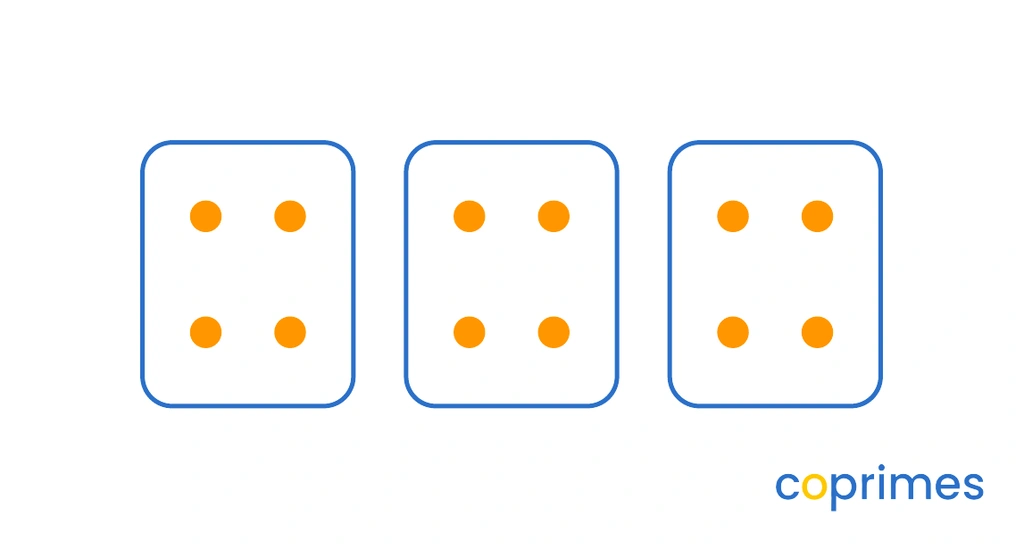
Which multiplication equation exactly matches the equal groups shown in the visual?
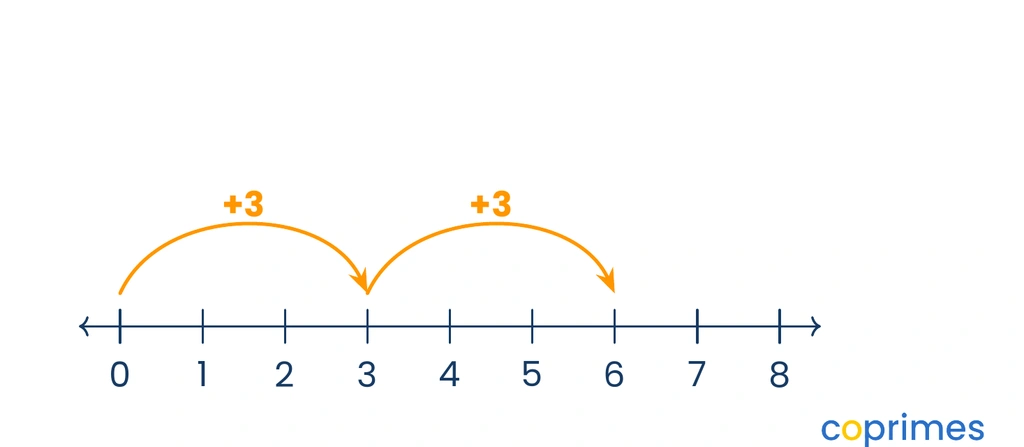
What multiplication problem does this number line show?

How many squares are in the array?
A classroom has rows of desks. Each row contains exactly desks. How many desks are there in total?
What does the commutative property of multiplication state?
Changing the order of the factors does not change the product.
Multiplying any number by zero always results in zero.
Grouping factors differently does not change the product.
Multiplying any number by one leaves the number unchanged.
Changing the order of the factors does not change the product.