
Checking Reasonableness of Answers
Checking reasonableness means deciding whether an answer makes mathematical and contextual sense by using an estimate, an inverse operation, bounds, units, or known facts. Before accepting a calculated result, verifying its reasonableness ensures that no outrageous errors occurred during the process.
What is reasonableness in math?
In mathematics, an answer is reasonable if it is logical and falls within a predictable range. Instead of assuming every calculation is automatically correct, checking reasonableness helps identify if a solution is wildly incorrect due to a simple arithmetic mistake or a misplaced decimal point.
Checking reasonableness prevents small calculation mistakes from becoming outrageous errors.
You can evaluate reasonableness using a combination of estimation strategies, mathematical proofs, and real-world logic.
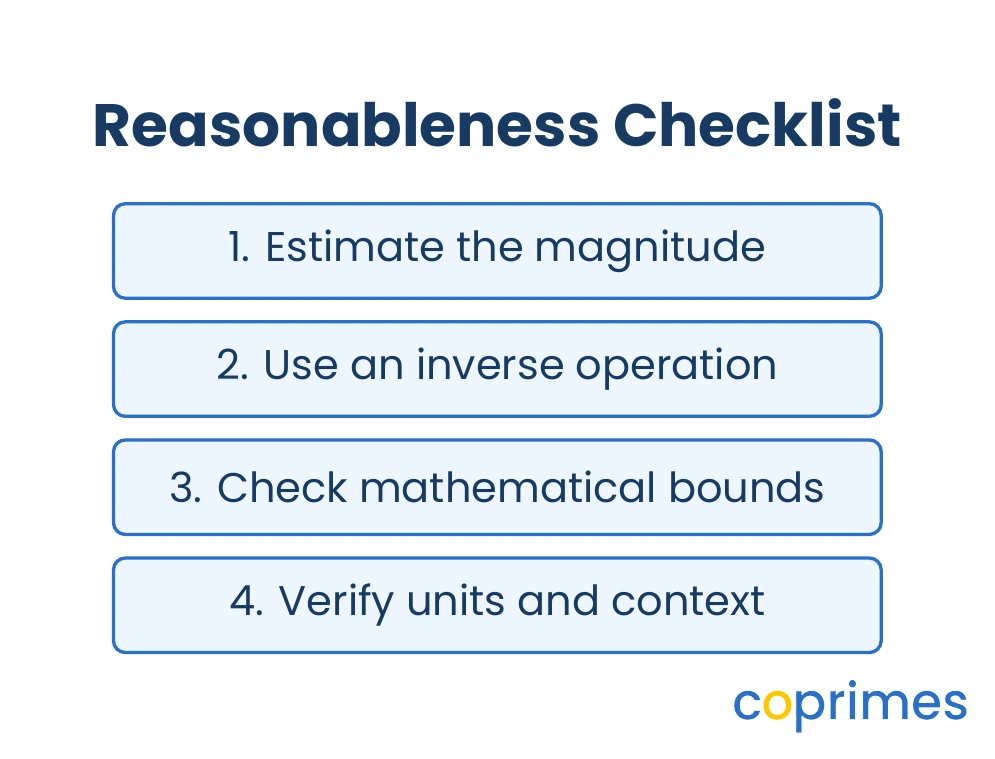
Estimate before or after calculating
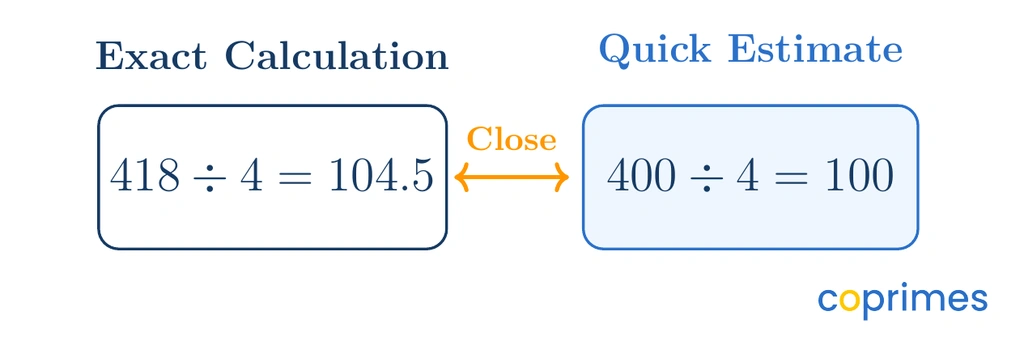
Before computing, you can use estimating calculations to establish a target range for your final answer. By applying estimation strategies like rounding numbers to a convenient place value, you can quickly find an approximate answer.
For addition, you might estimate by rounding to . This estimate immediately shows that an exact sum of is highly reasonable.
For multiplication, estimating as confirms that an exact product of makes sense. If your calculation resulted in , the estimate instantly reveals that the answer is unreasonable.
Use inverse operations
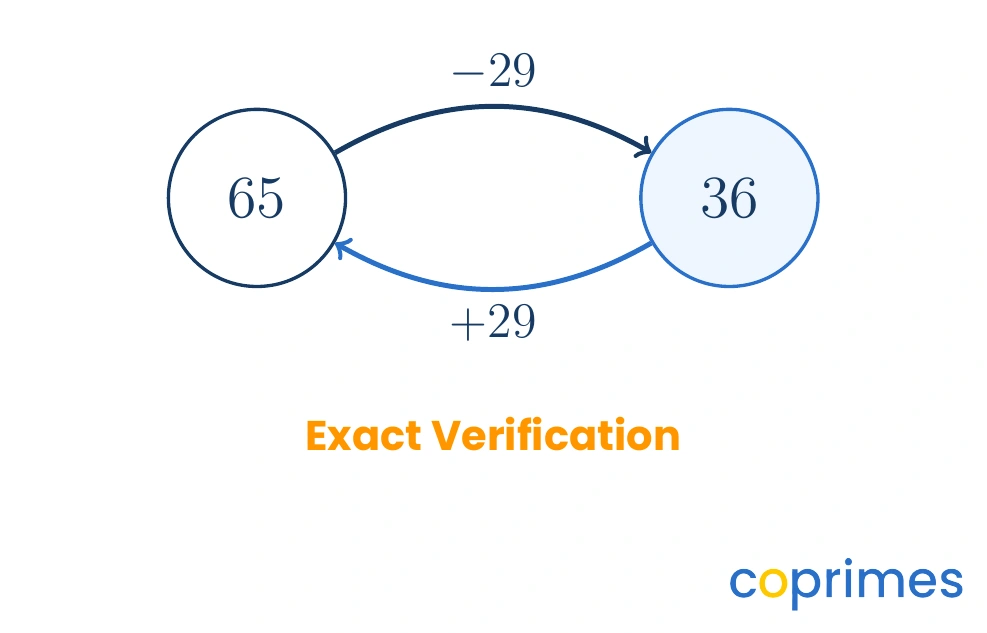
While estimation provides an approximate check, exploiting the inverse relationship between addition and subtraction allows you to prove your exact calculation is flawless.
An inverse operation reverses a calculation to prove the exact answer is correct.
For subtraction, you can verify by adding the difference back to the subtrahend: . Because this returns you to your starting number, the subtraction is perfectly correct.
Similarly, you can apply the division algorithm and checking method to verify division. If you calculate , you can check its reasonableness by evaluating . Since the product is exactly , the quotient is correct.

Use bounds and known facts
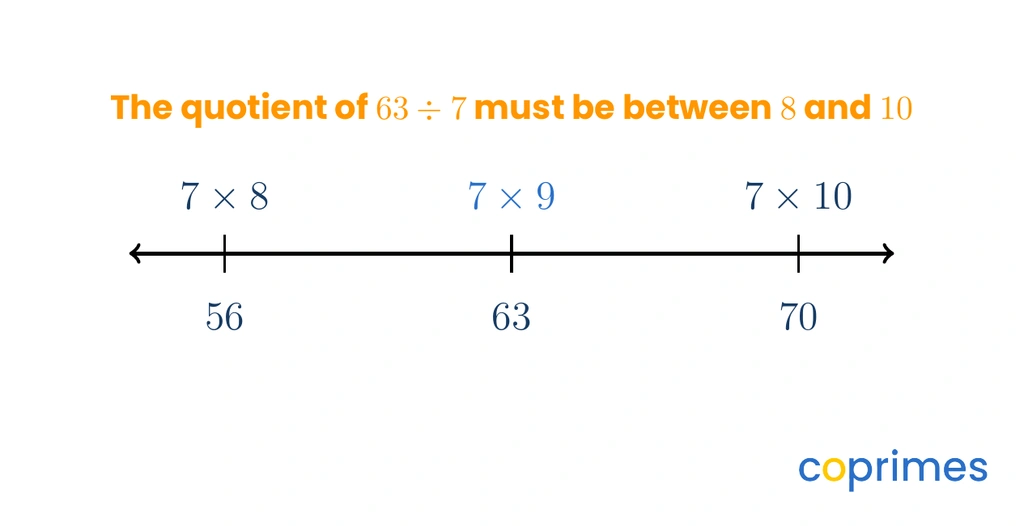
Another method for checking reasonableness is bounding the answer between two known mathematical facts. This guarantees the correct answer must lie within a specific range.
For example, to check the reasonableness of , you might use your known multiplication facts. You know that and .
Since is between and , the quotient must logically fall between and . This known boundary confirms that a calculated answer of makes perfect sense.
Check units and context
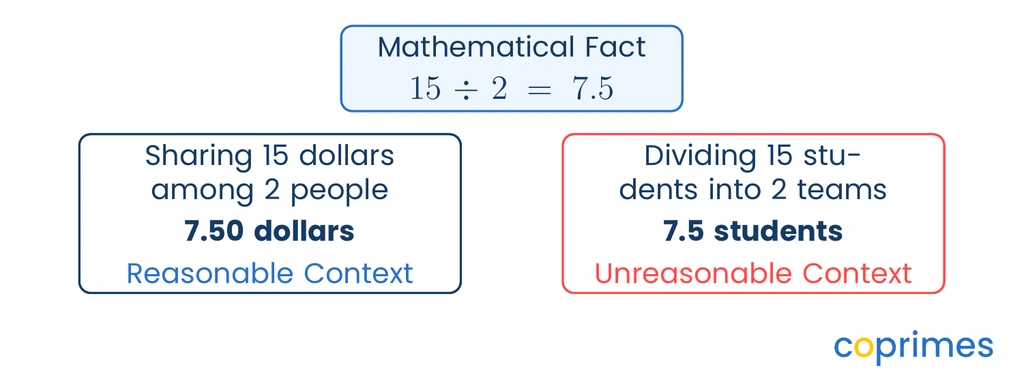
A mathematically correct calculation can still be completely unreasonable if it ignores the real-world context. Always verify that the units and the nature of the answer make sense for the problem being solved.
For example, if a calculation suggests that a tour group needs buses to travel, the answer is contextually unreasonable because vehicles must be whole units. The context requires rounding up to buses.
Similarly, negative values might be mathematically correct when solving an abstract equation, but they are often impossible in real-world contexts like measuring distance, measuring area, or counting the number of objects.
Worked examples
Review these examples to see how estimation, inverse operations, and context checks are applied to confirm reasonableness.
Example 1: Using estimation for a calculation check
Question: A school buys sets of markers. Each set contains markers. Is an exact answer of a reasonable total number of markers?
Method:
- Round both values to nearby numbers that are easy to multiply.
- Multiply the rounded values to establish a quick estimate.
- Compare the exact calculation to the estimate.
Answer: Yes, is reasonable.
Check: Rounding to and to provides a quick estimate of . Another valid estimate rounds only the , leaving . Because is close to these estimates and in the correct magnitude, it is mathematically reasonable.
Example 2: Verifying an exact answer using an inverse operation
Question: Calculate and prove the exact answer is correct.
Method:
- Perform the subtraction to find the exact difference.
- Apply the inverse operation to verify the result exactly.
Answer: .
Check: The inverse operation of subtraction is addition. Add the calculated difference () back to the subtrahend (). The exact sum flawlessly matches the original starting number. This exact proof confirms the calculation is perfectly reasonable and correct.
Example 3: Checking units and distinguishing proofs
Question: A painter needs liters of blue paint. The paint costs dollars per liter. What is the total cost? Show an approximate check and an exact proof.
Method:
- Multiply the volume by the cost per liter.
- Use rounding for an approximate check to confirm the magnitude.
- Use division for an exact mathematical proof.
- Verify that the context and units make sense.
Answer: dollars.
Check: For the approximate check, round to and to . The estimate dollars shows that a total of dollars is highly reasonable. For the exact proof, use the inverse operation: calculate , which equals exactly . Finally, verify the context: money and volume represent continuous amounts, so a precise decimal answer is perfectly reasonable.
A learning plan shaped by your child, not the class
State-aligned Math plus our own Logic and English curriculum. An adaptive baseline test finds the gaps and fills them.
Common mistakes
- Over-rounding: A frequent mistake is rounding both numbers heavily in the same direction before checking. This creates an estimate that is too far from the exact answer, which can incorrectly make a perfectly valid exact answer look unreasonable.
- Ignoring context: Calculating that a family needs tents for a camping trip might be computationally correct, but accepting a decimal answer for discrete physical objects is unreasonable. You must apply common sense and round up to tents.
- Order of operations errors: When verifying complex equations, forgetting the order of operations during your checking phase can make a correct answer appear unreasonable. Always perform multiplication and division before addition and subtraction when re-evaluating your work.
Frequently asked questions
How do you check if the sum of two decimals or fractions is reasonable?
Round the values to the nearest whole number before adding. For example, rounds to , which confirms that the exact answer of is reasonable. If you are adding and , recognize that both fractions are slightly less than half. Therefore, their exact sum must be slightly less than one whole.
What are outrageous solutions?
An outrageous solution is a mathematically impossible or wildly incorrect answer. If an estimation predicts a reasonable value near and the full calculation yields , the calculated solution is outrageous, typically due to a missed decimal point.
Should I check reasonableness before or after solving?
You can and should do both. Estimating before calculating gives you a safe target magnitude. Checking after your calculation using inverse operations confirms the exact mathematical result.
Practice questions
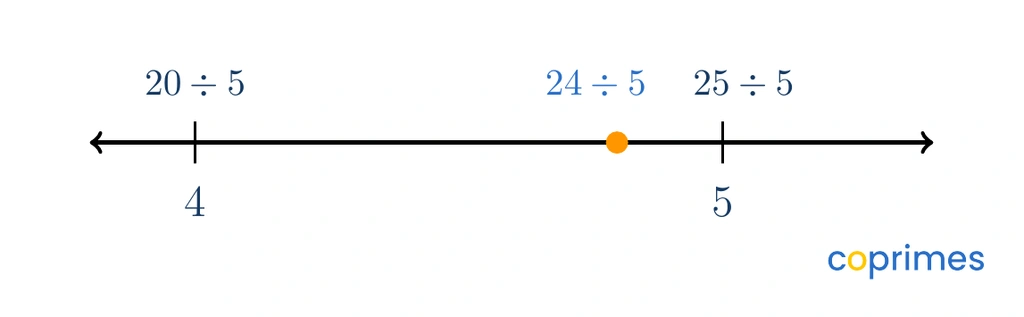
Look at the bounding number line. Based on the known facts, what is the most reasonable whole-number estimate for the exact value of ?
Which verification method uses an exact inverse operation to prove that is correct?
Add and to see if the exact sum returns to .
Subtract from to see if the difference is .
Round to and subtract exactly .
Multiply by to check the magnitude.
Add and to see if the exact sum returns to .
Which of the following calculated answers might be mathematically accurate but is unreasonable because of its real-world context?
Earning dollars per hour working part-time.
Needing passenger vans to transport a sports team.
Running a short sprint in exactly seconds.
Cutting a wooden board to a length of meters.
Needing passenger vans to transport a sports team.
A student calculates . Which estimation strategy best confirms this exact answer is reasonable?
Rounding to , which is very close to .
Rounding to , which confirms the place value.
Subtracting from to check the difference.
Dividing by to find the number of tens.
Rounding to , which is very close to .
If you know the mathematical bounds and , which of the following is a reasonable exact quotient for ?