
Division Word Problems: Definition, Method and Examples
A division word problem asks learners to share equally, find the number of groups, find a group size or interpret a remainder in context. Solving these problems connects the abstract mathematical process of division to real-life situations, such as distributing classroom supplies or packaging items for shipping.
What is a division word problem?
A division word problem is a mathematical story that requires breaking a total amount into equal parts. It tests your ability to read a real-world scenario, identify the total quantity, and determine how that quantity should be divided.
Every division word problem contains three core elements: the dividend (the total amount), the divisor (the number of groups or the size of each group), and the quotient (the mathematical answer). Because division is the inverse operation of multiplication, these problems often require using multiplication facts to find or check the answer.
Sharing and grouping structures
When solving these problems, the context usually falls into one of two structures. It is helpful to understand both to distinguish between division as sharing and grouping.
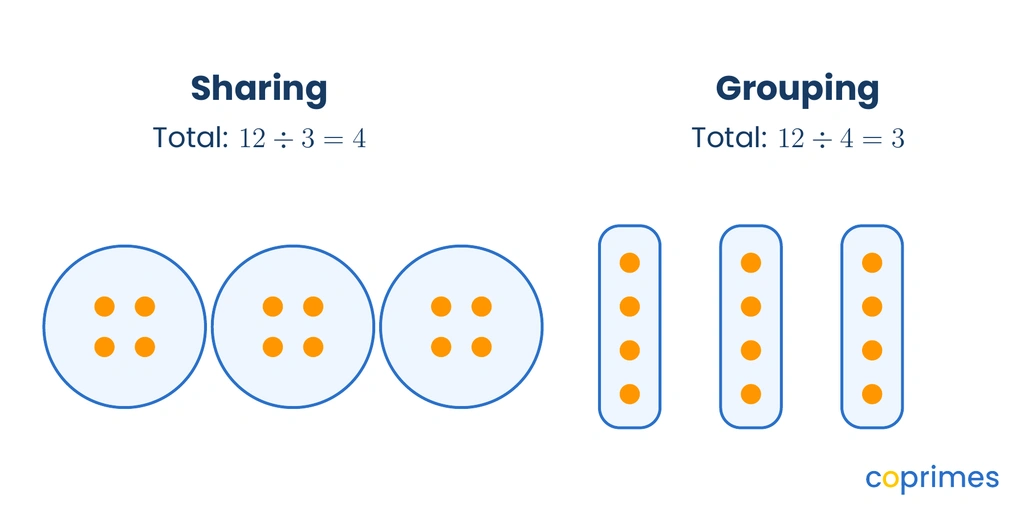
Sharing (Partitive Division)
In a sharing problem, you know the total and the number of groups. You divide to find the size of each group.
For example, sharing cookies equally among friends means each friend receives cookies.
Grouping (Quotative Division)
In a grouping problem, you know the total and the size of each group. You divide to find the number of groups.
For example, packing cookies into bags of means you will fill bags.
How to identify division
To determine if a word problem requires division, look for scenarios that involve equal distribution. Certain keywords and phrases act as structural clues.
Common phrases that indicate division include:
- "Share equally among"
- "Split into equal parts"
- "How many in each group"
- "Packed into boxes of"
- "Fraction of the total"
A learning plan shaped by your child, not the class
State-aligned Math plus our own Logic and English curriculum. An adaptive baseline test finds the gaps and fills them.
Draw a model and write an equation
Using a visual model makes it easier to organize the information in a word problem. A bar model represents the total amount as a long rectangle split into equal sections.
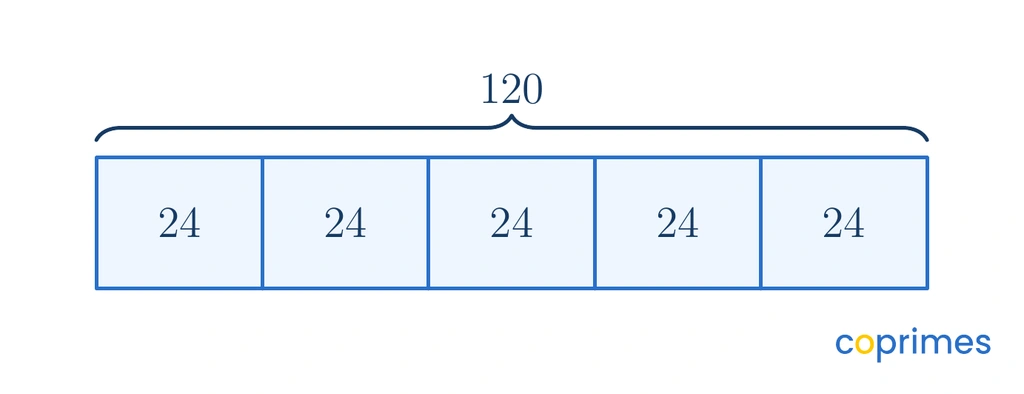
To solve the problem mathematically, translate the model into an equation. First, identify the to
The equation shows that a total of split into equal groups results in per group.
Interpret the remainder
When solving division with remainders, the leftover amount must be interpreted based on the story. The mathematical remainder is not always the final answer to the word problem.
The context of the problem determines whether you round up, round down, or divide the remainder exactly.
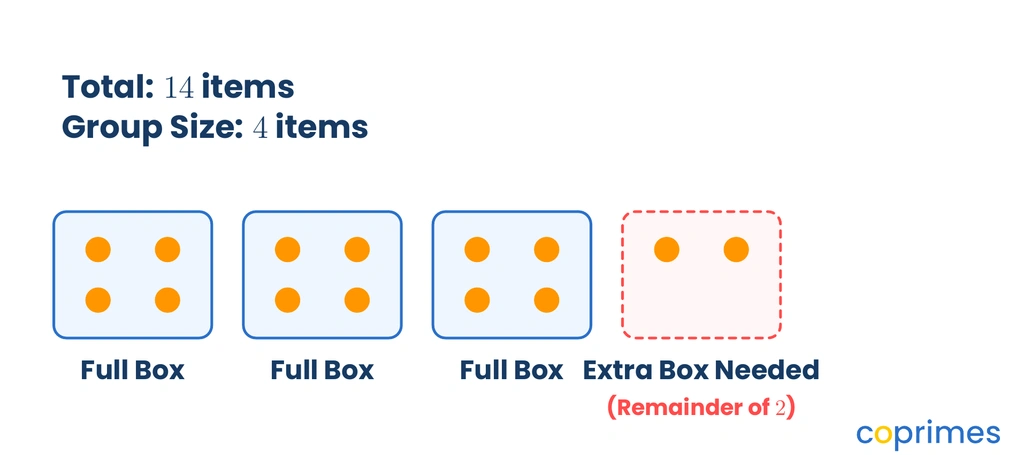
You must choose one of three common ways to handle the remainder:
- Round up: If you are packing objects into boxes or seating people in vehicles, any leftover items require one additional box or vehicle.
- Round down: If you are buying items with a fixed budget, you ignore the remainder because you cannot afford an additional complete item.
- Divide exactly: If you are sharing continuous items like pizzas or lengths of ribbon, the remainder can be divided into a decimal or a fraction.
Worked examples
These examples demonstrate how to identify the structure, calculate the quotient, and interpret the result.
Example 1: Sharing objects equally
Question: A farmer harvests apples and packs them equally into crates. How many apples are in each crate?
Method:
- Identify the total number of apples, which is .
- Identify the number of groups, which is crates.
- Divide the total by the number of groups: .
Answer: There are apples in each crate.
Check: Multiply the number of apples in one crate by the number of crates: .
Example 2: Interpreting a remainder
Question: A school is taking students on a field trip. Each minibus can hold students. How many minibuses must the school book?
Method:
- Identify the total number of students, which is .
- Identify the capacity of each minibus, which is students.
- Divide the total by the capacity to find the number of full minibuses: with a remainder of .
- Interpret the remainder. The remaining students still need transport, so one extra minibus is required.
Answer: The school must book minibuses.
Check: Multiply full buses by students to get . Add the remaining students to confirm the total of .
Example 3: Buying items with a budget
Question: A teacher has dollars to spend on notebooks. Each notebook costs dollars. How many complete notebooks can the teacher buy?
Method:
- Identify the total budget, which is dollars.
- Identify the cost of one notebook, which is dollars.
- Divide the budget by the cost per item: with a remainder of .
- Interpret the remainder. The teacher cannot buy a fraction of a notebook, so round down to the nearest whole number.
Answer: The teacher can buy notebooks.
Check: Multiply notebooks by dollars to get dollars, which leaves exactly dollars unspent.

Common mistakes
When translating a story into an equation, avoid these frequent errors.
- Dividing in the wrong order: Placing the divisor before the dividend. For example, writing instead of . Division is not commutative, so the order matters.
- Ignoring the context of the remainder: Writing the mathematical remainder as the final answer without applying it to the story. Claiming a school needs remainder buses is incorrect because buses must be whole objects.
- Misinterpreting keywords: Assuming words like "share" always mean division. You must verify that the total amount is known before deciding to divide.
Frequently asked questions
How do I know whether to multiply or divide?
Multiplication requires you to find a total when you know the number of groups and the size of each group. Division requires you to find the number of groups or the size of each group when the total is already known.
Can a division word problem have multiple steps?
Yes. Many real-world problems require addition or subtraction before you can divide. Mastering basic division stories prepares you for two-step multiplication and division word problems.
How do I divide an amount of money evenly?
When sharing money equally, a remainder can be converted into smaller units or written as a decimal. For example, dollars shared between people results in dollars and cents each, written as dollars.
Practice questions
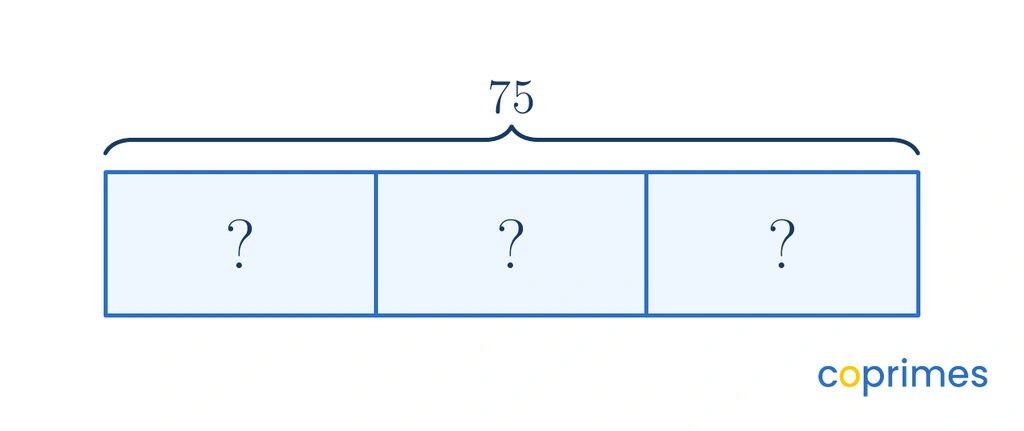
Which division word problem matches the model shown?
apples are shared equally into baskets.
apples are shared equally into baskets.
apples are added to a basket of .
apples are removed from baskets.
apples are shared equally into baskets.
A baker prepares muffins and packages them in boxes. Each box holds exactly muffins.
How many boxes does the baker need?
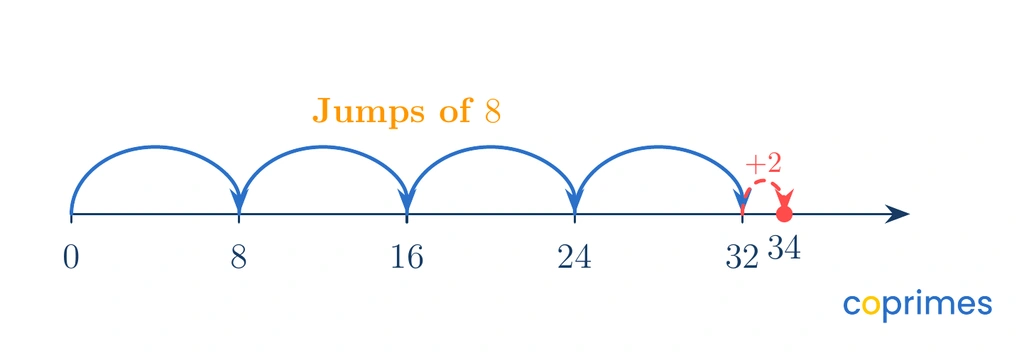
The number line models packing cups into boxes of .
How many cups are left over?
A ribbon is meters long. It is cut into sections that are exactly meters long.
How many complete sections can be cut?
with a remainder of
A school raises dollars. They buy books that cost dollars each.
How much money will be left over after buying as many books as possible?
dollar
dollars
dollars
dollars
dollars