
How to Solve Multi-Step Word Problems
A multi-step word problem needs more than one connected calculation and often combines operations, representations, or units before the final answer can be found and checked. Mastering these problems requires identifying the known information, determining the hidden intermediate steps, and selecting the correct mathematical operations to reach a logical conclusion.
What are multi-step word problems?
A multi-step word problem is a mathematical challenge that requires two or more operations to find the final solution.
Unlike single-step questions, these problems provide multiple pieces of information and require intermediate calculations. Before solving the final question, you must first find hidden values. Understanding two-step word problems is a strong foundation for tackling these longer challenges.
Separate the question into parts
The first step in any complex word problem is breaking the text into smaller, manageable pieces.
Read the entire problem carefully to understand the context. Then, identify the given values and the final question. Listing out the knowns and unknowns helps prevent confusion. Applying structured problem-solving strategies in math ensures you do not miss any critical information hidden in the wording.
Represent the quantities
Visualizing the problem makes it much easier to decide which mathematical operations to use.
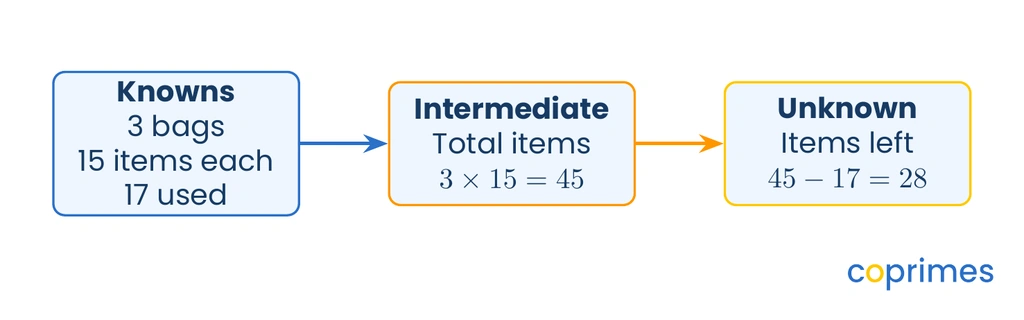
You can organize the given information into a problem map, a table, or an area model. Drawing strip diagrams and tape diagrams allows you to see how parts combine to make a whole or how quantities compare to one another.
A learning plan shaped by your child, not the class
State-aligned Math plus our own Logic and English curriculum. An adaptive baseline test finds the gaps and fills them.
Plan the operation sequence
Once you have represented the quantities, decide which operations are needed and in what order they should be performed.
Look for verbs and context clues that suggest addition, subtraction, multiplication, or division. You must also respect the order of operations if you write the entire sequence as a single mathematical expression.
Determine the intermediate step before calculating the final answer.
Track units and intermediate results
As you calculate each step, label your numbers with their correct units, such as meters, dollars, or kilograms.
Writing down the result of each step prevents you from losing your place or using the wrong number in the next calculation. An intermediate result acts as a stepping stone toward the final answer.
Check the final context
After calculating the final number, re-read the original question to ensure your answer makes sense.
Consider whether the magnitude of your answer fits the scenario. If a problem asks for the number of buses needed for students, a decimal answer must be rounded appropriately. This kind of logical verification is a key part of checking word problem answers.
Always verify that your numerical answer makes logical sense in the real-world scenario.

Worked examples
Review these examples to see how multi-step methods apply to different scenarios.
Example 1: Identifying required quantities
Question: A school needs notebooks. They already have notebooks in the storage room. If notebooks are sold in packs of , how many packs do they need to buy?
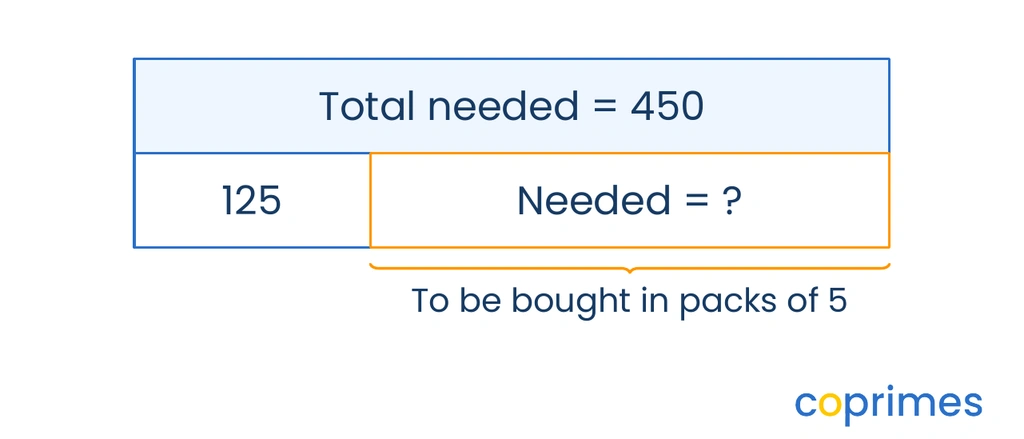
Method:
- Subtract the notebooks already in storage from the total needed.
- Divide the remaining number of notebooks by the pack size.
Answer: Step 1: notebooks needed. Step 2: packs. The school needs to buy packs.
Check: notebooks. Adding the in storage gives notebooks. The answer is correct.
Example 2: Alternative valid solution paths
Question: A family drives a total of kilometers for a trip. On the first day, they drive kilometers. On the second day, they drive twice as far as they did on the first day. How many kilometers do they have left to drive?
Method:
- Calculate the distance driven on the second day.
- Find the total distance driven over both days, then subtract from the overall trip distance. Alternatively, subtract each day's distance one by one from the total.
Answer: Path 1: The second day distance is kilometers. The total driven is kilometers. The distance left is kilometers. Path 2 (Alternative): Subtract Day 1 from the total to get kilometers. Then subtract Day 2 to get kilometers. Both methods yield kilometers.
Check: . The sum of all parts equals the total distance.
Example 3: Area and cost calculations
Question: A gardener has a rectangular plot measuring meters by meters. They want to cover the entire plot with soil that costs dollars per square meter. However, they have a discount coupon for dollars off the total price. What is the final cost?
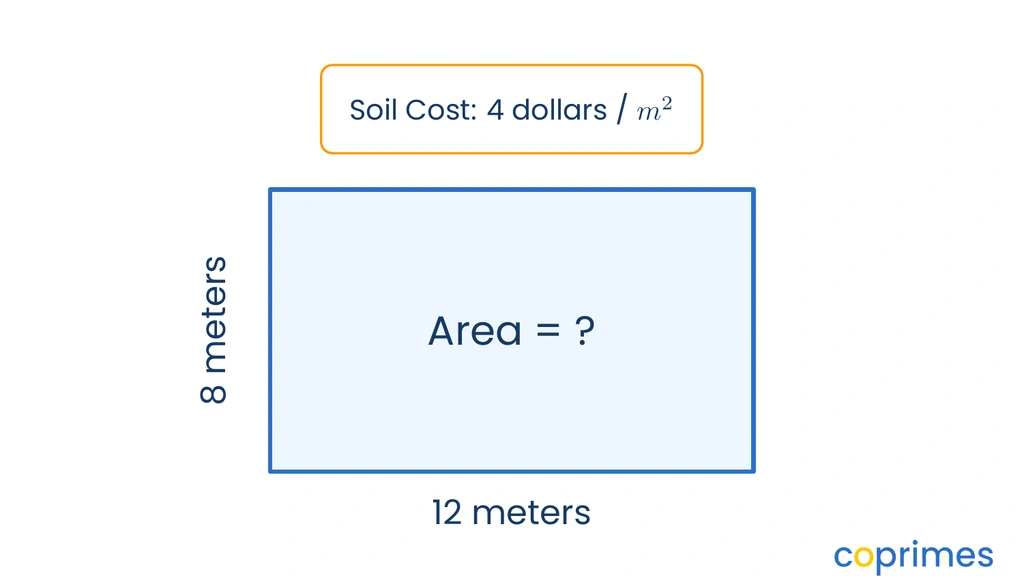
Method:
- Find the area of the rectangular plot by multiplying its length by its width.
- Multiply the area by the cost per square meter to find the price before the discount.
- Subtract the discount from the total price.
Answer: The area is square meters. The initial price is dollars. The final cost is dollars.
Check: Working backwards, adding the discount gives dollars. Dividing by gives square meters, which matches . The cost is correct.
Frequently asked questions
How do I know if a problem is multi-step?
If finding the answer to the final question requires information that is not directly given, you must perform an intermediate calculation. For example, if a problem involves finding of a quantity before adding another value, it requires multiple steps. Any problem that involves multiple categories, combined operations, or unit conversions usually requires more than one calculation.
What should I do if I get stuck?
Re-read the question and draw a diagram representing the given values. Focus only on finding one unknown piece of information at a time. Often, solving for an intermediate value makes the final step obvious.
Practice questions
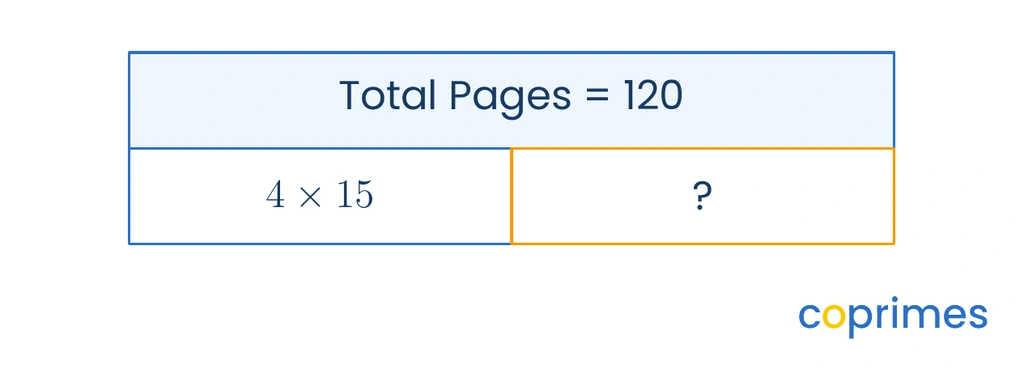
A book has pages. Maya reads pages a day for days. How many pages does she have left to read? The bar model below shows the problem. What is the value of the missing part?
45
60
80
105
60
A farmer packs boxes of apples. Each box contains apples. He then gives apples to his neighbor. Which expression shows how to find the number of apples he has left?
A store sells shirts for dollars each. If a customer buys shirts and pays with a -dollar bill, how much change should they receive?
46 dollars
54 dollars
82 dollars
44 dollars
46 dollars
Leo has dollars. He buys video games that cost dollars each. He calculates his remaining money as dollars. What mistake did Leo make?
He added the cost of the games instead of subtracting.
He subtracted 2 from 19 before subtracting from 50.
He multiplied 50 by 2 instead of 19 by 2.
He forgot to multiply the cost of the game by 2.
He forgot to multiply the cost of the game by 2.
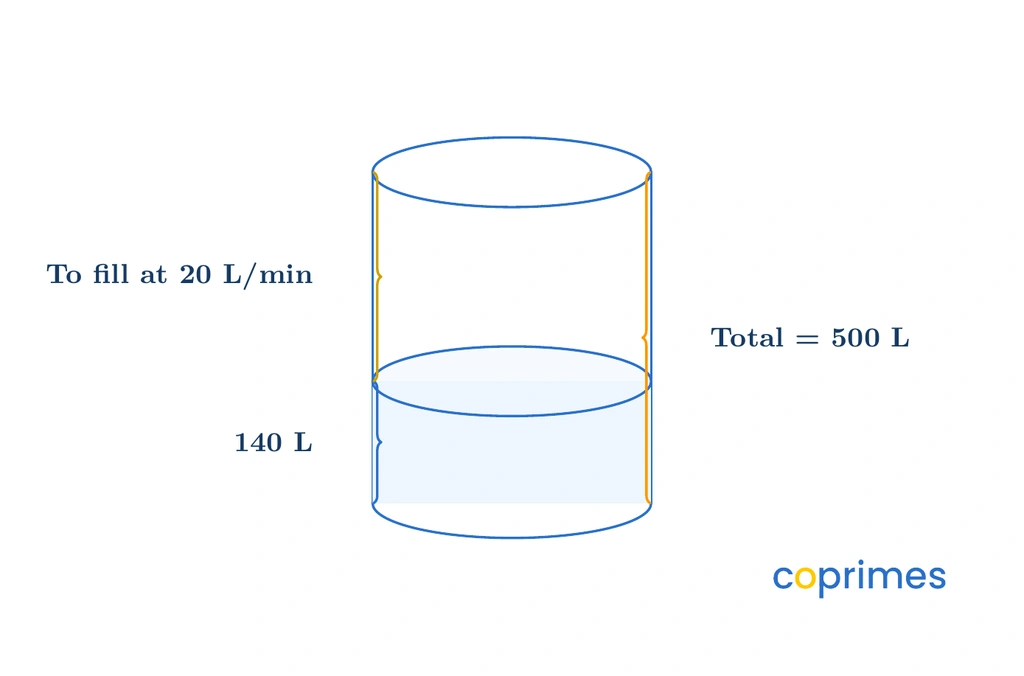
A water tank holds liters. A hose fills the tank at a rate of liters per minute. If the tank already contains liters, how many minutes will it take to fill the tank completely?
7 minutes
18 minutes
25 minutes
32 minutes
18 minutes