
Multiplying Fractions: Step-by-Step Methods and Examples
To multiply fractions, multiply numerators to get the new numerator, multiply denominators to get the new denominator, and simplify; a common denominator is not required for multiplication.
When you learn the rules of fraction multiplication, you unlock the ability to solve scaling problems, area calculations, and probability combinations easily.
How do you multiply fractions?
When learning how to multiply fractions, it helps to know that the process works exactly the same way for all fractional values. The product of fractions is found by combining their parts.
Method:
- Multiply the top numbers (numerators) together.
- Multiply the bottom numbers (denominators) together.
- Simplify the new fraction if needed.
Always multiply straight across; you do not need common denominators.
Why fraction multiplication can make a smaller result
When you multiply whole numbers, the result is usually larger. However, when you multiply two proper fractions, the result is smaller than either of the original fractions. This happens because you are finding a part of a part.
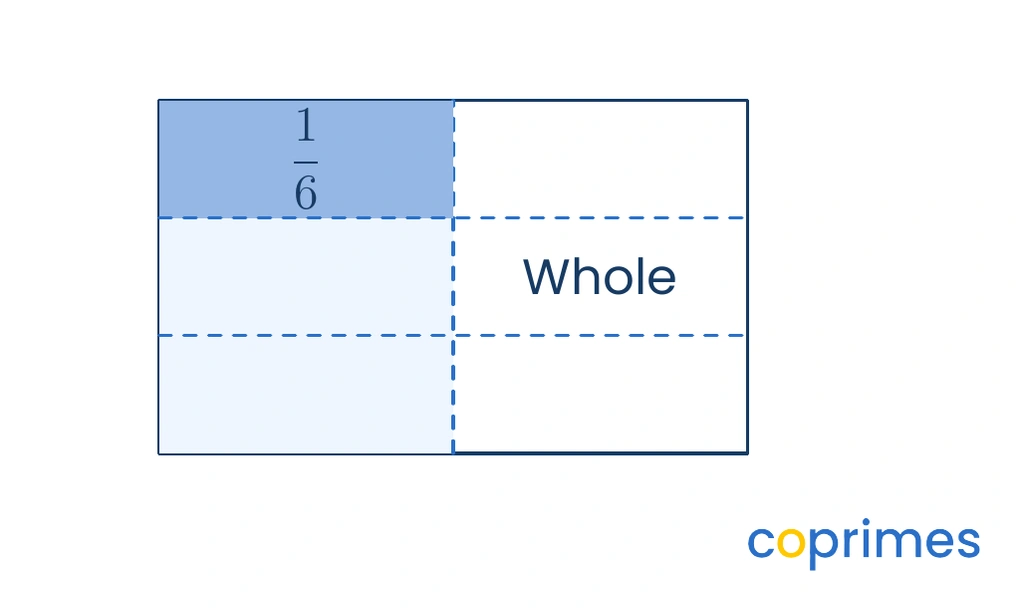
For instance, finding of is the same as calculating . The result, , is a much smaller piece than both and .
Multiply numerators and denominators
Fraction multiplication follows a straightforward mathematical rule regardless of the values involved.
=
For example, to evaluate :
- Multiply the numerators: .
- Multiply the denominators: .
The product is . Since and share no common factors other than , the fraction is in its simplest form.
A learning plan shaped by your child, not the class
State-aligned Math plus our own Logic and English curriculum. An adaptive baseline test finds the gaps and fills them.
Simplify before or after multiplying
When you multiply two fractions, you must present the final answer in its simplest form. You can choose to simplify the fractions before multiplying (often called cross-cancellation) or simplify the product after multiplying. Before starting, review simplifying fractions to ensure you identify common factors easily.
Method 1: Simplify after multiplying
Both and share a greatest common factor of . Divide the numerator and denominator by to get .
Method 2: Simplify before multiplying (Cross-cancellation)
You can divide any numerator and any denominator by a common factor before multiplying. This keeps the numbers smaller and easier to work with.
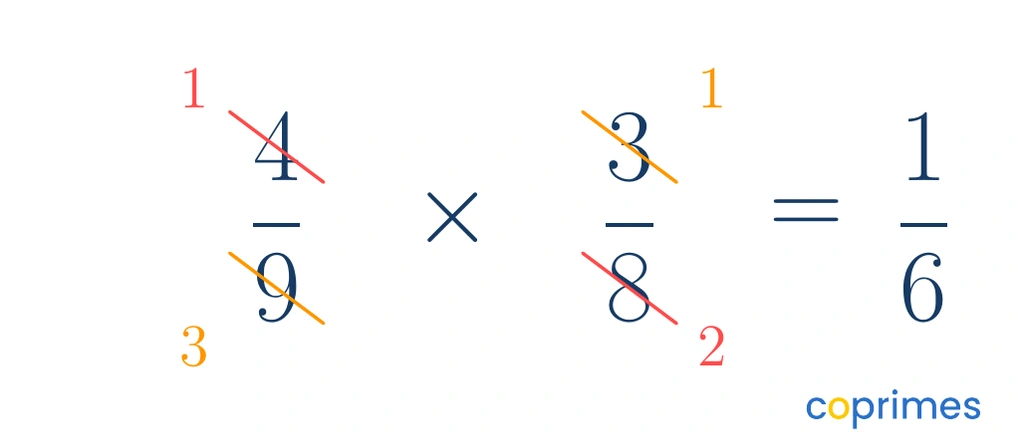
Cross-cancellation is only valid when simplifying one numerator and one denominator. Never cross-cancel two numerators or two denominators.
Use area models
Area models visually demonstrate what it means to multiply fractional values. To find the product of , draw a rectangle to represent one whole.
- Divide the rectangle vertically into equal columns and shade to represent .
- Divide the same rectangle horizontally into equal rows and shade to represent .
- The overlapping section represents the product.
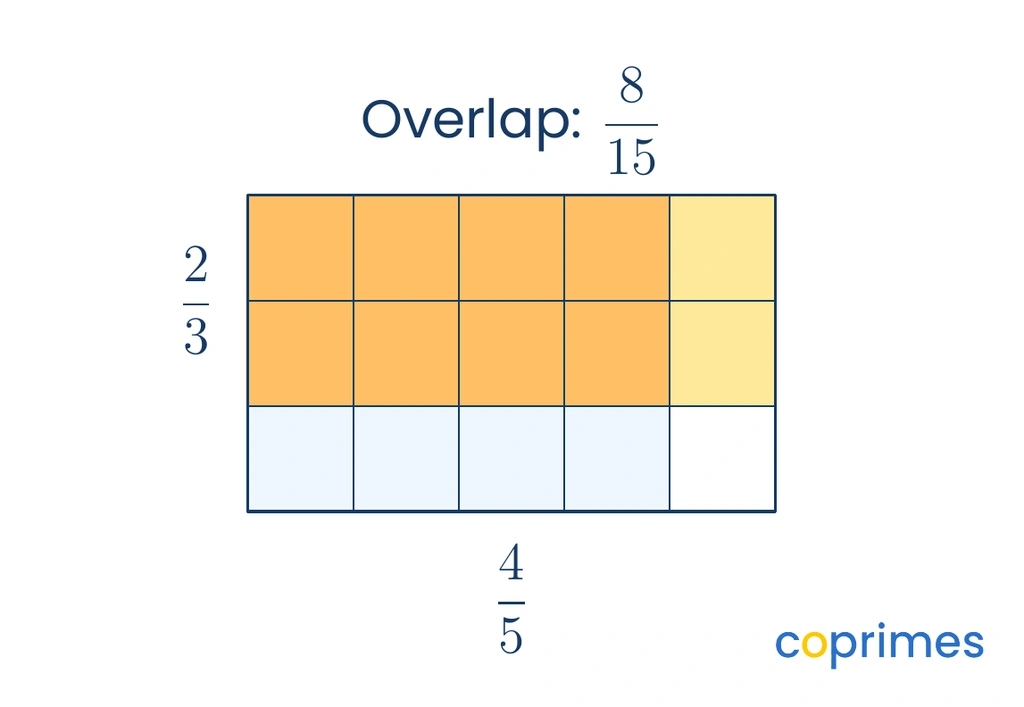
The whole rectangle is divided into equal pieces, which becomes the new denominator. The overlapping region covers of those pieces, creating the new numerator. The product is .
Worked examples
Understanding multiply fractions examples helps reinforce the steps and shows how the rules apply across different problems. Many fraction word problems rely on these methods.
Example 1: Multiplying proper fractions without common factors
Question: Evaluate .
Method:
- Multiply the numerators: .
- Multiply the denominators: .
- Check if the fraction can be simplified. The numbers and share no common factors.
Answer:
Check: Using an area model, overlapping squares out of total squares confirms the product.
Example 2: Cross-cancelling before multiplying
Question: Evaluate .
Method:
- Identify common factors between numerators and denominators.
- Divide the numerator and denominator by . They become and .
- Divide the numerator and denominator by . They become and .
- Multiply the simplified numbers: .
Answer:
Check: Multiply first without simplifying: and . Simplify by dividing both by to get . The result matches.
Example 3: Multiplying a fraction by a whole number
Question: A recipe calls for of a cup of sugar per batch. How much sugar is needed for batches?
Method:
- Write the whole number as a fraction: .
- Set up the multiplication: .
- Multiply numerators () and denominators ().
- The result is an improper fraction, .
Answer: cups of sugar.
Check: Add four times: .

Common mistakes
When multiplying fractions, watch out for these frequent errors:
- Finding a common denominator: Unlike addition or subtraction, you do not need a common denominator to multiply. Multiplying straight across is correct and prevents creating unnecessarily large numbers.
- Cross-cancelling straight across: You can only cancel a numerator with a denominator. You cannot cross-cancel two numerators or two denominators. For example, in , you cannot cancel the and the .
- Forgetting to simplify: Always check if the final numerator and denominator share a common factor before finishing the problem.
Frequently asked questions
Can you multiply three or more fractions at once?
Yes. Multiply all the numerators together to find the final numerator, and multiply all the denominators together to find the final denominator. You can cross-cancel across any combination of numerators and denominators.
What happens if you multiply a fraction by?
Any number multiplied by remains unchanged. Since can be written as or , you are essentially multiplying the numerator and denominator by the same amount, creating an equivalent fraction.
How is multiplying fractions connected to other math topics?
Once you master this skill, you are ready for multiplying fractions by whole numbers and multiplying mixed numbers. These topics use identical multiplication rules after a small setup step.
Practice questions
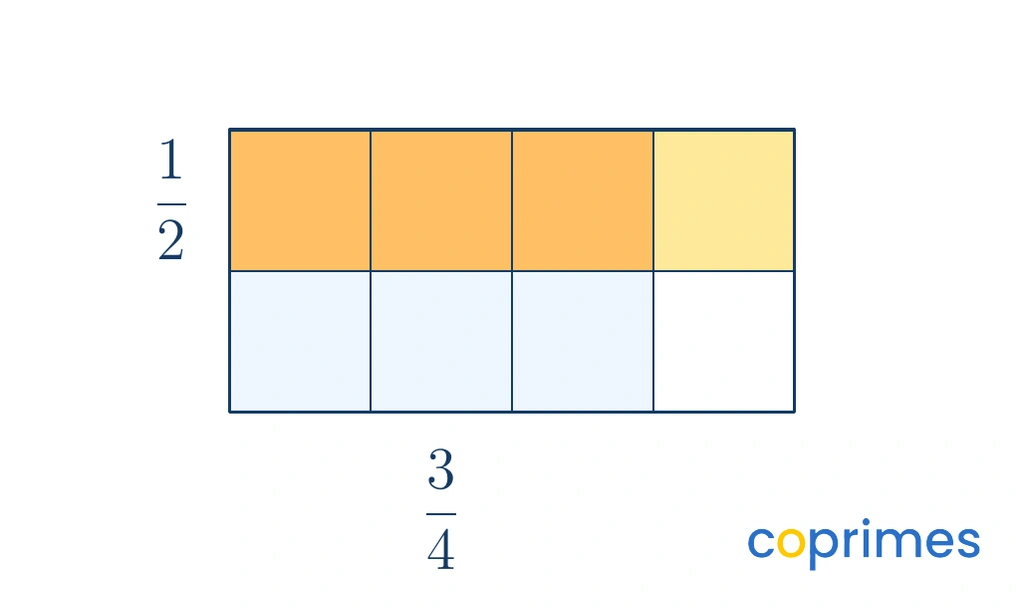
Which multiplication problem is represented by the area model above?
What is the product of and ?
Simplify and multiply: . Which option represents the fraction in simplest form?
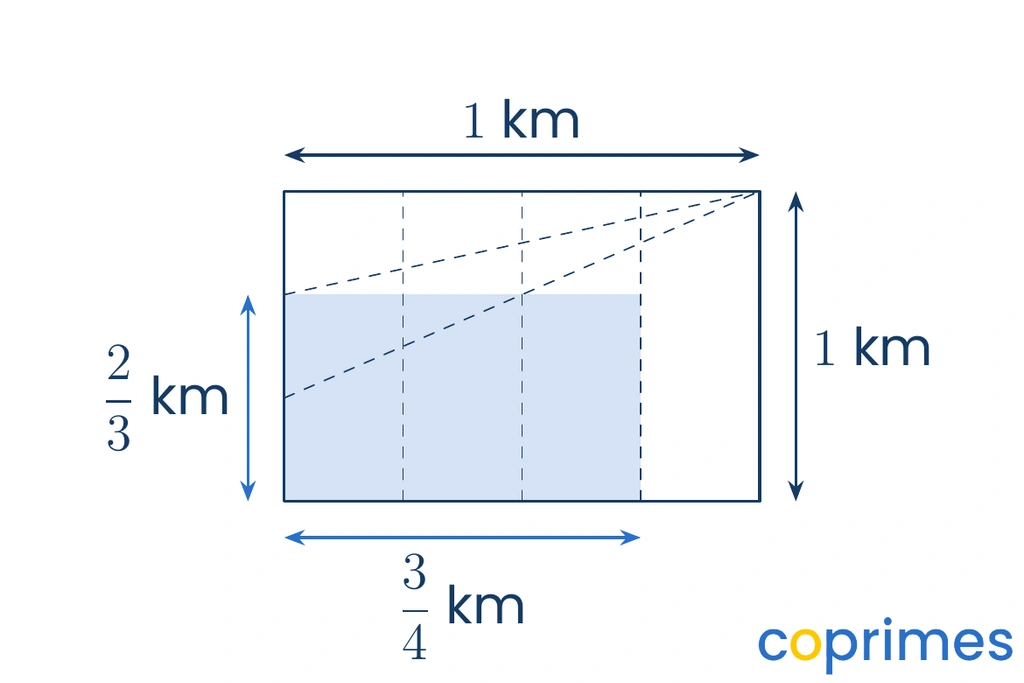
Based on the model above, what is the area of the rectangular garden in simplest form?
A recipe requires of a cup of milk. If you only want to make of the recipe, how much milk should you use?