
Short Division: Definition, Method and Examples
Short division is a compact written method of division used to divide a large number by a single-digit or simple two-digit number. It records each part of the answer directly above the problem while carrying any remainder mentally or with small digits to the next place value.
What is short division?
Short division is a formal algorithm that breaks down a division problem into smaller, manageable steps. It is often called the compact division method. In some regions, it is informally known as the bus stop method because the division bracket resembles a bus shelter.
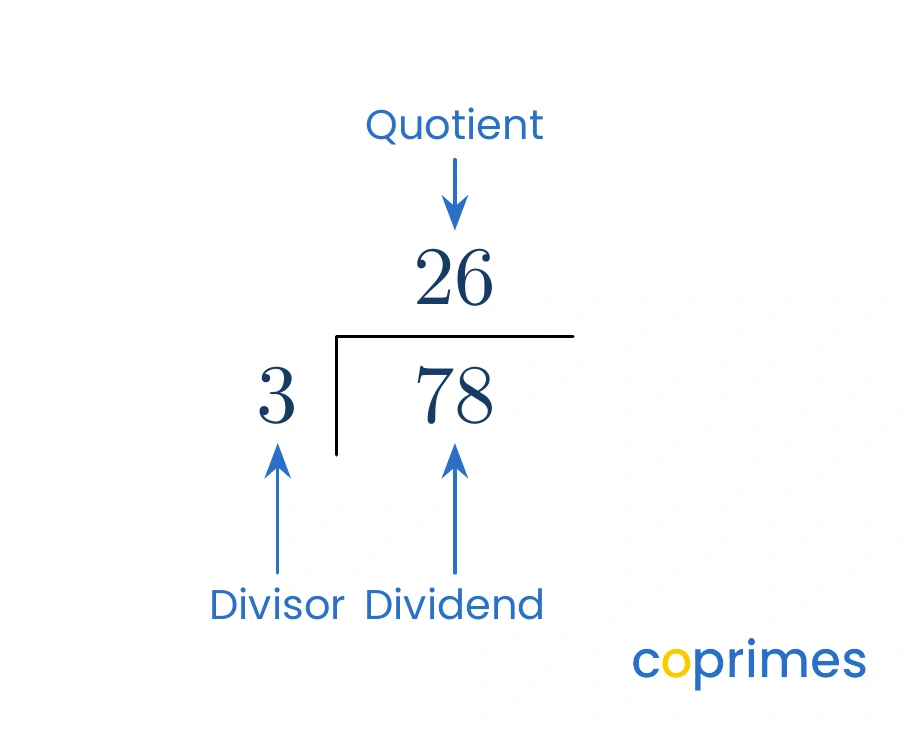
Instead of writing out long subtraction steps, short division saves space by recording the remainder from each step compactly. This method is most efficient when the divisor is a single digit or a familiar number like .
Set up the division
To set up short division, arrange the numbers using a division bracket.
- Dividend: The total amount being divided goes inside the bracket.
- Divisor: The number you are dividing by goes on the outside, to the left.
- Quotient: The answer is written on top of the bracket, directly above the corresponding digits of the dividend.
Proper alignment is critical. The digits of the quotient must align perfectly with the place value columns of the dividend.
Place-value meaning of carried remainders
Short division relies heavily on place value. When you divide the digits in a column and have an amount left over, that remainder is carried to the next smaller place value.
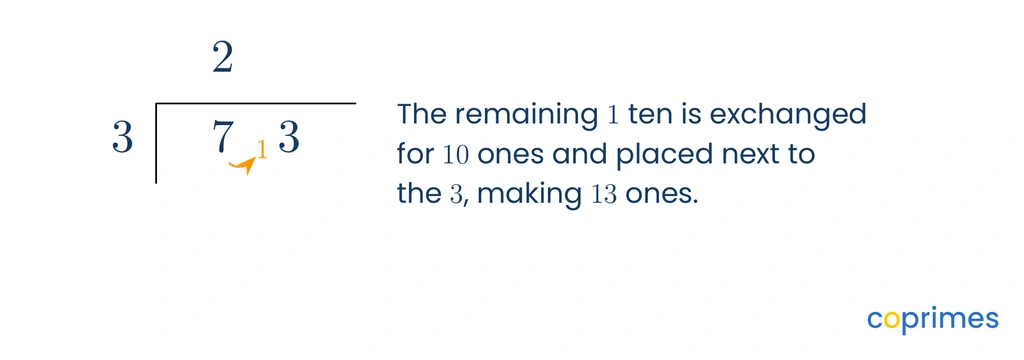
A remainder in one column represents a bundle of ten in the next column to the right.
For example, when dividing by , you first divide the tens. tens divided by gives tens, with ten left over. This ten is carried to the ones column, where it becomes ones. Combined with the existing ones, you now divide ones by .

Step-by-step short division
Unlike addition or multiplication, division starts from the largest place value on the left and moves to the right.
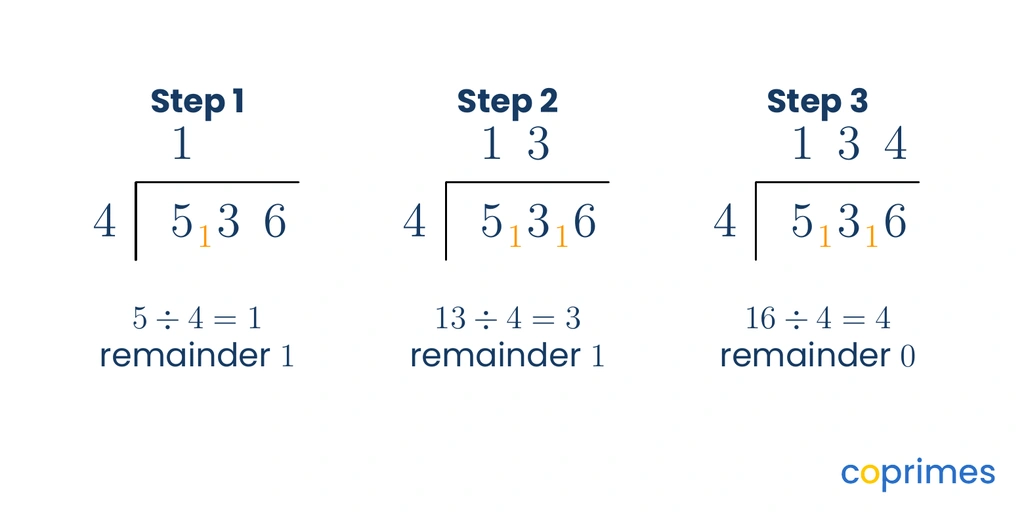
Let's divide by .
- Divide the hundreds: hundreds divided by is hundred, with hundred remaining. Write above the hundreds place. Carry the to the tens place to make tens.
- Divide the tens: tens divided by is tens, with ten remaining. Write above the tens place. Carry the to the ones place to make ones.
- Divide the ones: ones divided by is exactly . Write above the ones place.
The quotient is .
Short division with a remainder
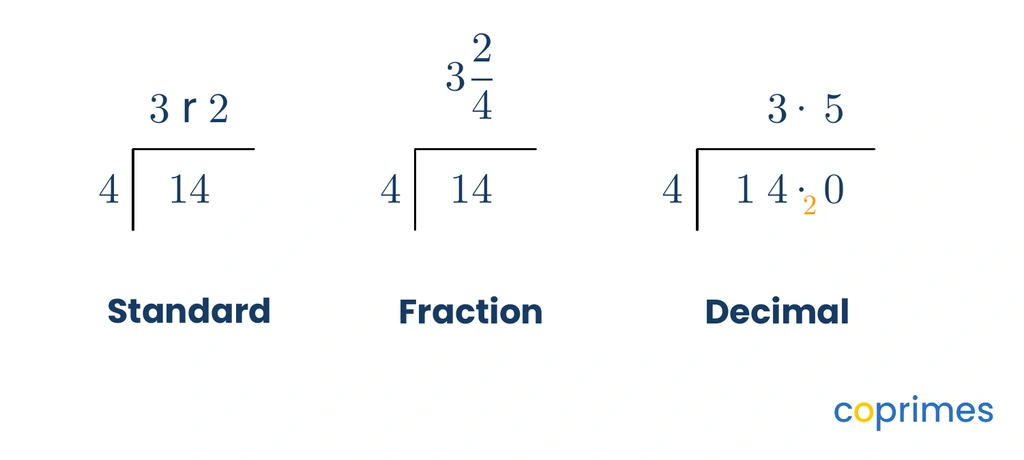
When a number does not divide perfectly, the final step produces a remainder. You can express division with remainders in three ways.
- Standard remainder: Write an followed by the leftover number. For example, .
- Fraction: Use the remainder as the numerator and the divisor as the denominator. For example, .
- Decimal: Place a decimal point in the quotient and dividend, add a zero, and continue dividing. The carried remainder moves to the tenths place. For example, .
Short versus long division
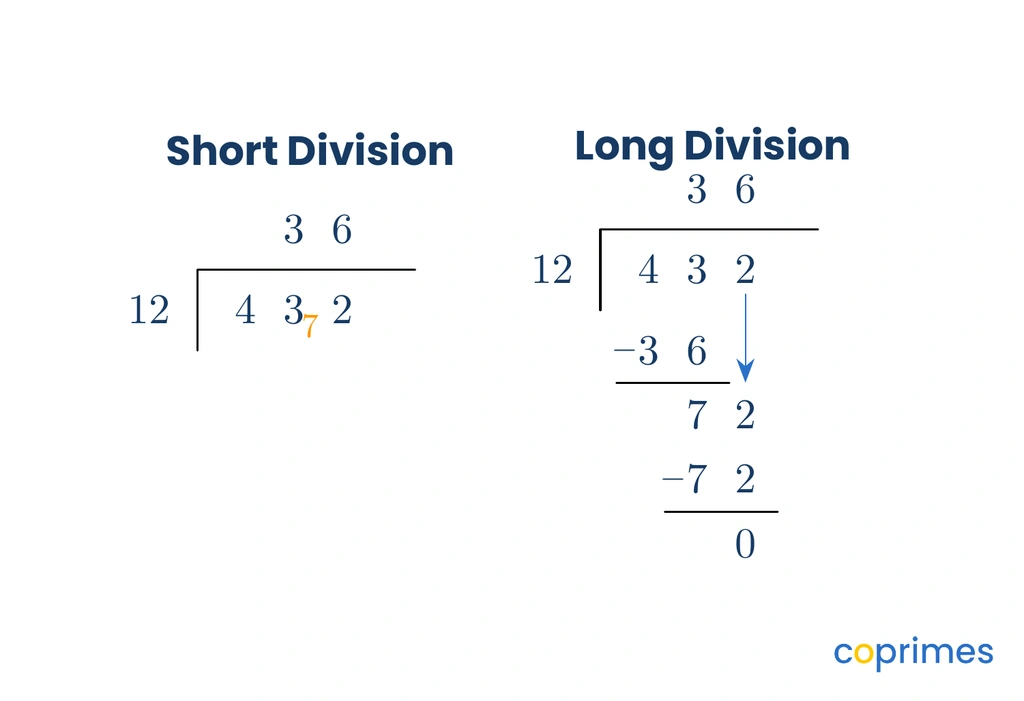
Both methods use the exact same mathematical logic, but short division requires you to perform the subtraction step mentally.
In long division, you write out the multiplication and subtraction for each step down the page. In short division, you only write the final remainder of each step as a small digit next to the following place value.
A learning plan shaped by your child, not the class
State-aligned Math plus our own Logic and English curriculum. An adaptive baseline test finds the gaps and fills them.
Worked examples
Example 1: Exact division
Question: A bakery produces muffins and packs them evenly into boxes of . How many boxes are needed?
Method:
- Divide hundreds by : hundred, remainder . Carry the .
- Divide tens by : exactly tens, remainder .
- Divide ones by : exactly one.
Answer: boxes.
Check: Multiply by . , , . Total is . This uses the division algorithm and checking method.
Example 2: Division with a zero placeholder
Question: Calculate .
Method:
- Divide the hundreds: . Write above the hundreds. No remainder.
- Divide the tens: . Since is smaller than , write above the tens. The ten is carried over to the ones column.
- Divide the ones: The carried ten joins the ones to make . . Write above the ones.
Answer: .
Check: . The answer is correct.
Example 3: Division with a decimal remainder
Question: Share dollars equally among friends. What is the cost per person?
Method:
- Divide by : goes into four times (), leaving a remainder of .
- Add a decimal point and a zero to to make . Carry the to the tenths place to make tenths.
- Divide by : times (), leaving a remainder of . Carry the to the hundredths place to make hundredths.
- Divide by : exactly .
Answer: Each friend pays dollars.
Check: dollars.
Common mistakes
- Forgetting zero placeholders: If a digit cannot be divided by the divisor, you must place a zero in the quotient directly above it. Skipping the zero will shift all following digits to the wrong place value.
- Misaligning digits: Writing the quotient digits loosely can cause them to align with the wrong columns, leading to confusion during checking or further calculation.
- Ignoring the decimal point: When extending a division to find a decimal answer, the decimal point in the quotient must align exactly above the decimal point in the dividend.
Frequently asked questions
Can you use short division with a two-digit divisor?
Yes. You can use short division for any divisor as long as you are comfortable calculating its multiples mentally. It is very common to use short division for divisors up to . For larger two-digit divisors, long division is usually less prone to mental errors.
Why do we divide from left to right?
We start with the largest place value to ensure that any remainder is broken down into smaller units (carried over) and shared among the remaining digits.
Practice questions
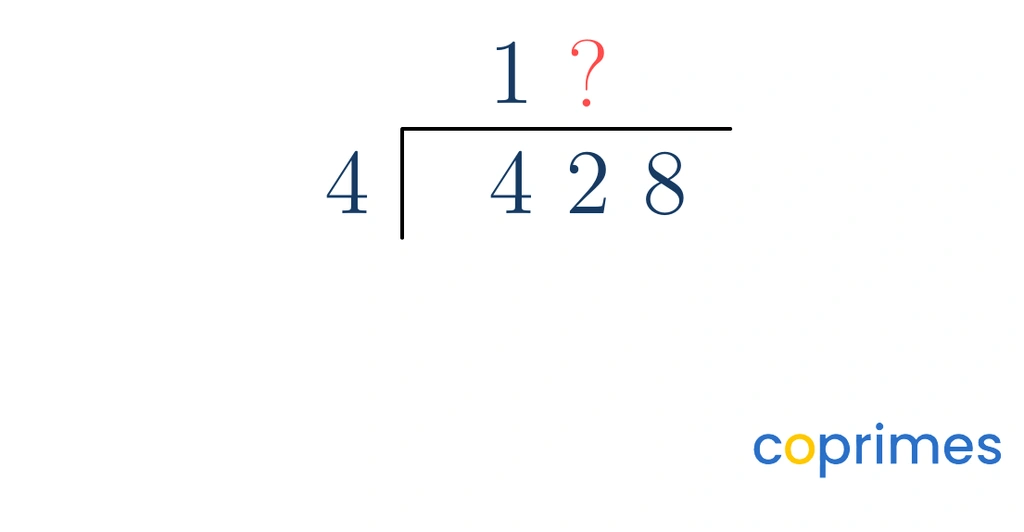
In the short division problem shown above, what should be written in the tens column of the quotient where the question mark is located?
Calculate the answer using short division: .
When dividing by , the first step leaves a remainder of from the hundreds column. What does this become when it is carried to the tens column?
tens
ten
tens
ones
tens
Calculate and express the answer as a decimal.
A school needs to transport students by minibus. Each minibus holds students. How many minibuses are needed in total?