
Long Division: Definition, Method and Examples
Long division is a written algorithm that repeatedly divides, multiplies, subtracts, and brings down digits to divide larger numbers accurately. It expands the standard short division process, making it easier to track calculations when dividing by numbers with two or more digits.
What is long division?
Long division is the standard mathematical algorithm used to divide large numbers into equal groups. It breaks down a complex division problem into a series of smaller, manageable operations.
Unlike short division, which requires you to hold remainders in your head, long division requires you to write out every calculation. This expanded division method is particularly useful when dividing by two-digit or three-digit numbers, as it prevents mental arithmetic errors and keeps your steps organized.
Set up dividend, divisor and quotient
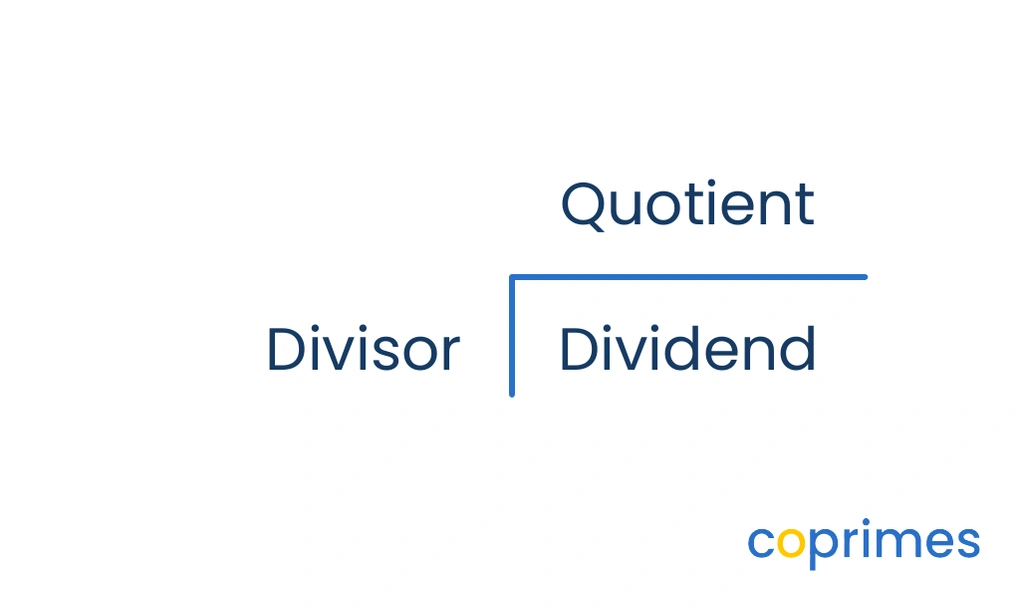
Before starting the calculation, you must arrange the numbers in the standard long division layout. The layout uses a division bracket to separate the three main components of the operation.
- Dividend: The total amount being divided. This number goes inside the bracket.
- Divisor: The number you are dividing by. This number goes on the outside, to the left of the bracket.
- Quotient: The final answer. This is written on top of the bracket, with its digits perfectly aligned above the corresponding place values of the dividend.
The divide-multiply-subtract-bring-down cycle
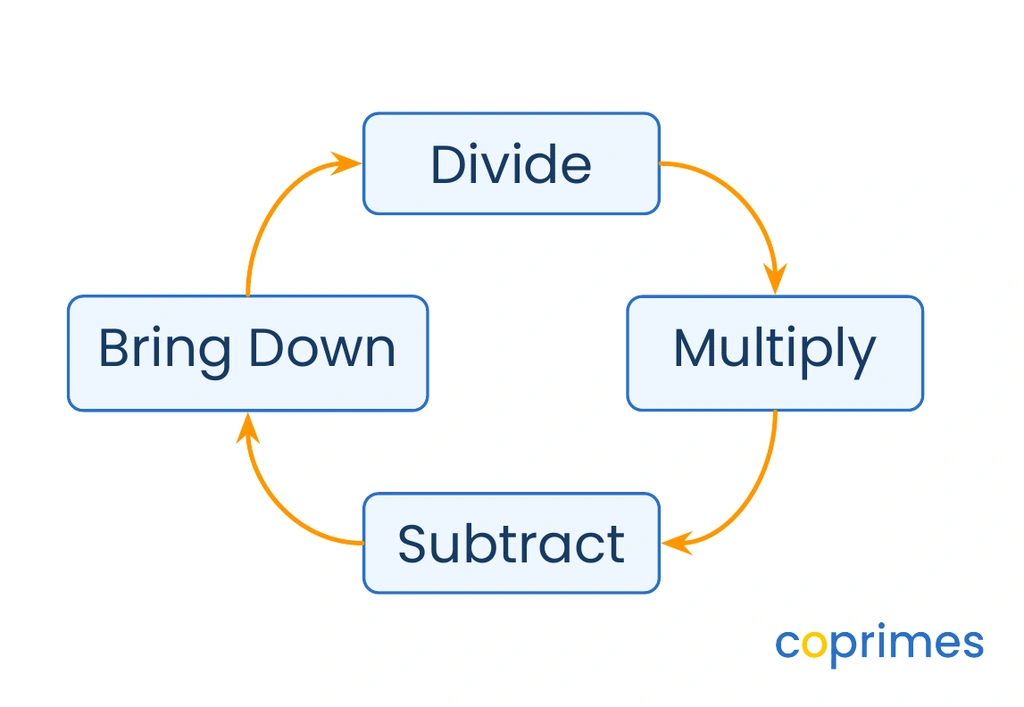
The standard division algorithm relies on a repeating cycle of four steps. You continue this cycle until there are no more digits left in the dividend to bring down.
- Divide: Determine how many times the divisor fits into the current working digits of the dividend. Write this number on top as part of the quotient.
- Multiply: Multiply the number you just wrote in the quotient by the divisor. Write the result underneath the working digits of the dividend.
- Subtract: Subtract this result from the working digits. The answer is your remainder for this step.
- Bring down: Bring down the next digit from the dividend to join the remainder, creating a new number to divide.
The core steps of long division are Divide, Multiply, Subtract, and Bring down.
A learning plan shaped by your child, not the class
State-aligned Math plus our own Logic and English curriculum. An adaptive baseline test finds the gaps and fills them.
Long division with remainders
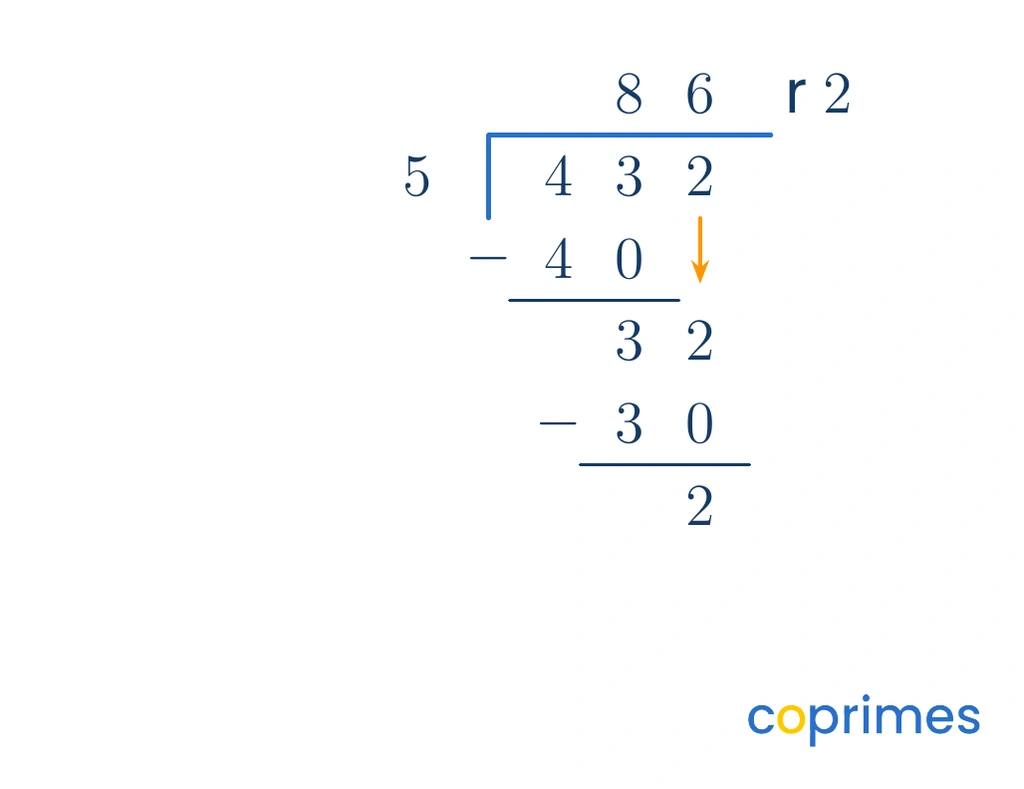
When the divisor does not divide the dividend evenly, the final subtraction step will leave a number greater than zero. This leftover amount is the remainder.
Division with remainders can be expressed in three ways depending on the problem format. It can be written as a whole number remainder with an , it can be converted into a fraction where the remainder is the numerator and the divisor is the denominator, or it can be continued into a decimal by adding a decimal point and bringing down zeroes.
Long division with a two-digit divisor
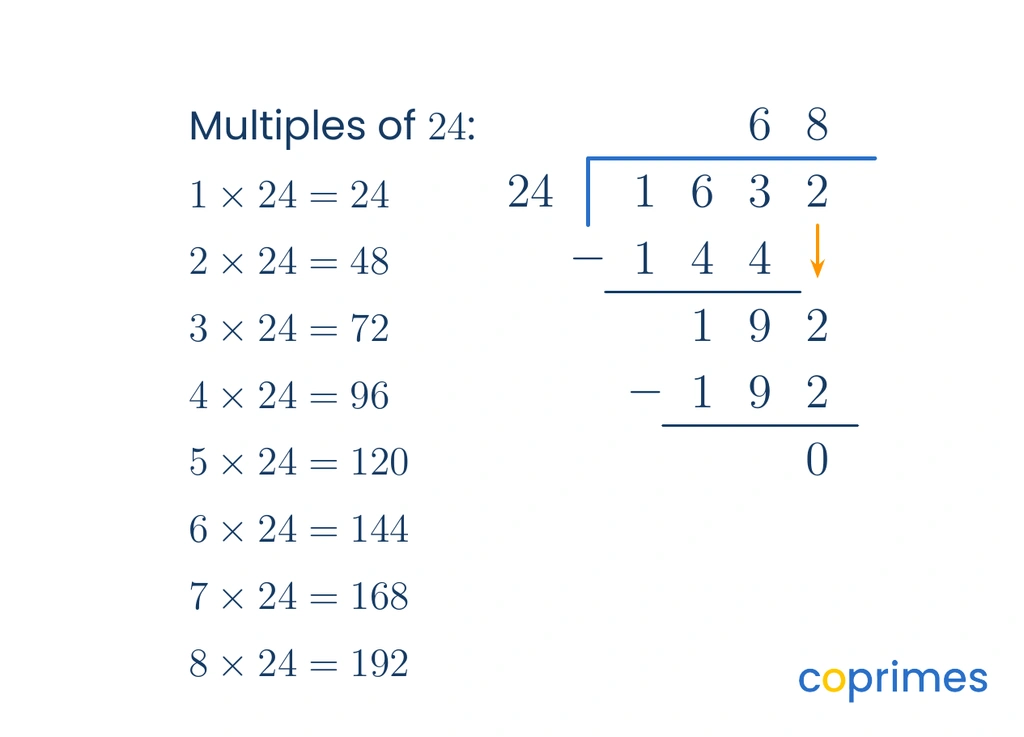
When dividing by a two-digit number, the steps remain exactly the same. However, determining how many times a large divisor fits into the dividend can be difficult to calculate mentally.
To make the process easier, list the first several multiples of the two-digit divisor in the margin before you begin. You can find these multiples through repeated addition. Having a reference list reduces the mental load and allows you to focus purely on executing the long-division algorithm efficiently.
Interpret the remainder
In division word problems, calculating the remainder is only half the task. You must interpret what the remainder means in the real-world context of the problem to find the correct answer.
The context determines whether you should keep the exact remainder, round up, or round down.
- Keep the remainder: If the problem asks how many items are left over, the remainder itself is the answer.
- Round up: If you are packing items or transporting people and everyone must be included, you need an extra container or vehicle for the remainder. You add one to the whole-number quotient.
- Round down: If you are buying complete sets or making full groups, leftover parts cannot form a complete group. You ignore the remainder and use only the whole-number quotient.
Always interpret the remainder based on the context of the word problem.

Worked examples
The following examples demonstrate the complete long division process, from a straightforward problem to an applied context.
Example 1: Long division with a single-digit divisor
Question: Calculate .
Method:
- Divide: . Write in the quotient.
- Multiply & Subtract: . Subtract from to get .
- Bring down: Bring down the to make .
- Repeat: . . . Bring down the to make .
- Repeat: . . . Bring down the to make .
- Repeat: . . .
Answer: , or .
Check: To apply the division algorithm and checking, multiply the quotient by the divisor and add the remainder: .
Example 2: Two-digit divisor with real-world context
Question: A factory produces toy cars. The cars are packed into boxes of . How many toy cars are left over?
Method:
- Set up the calculation as .
- List the multiples of :
- Divide: goes into three times. ().
- Subtract & Bring down: . Bring down the to make .
- Repeat: goes into two times. ().
- Subtract & Bring down: . Bring down the to make .
- Repeat: goes into eight times. ().
- Subtract: . There are no more digits to bring down.
Answer: The remainder is , so there are toy cars left over.
Check: Multiply the quotient by the divisor and add the remainder: .
Common mistakes
When learning the standard division algorithm, learners frequently make structural and arithmetic errors.
- Misaligning digits: Writing a quotient digit above the wrong place value can shift the entire answer, leading to incorrect calculations or missing zeroes. Use graph paper or draw light vertical lines to keep columns straight.
- Forgetting to write a zero: If the divisor is larger than the current working number, the divisor goes into it zero times. You must write a in the quotient before bringing down the next digit. Leaving out the zero will make the final answer entirely incorrect.
- Subtracting incorrectly: Long division involves multiple subtraction steps. A simple arithmetic mistake in any middle step will carry forward, making the rest of the division and the final quotient wrong. Always double-check your subtraction before bringing down the next digit.
Frequently asked questions
Review these common questions about the long division algorithm.
What are the main steps of long division?
The core process involves four repeating steps: divide, multiply, subtract, and bring down. You repeat this sequence until the entire dividend has been processed.
How is long division different from short division?
Both methods use the same mathematical logic. Short division requires you to calculate and carry the remainder mentally, making it faster but more difficult to track. Long division requires you to write out the multiplication and subtraction steps beneath the dividend, which is essential when dividing by larger numbers.
Can long division answers have decimals?
Yes. If you reach the end of a whole number dividend and have a remainder, you can place a decimal point in both the dividend and the quotient, add a zero to the dividend, bring it down, and continue dividing.
Practice questions
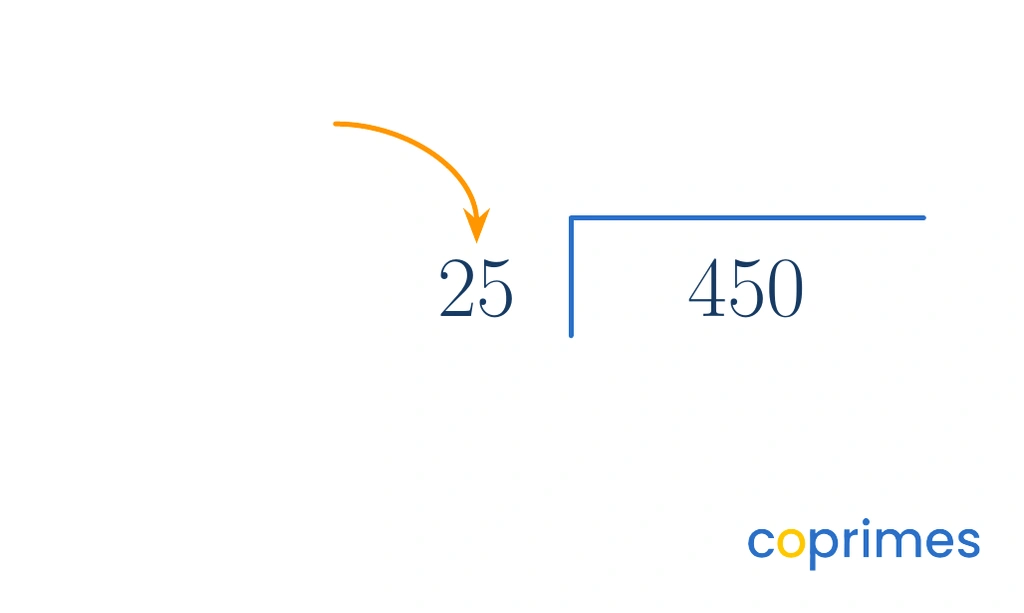
In the division setup shown, what is the mathematical term for the number ?
Divisor
Dividend
Quotient
Remainder
Divisor
When calculating using long division, what is the value of the first digit placed in the quotient?
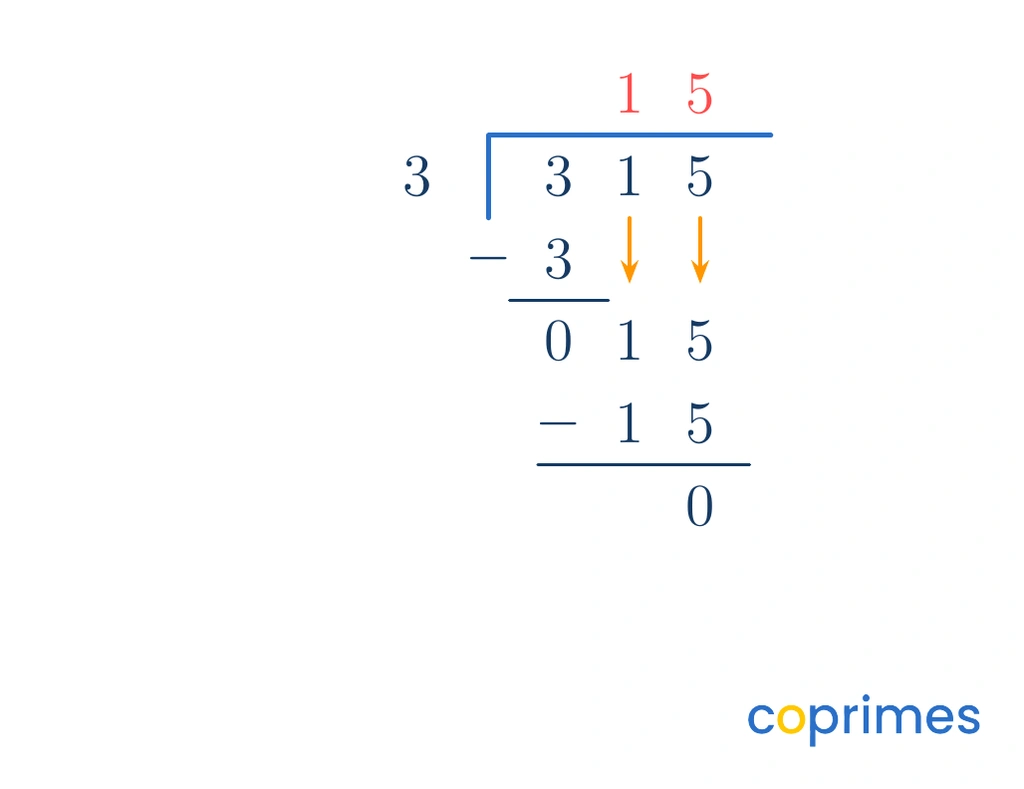
A student divides by and gets a quotient of , as shown in the calculation. What common mistake did the student make?
They subtracted incorrectly in the first step.
They forgot to place a zero in the quotient.
They brought down the wrong digit from the dividend.
They multiplied the quotient by the dividend instead of the divisor.
They forgot to place a zero in the quotient.
A school is ordering vans for a field trip. There are students attending. Each van holds exactly students. How many vans must the school order?
vans
vans
vans
vans
vans
Calculate using long division.