
Decimal Notation: Definition, Method, and Examples
Decimal notation writes a number with a decimal point between the ones place and tenths place, so the digits on the right represent fractional place values rather than whole-number places.
This system provides a standardized way to express quantities that fall between two integers, making precise measurements and calculations much easier to read.
What is decimal notation?
Decimal notation is a numerical format that represents parts of a whole using a base-10 number system.
In decimal notation, every place value is a power of ten. Instead of writing a fraction with a numerator and a denominator, the value is written linearly.
Before moving forward, recall that decimal numbers are values that include both a whole quantity and a fractional quantity written using this system.
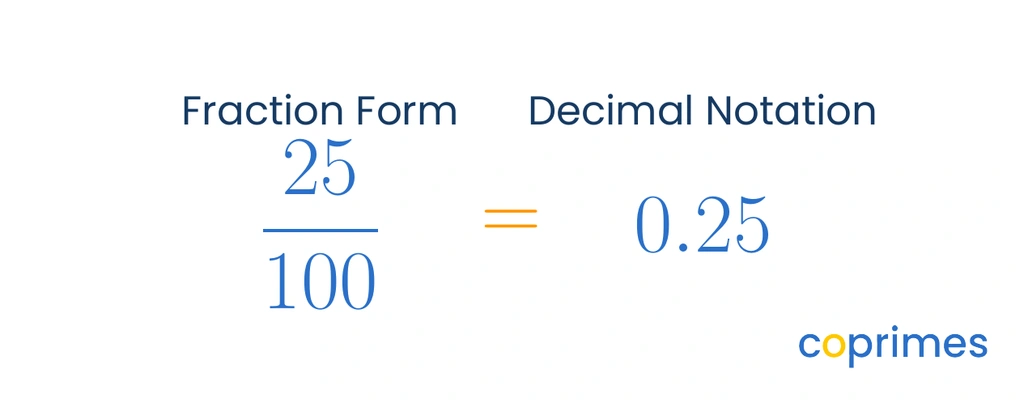
The standard format ensures that anyone reading the number understands exactly which portion is complete and which portion represents a fraction.
Locate the decimal point
The decimal point is a small dot placed immediately after the ones place, serving as the anchor for the entire number.
It separates the whole number part on its left from the fractional part on its right. The decimal point itself dictates where the ones place sits, establishing the value of every other digit in the sequence.
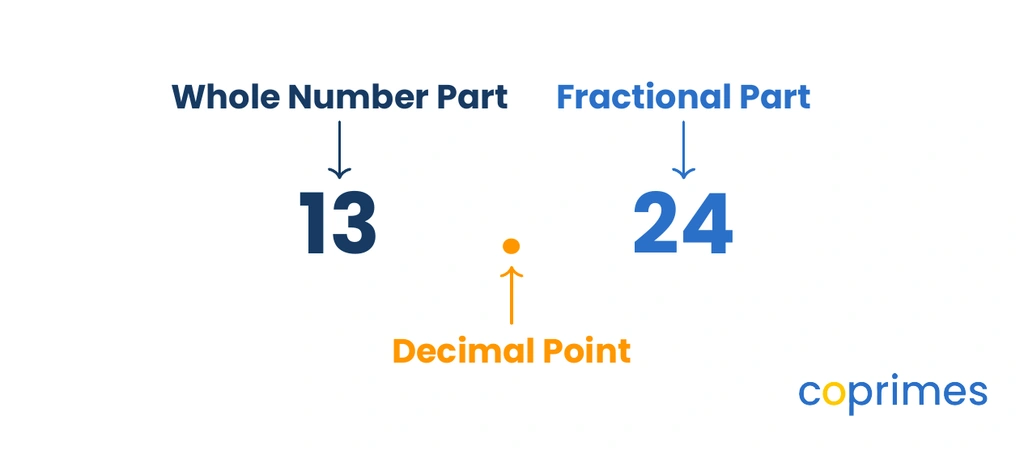
When reading a decimal number aloud, the decimal point is pronounced as the word "and" to emphasize this separation between complete wholes and fractional pieces.
Name the places around the point
As you move outward from the decimal point, each position has a specific value based on powers of .
To the left, the places represent whole quantities: ones, tens, hundreds, and so on. To the right, the places represent fractional quantities: tenths, hundredths, and thousandths.
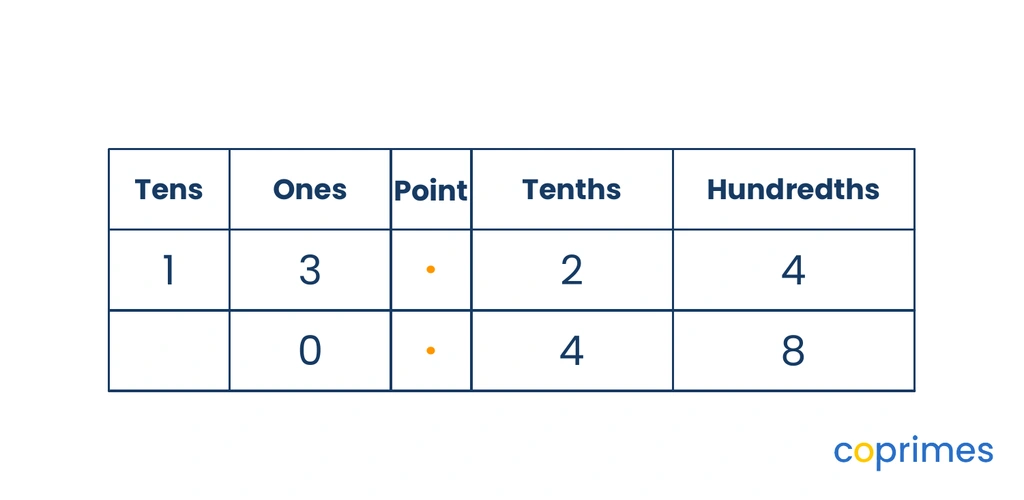
If you want to master decimal place value, it helps to see that each step to the right makes the digit's value ten times smaller. This underlying structure is also exactly how we expand and calculate decimals in expanded form.

Write decimals from models
Visual models, such as grids divided into or equal parts, show how decimal notation works in practice.
A fully shaded grid represents one whole (). If only a portion of the grid is shaded, counting the squares reveals the decimal value.
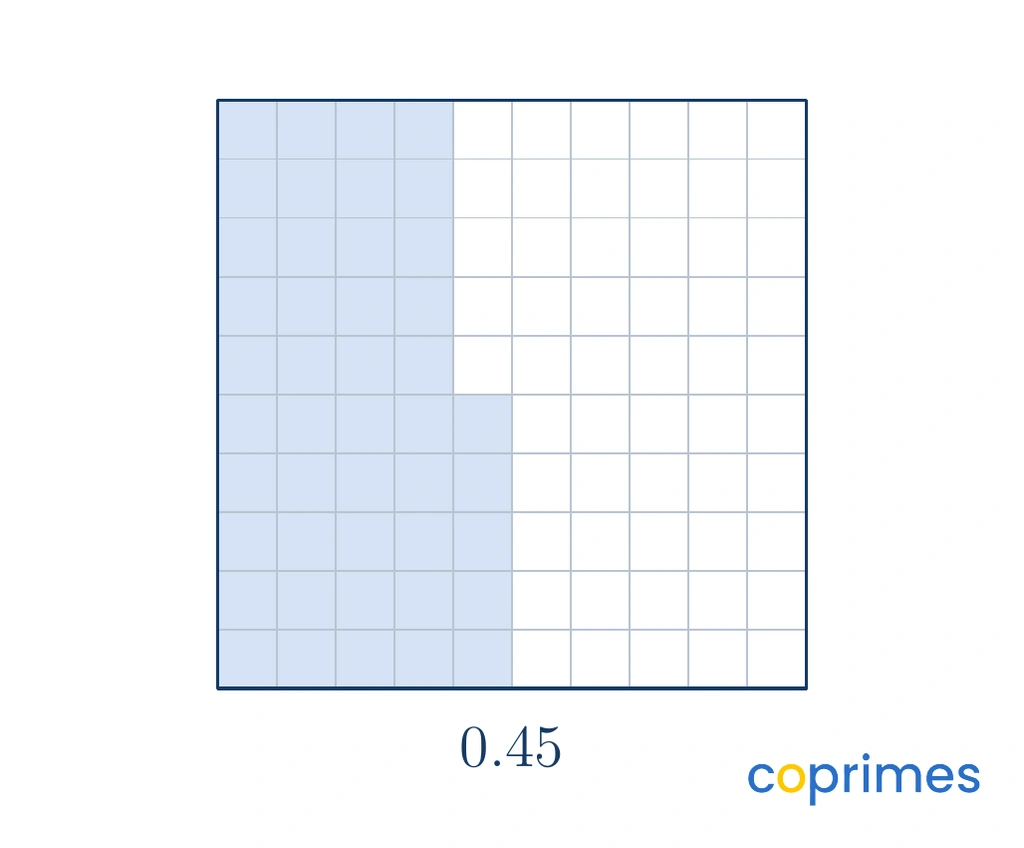
When reading and writing decimals, visualizing the value prevents confusion. For instance, out of small squares represents forty-five hundredths. In decimal notation, this is explicitly written as .
Use zeros as placeholders
Placing extra zeros at the far right of a decimal number does not change its mathematical value, but it does change its written precision.
For example, , , and all represent the exact same quantity. The digit remains anchored in the ones place, and the digit remains anchored in the tenths place.
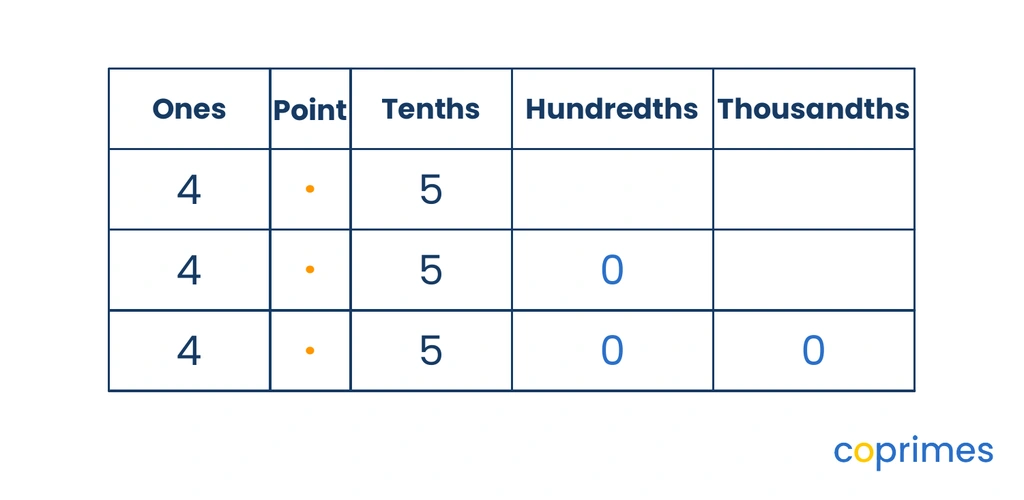
The appended trailing zeros simply communicate that there are zero hundredths and zero thousandths present, which is often useful when lining up numbers for addition or subtraction.
Worked examples
Reviewing structured steps reveals how standard definitions operate when applied to a problem.
Example 1: Writing decimal notation from a fraction
Question: Write the mixed number and in decimal notation.
Method:
- Identify the whole-number part. The whole number is .
- Place the decimal point immediately after the ones place.
- Identify the fractional part. The fraction means there are hundredths and tenths.
- Write in the tenths place and in the hundredths place.
Answer: The decimal notation is .
Check: Read the decimal aloud. The number is read as "thirty-four and seven hundredths," which accurately reflects the original mixed fraction.
Example 2: Expanding decimal notation
Question: Write the decimal number in expanded form using fractions.
Method:
- Identify the value of each digit based on its position relative to the decimal point.
- The digit is in the ones place. Its value is .
- The digit is in the tenths place. Its value is .
- The digit is in the hundredths place. Its value is .
- Add the individual values together.
Answer: The expanded form is .
Check: Convert the fractions back into decimal notation. Since and , combining yields .
Example 3: Verifying equivalent values
Question: Do and represent the same mathematical value?
Method:
- Identify the whole-number part of both numbers. Both have ones.
- Identify the tenths place. Both have tenths.
- Identify the hundredths place. The first number has no visible digit in the hundredths place, meaning hundredths. The second number explicitly shows a in the hundredths place.
Answer: Yes, they represent the exact same value.
Check: When comparing decimals, align the decimal points vertically. Because and have identical digits in every place value column, they are strictly equal.
A learning plan shaped by your child, not the class
State-aligned Math plus our own Logic and English curriculum. An adaptive baseline test finds the gaps and fills them.
Common mistakes
One common mistake is misreading the fractional part as a whole number.
A learner might mistakenly think is larger than because the integer is greater than the integer . However, represents tenths, while represents tenths and hundredths.
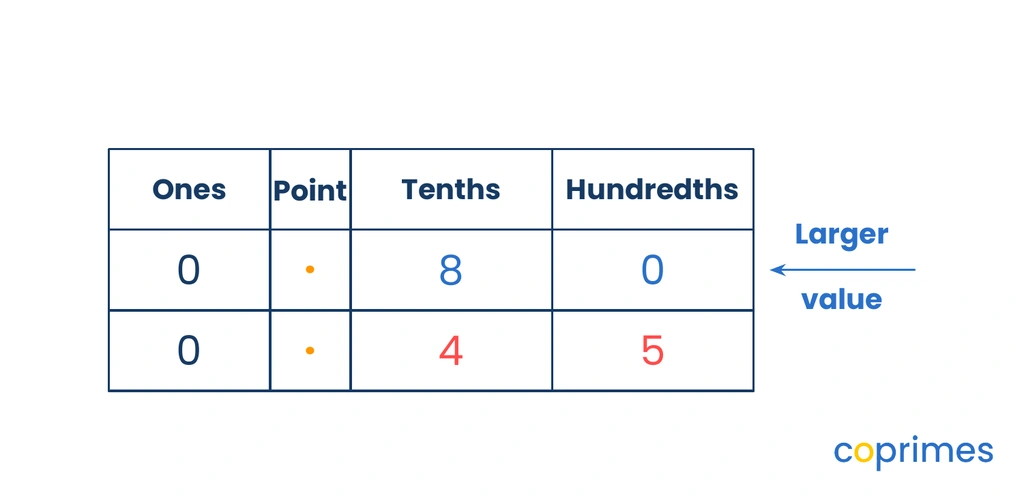
Because tenths is more than tenths, is the larger value. Another frequent error is skipping placeholder zeros immediately after the decimal point. If a number has ones and hundredths, writing is incorrect because it mistakenly places the in the tenths position. The accurate decimal notation is .
Frequently asked questions
What is the decimal notation of 1?
The decimal notation of is . While it is most commonly written simply as the whole number , adding a decimal point and a trailing zero emphasizes that there are exactly zero fractional parts.
What is the decimal notation of a fraction?
The decimal notation of a fraction expresses the same value using a decimal point rather than a numerator and denominator. For example, the fraction is equivalent to , which is written as in decimal notation.
What is the decimal notation of a percentage?
To write a percentage in decimal notation, divide the percentage value by and remove the percent sign. This effectively moves the decimal point two places to the left. Following this rule, is written as .
Practice questions
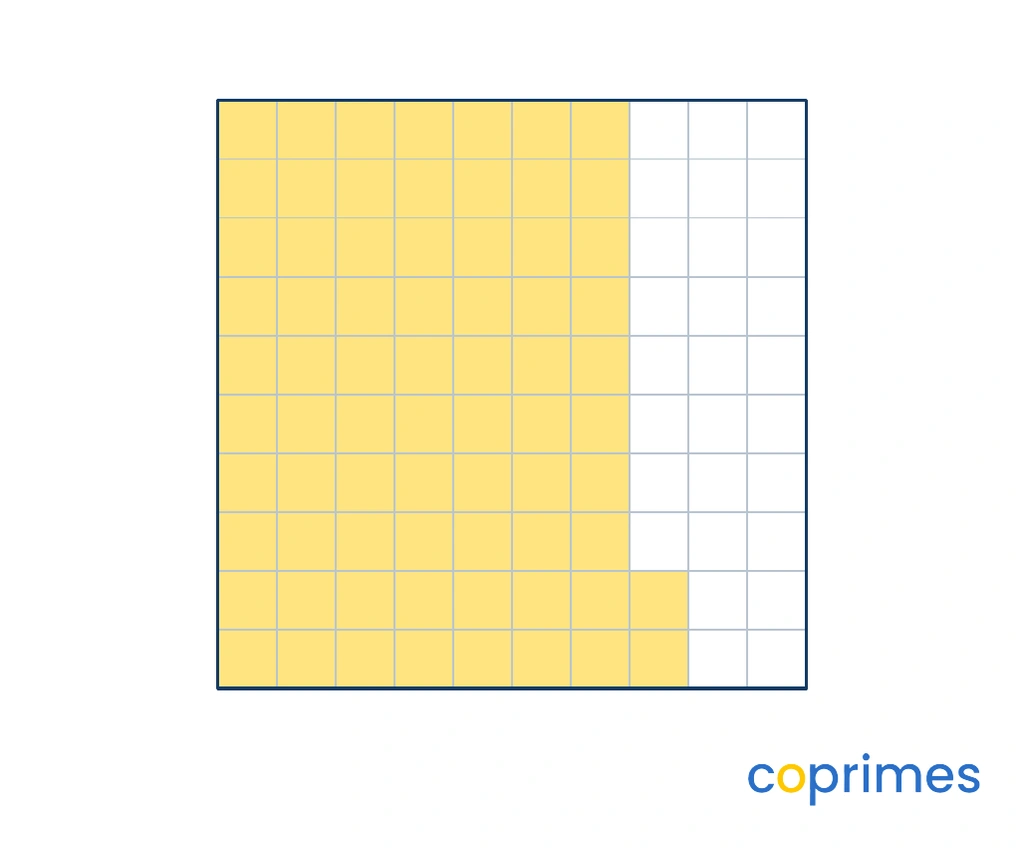
Which decimal notation represents the shaded area in the grid?
Which of the following is the correct decimal notation for and ?
In the decimal number , what is the value of the digit ?
Which of the following decimal numbers is NOT equal to ?
A student wants to write a number that has tens, ones, tenths, and thousandths. Which is the correct decimal notation?