
How to Convert Fractions to Decimals
To convert a fraction to a decimal, either rewrite it as an equivalent fraction with a denominator of , , or , or divide the numerator by the denominator. Simplifying the fraction first can often make the calculation easier.
Understanding this fraction-decimal conversion is essential for comparing values, performing calculations, and working with percentages. Converting fractions allows you to express parts of a whole in standard decimal notation. This process is the reverse of converting decimals to fractions.
How do you convert fractions to decimals?
Converting a fraction to a decimal means changing its format while keeping its value exactly the same. You achieve this by representing the value using decimal place value.
There are two primary methods to write fractions as decimals:
- Using equivalent fractions: Scale the denominator to a power of ten, such as , , or .
- Using division: Divide the numerator by the denominator.
The equivalent fraction method is very fast but only works easily when the denominator is a factor of , , or (such as , , , , or ). When the denominator does not scale easily, division is the most reliable method.
Use equivalent fractions with powers of ten
If the denominator can be multiplied by a whole number to reach , , or , you can create an equivalent fraction that translates directly into a decimal.
Multiply both the numerator and the denominator by the same number. Once the denominator is a power of ten, the numerator gives the digits of the decimal.
For example, to convert into a decimal, multiply the numerator and denominator by to reach a denominator of :
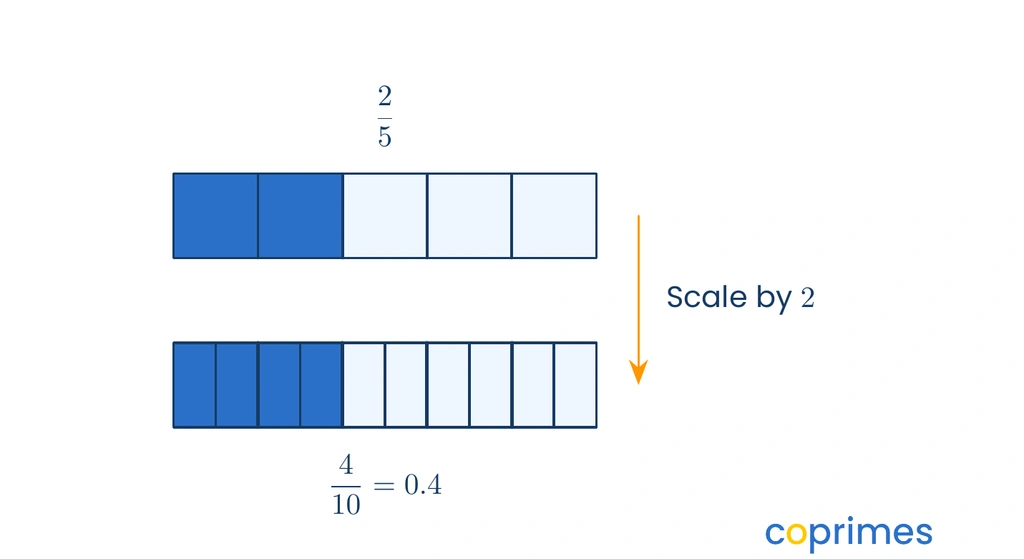
Similarly, if you have , multiply the numerator and denominator by to reach a denominator of . The result is , which is written as .
Use division
When the denominator does not easily scale to a power of ten, use division to convert the fraction to decimal form.
A fraction bar represents division. To convert any fraction, simply divide the top number by the bottom number.
Always divide the numerator by the denominator, even if the numerator is smaller.
For example, to convert to a decimal, calculate . Because is smaller than , you will place a decimal point and append zeros to the dividend () to complete the long division.
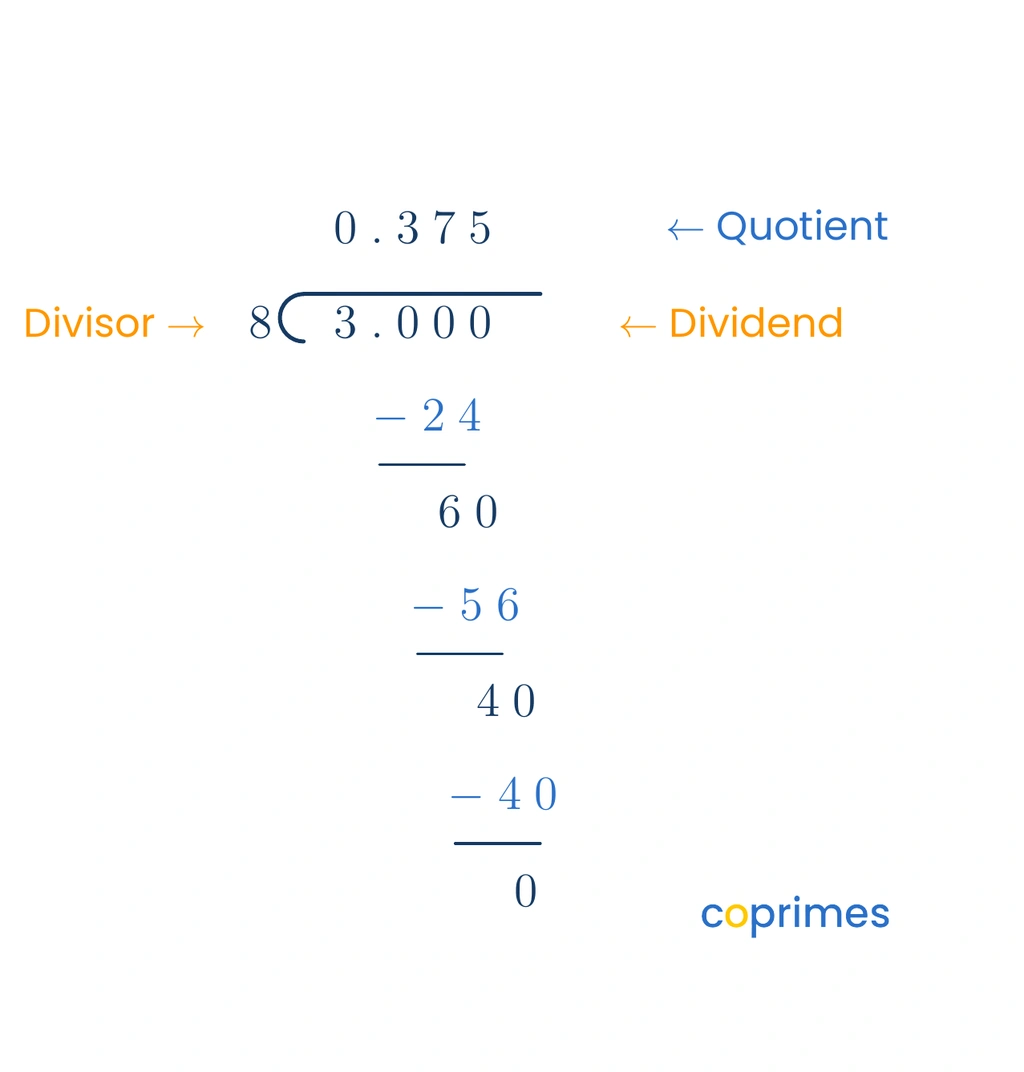
The resulting decimal is . Therefore, .

Convert proper and improper fractions
A proper fraction has a numerator smaller than the denominator and converts to a decimal between and . An improper fraction has a numerator larger than or equal to its denominator and converts to a decimal of or greater.
When converting an improper fraction like , you can divide directly: .
If you have a mixed number, you can handle the conversion in two ways:
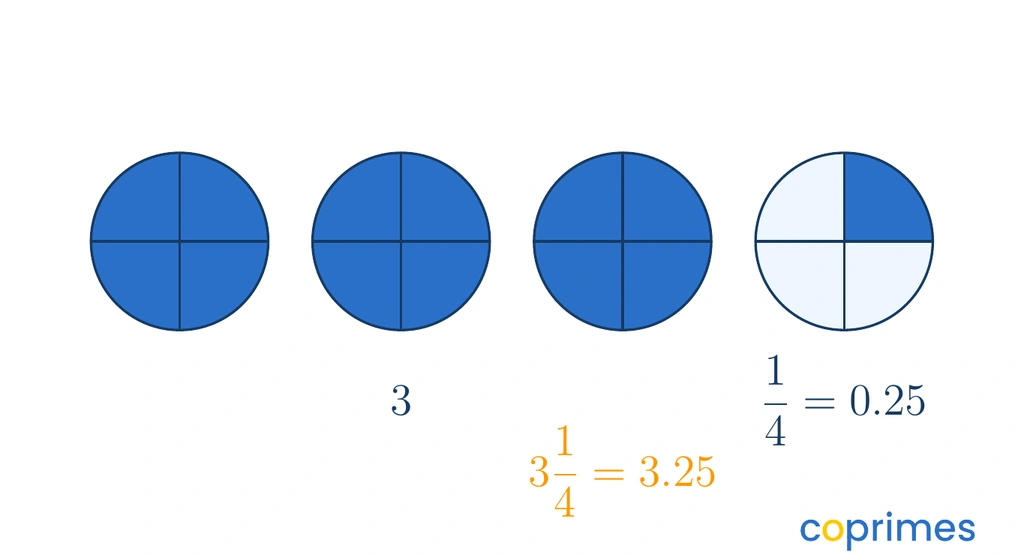
- Keep the whole number separate: Write the whole number before the decimal point, and use division or equivalent fractions to convert only the fractional part. For example, to convert , keep the and convert to . The combined result is .
- Convert to an improper fraction first: Rewrite as , then divide by to get .
Recognise terminating and recurring results
When you divide the numerator by the denominator, the result will fall into one of two categories: terminating decimals or recurring decimals. This difference determines the decimal expansion of rational numbers.
A terminating decimal ends completely because the division eventually reaches a remainder of zero. For example, .
A recurring decimal (or repeating decimal) has a digit or a group of digits that repeats infinitely. This happens when the division results in a repeating pattern of remainders.
To write a recurring decimal, place a line over the repeating digits. For example, converting requires dividing by . The division yields , which never ends. You write this as .
If a larger block of digits repeats, such as , place the line over the entire repeating sequence: .
Worked examples
Example 1: Converting an improper fraction to a decimal
Question: Convert to a decimal.
Method:
- Because the fraction is improper, the result will be greater than .
- Divide the numerator by the denominator: .
- goes into one time with a remainder of .
- Add a decimal point and a zero to make it .
- goes into exactly times.
Answer: .
Check: Multiply the decimal by the denominator: .
Example 2: Converting a mixed number to a decimal
Question: Convert to a decimal using equivalent fractions.
Method:
- Keep the whole number separate.
- Focus on the fractional part, .
- Find an equivalent fraction with a denominator of by multiplying the numerator and denominator by .
- .
- Combine the whole number with the decimal part.
Answer: .
Check: Convert back to an improper fraction: . Simplify by dividing by to get , which is .
Example 3: Converting a fraction to a recurring decimal
Question: Convert to a decimal.
Method:
- Divide by . Place a decimal point and append zeros: .
- goes into eight times () with a remainder of . The first decimal digit is .
- Bring down a zero to make . goes into three times () with a remainder of .
- Bring down a zero to make . goes into three times () with a remainder of .
- The remainder of repeats infinitely, meaning the digit will repeat.
Answer: .
Check: The digit does not repeat, but the does. The notation correctly places the bar only over the .
A learning plan shaped by your child, not the class
State-aligned Math plus our own Logic and English curriculum. An adaptive baseline test finds the gaps and fills them.
Common mistakes
- Flipping the division order: The most frequent error is dividing the larger number by the smaller number, regardless of their position. For , you must calculate . Calculating is incorrect.
- Ignoring the whole number: When converting a mixed number, it is easy to convert only the fraction and forget to write the whole number in front of the decimal. Always carry the whole number into your final answer.
- Misplacing the recurring bar: When writing a repeating decimal, the bar must cover only the exact sequence of digits that repeats. Writing instead of changes the value.
Frequently asked questions
How do you convert fractions to decimals?
To convert a fraction to a decimal, divide the top number (numerator) by the bottom number (denominator). Alternatively, multiply both the numerator and denominator by a value that turns the denominator into a power of ten, then write the resulting digits as a decimal.
Do all fractions convert to decimals that end?
No. While some fractions create terminating decimals that end at a specific place value, others create recurring decimals that repeat infinitely. If the simplified fraction's denominator has any prime factors other than or , the decimal will repeat.
What is a mixed number?
A mixed number combines a whole number and a proper fraction, such as . It represents a value greater than . When converting it to a decimal, the whole number remains to the left of the decimal point.
Practice questions
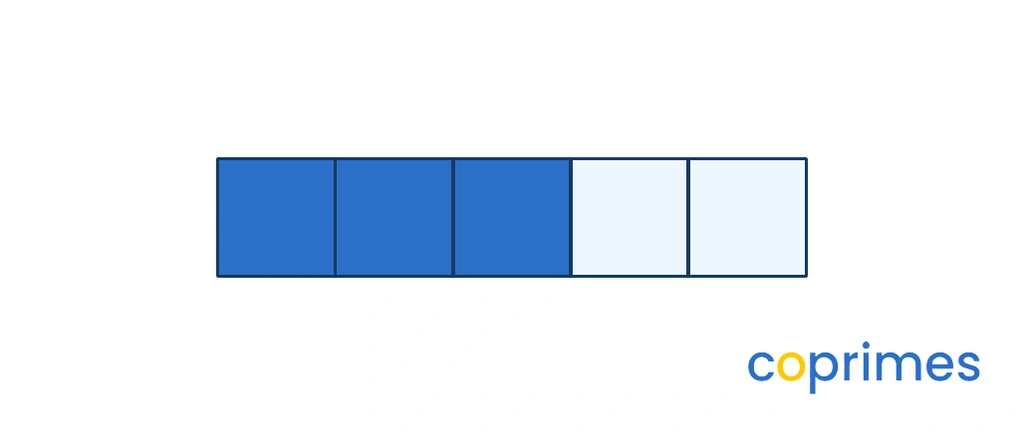
What decimal represents the shaded area of the model?
Convert to a decimal.
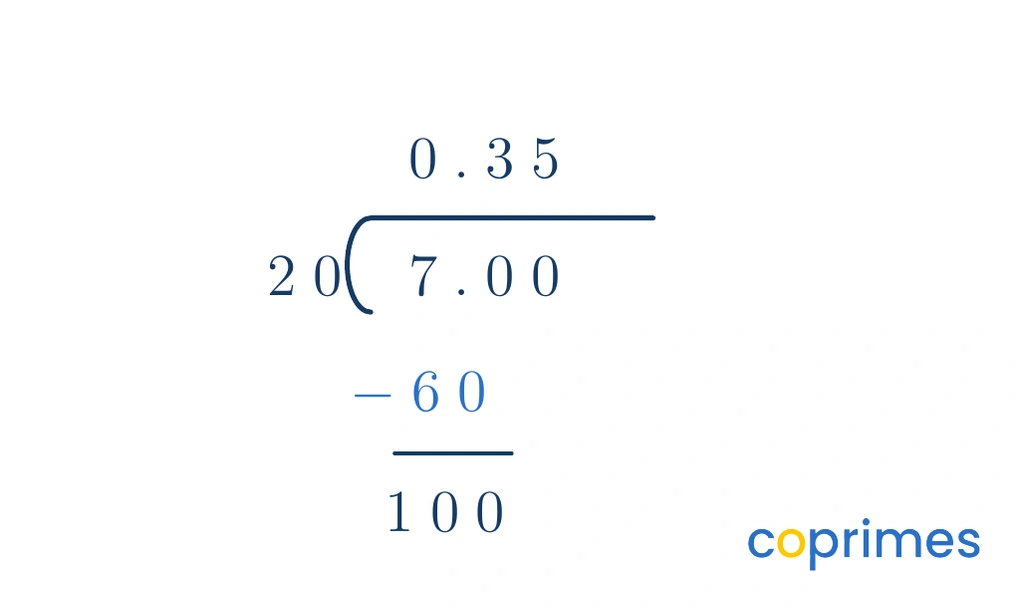
Which fraction is being converted to a decimal in this division model?
What is the correct decimal form of ?
Convert to a decimal.