
Identity Property of Multiplication
The identity property of multiplication states that multiplying any number by one leaves the number unchanged. Because the value remains exactly the same, the number one is known as the multiplicative identity. This foundational rule applies to all types of numbers and algebraic expressions.
What is the identity property of multiplication?
The identity property of multiplication, sometimes called the one property of multiplication, means that the product of any number and one is always the original number itself.
Whenever you multiply a quantity by one, the quantity retains its original mathematical identity. Understanding the properties of multiplication helps simplify complex calculations and makes solving algebraic equations much more efficient.
The multiplicative identity guarantees that multiplying by one does not change a number's value.
Why one is the multiplicative identity
In mathematics, an identity is a special value that leaves other numbers unchanged during a specific operation.
For multiplication, this special number is one. When you have one group of a certain quantity, you simply have that exact quantity, without any increases or decreases.
Because multiplication is commutative, the order of the numbers does not matter. Whether you multiply a starting number by one, or multiply one by the starting number, the final result is identical.
Formula and visual model
The identity property can be written as an algebraic formula, where the letter represents any real number.
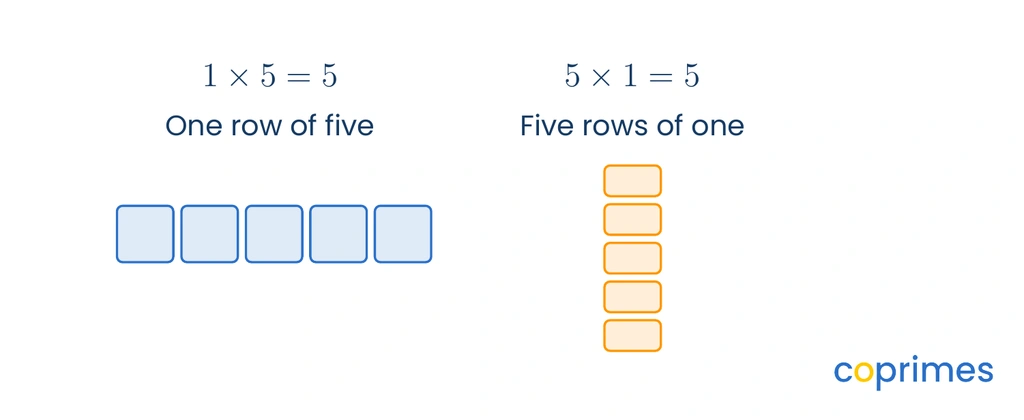
We can model this property visually using arrays. One row of five objects represents the same total quantity as five rows containing one object each.
A learning plan shaped by your child, not the class
State-aligned Math plus our own Logic and English curriculum. An adaptive baseline test finds the gaps and fills them.
Identity with different number types
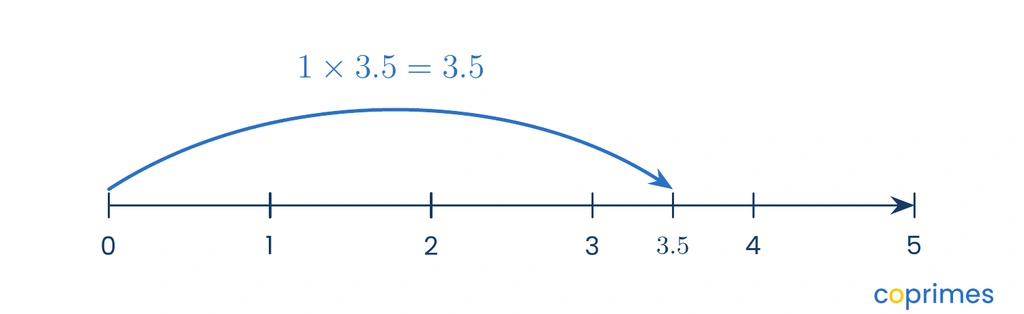
The multiplicative identity applies uniformly to every type of number, not just positive whole numbers. The rule behaves the exact same way for fractions, decimals, negative integers, and unknown variables.
- Whole numbers:
- Fractions:
- Decimals:
- Negative numbers:
- Variables:
Identity versus zero
Students often confuse the identity property with the zero property of multiplication.
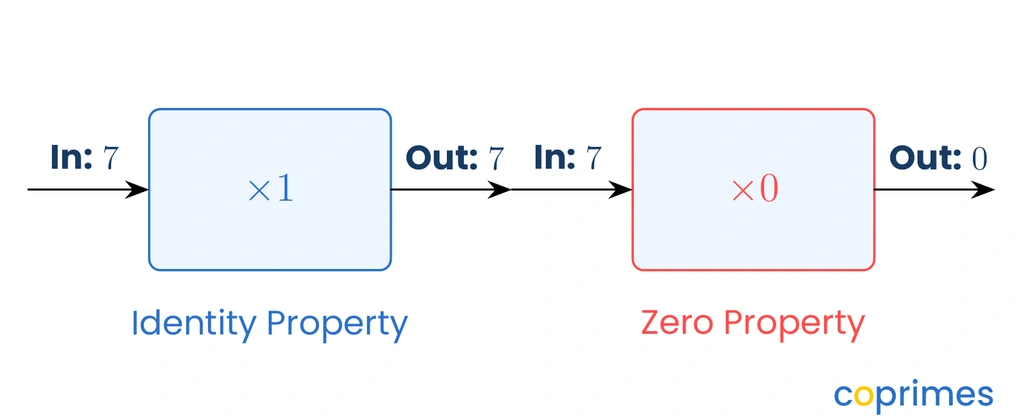
While multiplying by one preserves the original number, multiplying by zero completely changes the value because it always results in zero. Additionally, while the undefined nature of division by zero restricts calculations, multiplying and dividing by one are perfectly valid operations that leave quantities intact.
Property | Multiplier | Effect | Example |
Identity Property | The number stays exactly the same. | ||
Zero Property | The product is always zero. |
Worked examples
Example 1: Finding an unknown multiplier
Question: Find the missing value in the equation .
Method:
- Look at the starting number and the final product.
- Notice that the number has remained completely unchanged.
- Apply the identity property of multiplication, which states that any number multiplied by one equals itself.
Answer: The missing value is .
Check: . The equation is correct.
Example 2: Simplifying algebraic expressions
Question: Simplify the expression .
Method:
- Identify the multiplier outside the parentheses.
- Recognize that multiplying the entire expression by one will leave its value unchanged.
- Remove the multiplier of one, leaving the internal expression intact.
Answer: The simplified expression is .
Check: Distributing the yields .
Example 3: Applying identity to fractions
Question: What is the product of and ?
Method:
- Set up the multiplication problem: .
- Use the identity property of multiplication. Any fraction multiplied by one retains its original value.
Answer: The product is .
Check: Write as and multiply: , which simplifies back to .

Frequently asked questions
Is there an identity property for addition?
Yes, but the identity number for addition is zero, not one. The additive identity property states that adding zero to any number leaves it unchanged (for example, ).
Does the identity property apply to division?
It works in one direction. Dividing any number by one leaves the number unchanged (). However, dividing one by another number changes the value (), so division does not share the same full commutative identity property as multiplication.
Practice questions
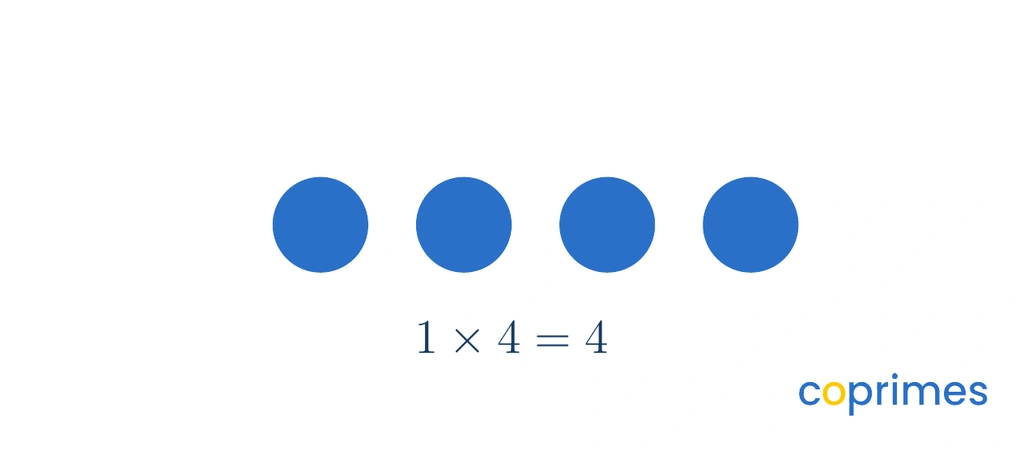
Which mathematical property does the visual model represent?
Identity property of multiplication
Zero property of multiplication
Identity property of addition
Commutative property of multiplication
Identity property of multiplication
What is the missing value in the equation ?
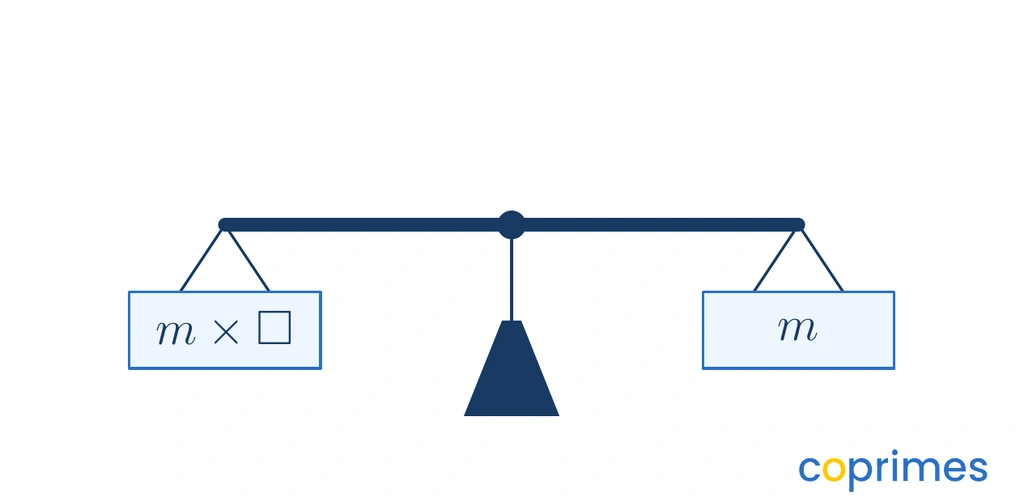
For the scale to remain balanced, what number must replace the square?
Which expression correctly uses the identity property of multiplication to simplify ?
Which equation accurately demonstrates the identity property of multiplication?