
Ordering Fractions: Definition, Method and Examples
Ordering fractions means arranging them from least to greatest or greatest to least by comparing their values. This is often done by rewriting the fractions with a common denominator, converting them to decimals, or locating them on a number line to clearly see their relative sizes.
What is ordering fractions?
Ordering fractions is the process of arranging a set of fractions from least to greatest (ascending order) or from greatest to least (descending order).
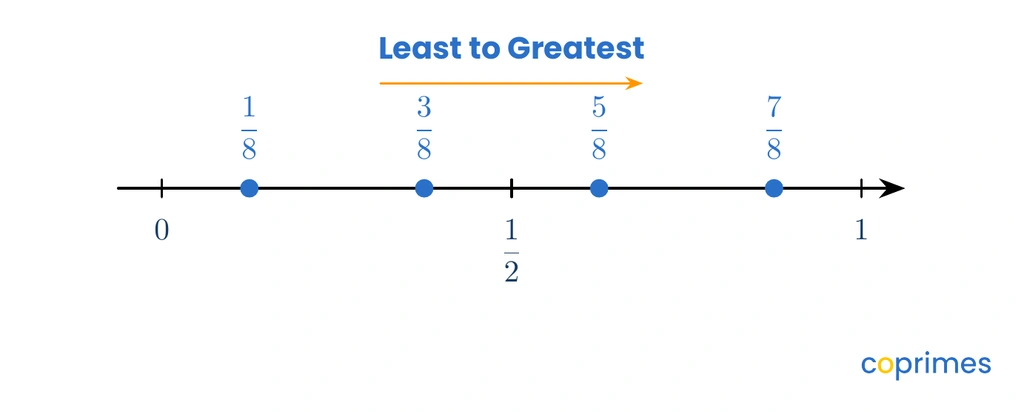
Understanding how to properly sequence fractional values allows you to organize data, interpret measurements, and solve proportional relationships accurately.
Order fractions with the same denominator
When fractions share the same denominator, all the parts represent the exact same size of the whole. You can determine the order simply by comparing their numerators.
Fractions must represent the same whole before you can accurately compare their parts.
Before working with mixed groups, it is helpful to be comfortable with comparing fractions to quickly recognize which individual value is larger.
Order fractions with different denominators
Fractions with different denominators have different piece sizes. To compare them fairly, you must rewrite them so they share a common denominator.
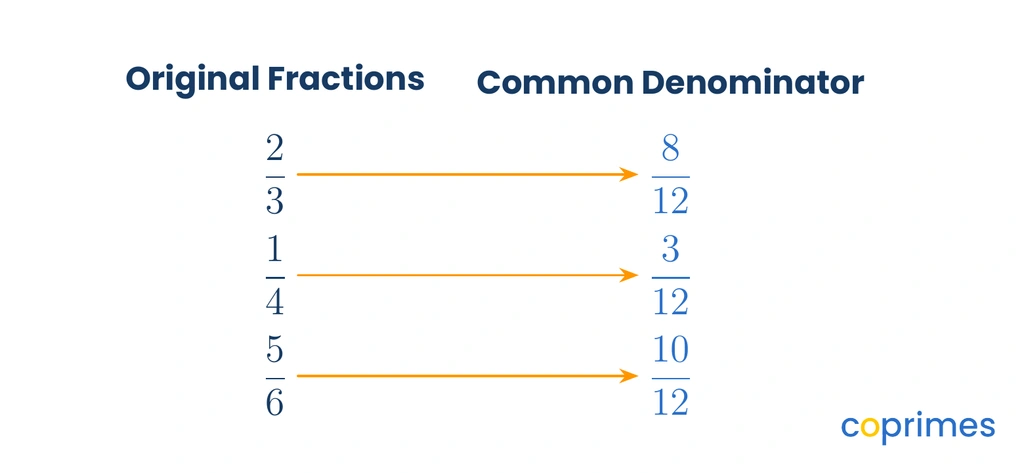
Method for ordering fractions with different denominators:
- Find a common multiple for all the denominators in the set.
- Multiply the numerator and denominator of each fraction by the necessary factor to create equivalent fractions.
- Arrange the equivalent fractions in order by comparing their numerators.
- Rewrite the final list using the original fractions.
A learning plan shaped by your child, not the class
State-aligned Math plus our own Logic and English curriculum. An adaptive baseline test finds the gaps and fills them.
Order fractions using benchmarks
Sometimes, you do not need to find a common denominator. You can evaluate fractions by comparing them to known benchmark fractions such as , , and .
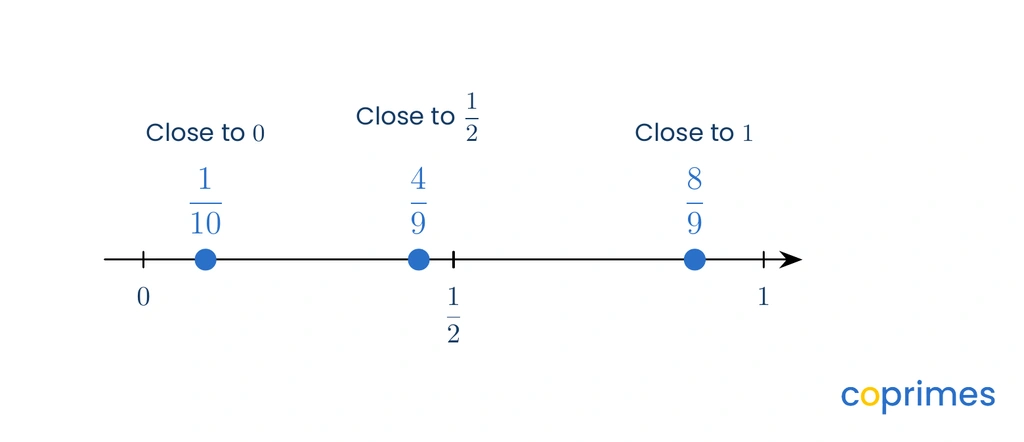
Using benchmarks is often the fastest way to arrange values if some fractions are obviously small while others are nearly whole.
Order improper fractions and mixed numbers
When a list contains both proper fractions and mixed numbers, convert the mixed numbers into improper fractions first. This standardizes the format before you find a common denominator.
Always convert mixed numbers to improper fractions before finding a common denominator.
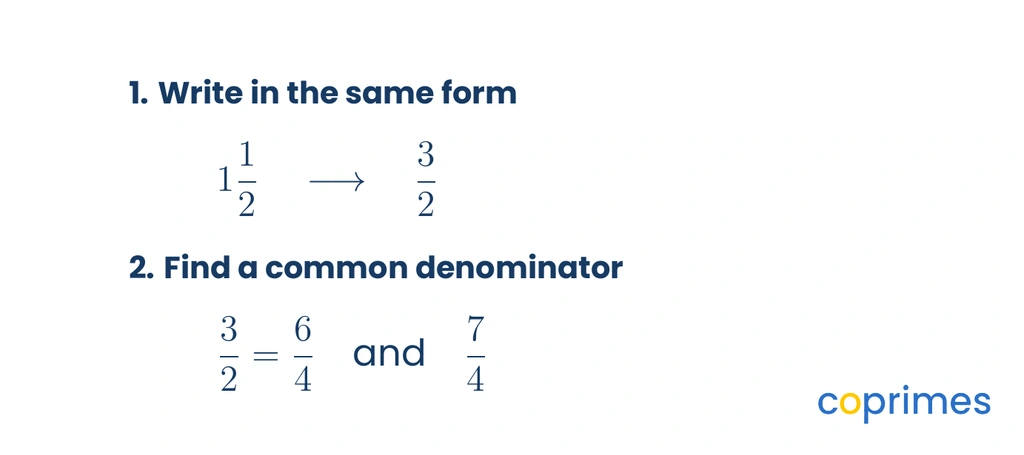
Plotting these fractions on a number line is another reliable method for seeing their true order when values exceed one whole.
Worked examples
Example 1: Ordering proper fractions
Question: Order the fractions , , and from least to greatest
.
Method:
- Find a common denominator. The least common multiple of , , and is .
- Convert each to an equivalent fraction. , , and .
- Order the equivalent fractions by numerator: , , .
Answer: The ordered list is , , .
Check: The fraction is less than a half, is slightly more than a half, and is close to one. The order is correct.
Example 2: Ordering improper fractions and mixed numbers
Question: Order the values , , and from greatest to least.
Method:
- Convert the mixed number into an improper fraction. The value becomes .
- Find a common denominator for , , and . The lowest common multiple is .
- Create equivalent fractions. , , and .
- Order the fractions by their numerators from greatest to least: , , .
Answer: The ordered list is , , .
Check: The decimal equivalents are approximately , , and . The descending order is mathematically correct.
Example 3: Ordering a set with equivalent fractions
Question: Order the fractions , , , and from least to greatest.
Method:
- Convert the mixed number to the improper fraction .
- Find a common denominator for , , and . The common denominator is .
- Rewrite as equivalent fractions. , , , and remains .
- Compare the numerators: .
Answer: The ordered list is , , .
Check: Since and represent the exact same value, equating them correctly handles the tie within the set.

Common mistakes
Here are some frequent errors to avoid when organizing fractions:
- Comparing numbers individually: It is a mistake to think is smaller than just because and are small numbers. You must evaluate the mathematical relationship between the numerator and denominator.
- Assuming improper fractions are smaller: An improper fraction can represent a larger value than a mixed number. Always convert both to the same form before judging.
- Mixing up the required order: Read the question carefully to see if it asks for least to greatest or greatest to least.
- Forgetting the original fractions: After doing calculations with equivalent denominators, remember to write your final answer using the original fractions given in the problem.
Frequently asked questions
Do you have to use the least common denominator?
No, any common multiple works as a denominator. However, using the lowest common multiple keeps the numbers smaller and easier to calculate.
Do you always need a common denominator?
No. You can convert the fractions to decimals, use benchmark fractions, or draw models to order them without calculating a common denominator.
Can comparison symbols be used to show the order?
Yes. Instead of using commas, you can separate the ordered fractions with the less than () or greater than () symbols to make the mathematical relationship explicit.
Practice questions
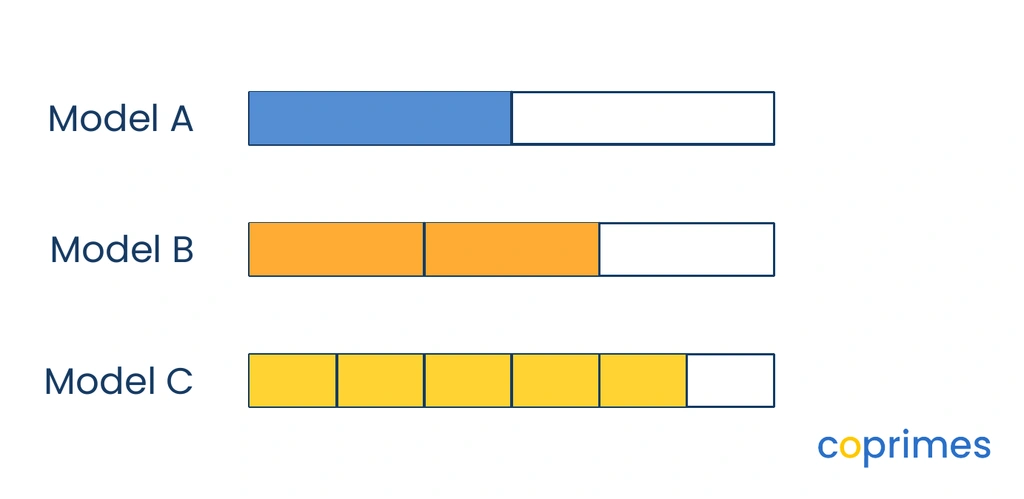
Which list shows the fractions represented by the models in order from least to greatest?
Order the fractions , , and from greatest to least.
Order the values , , and from least to greatest.
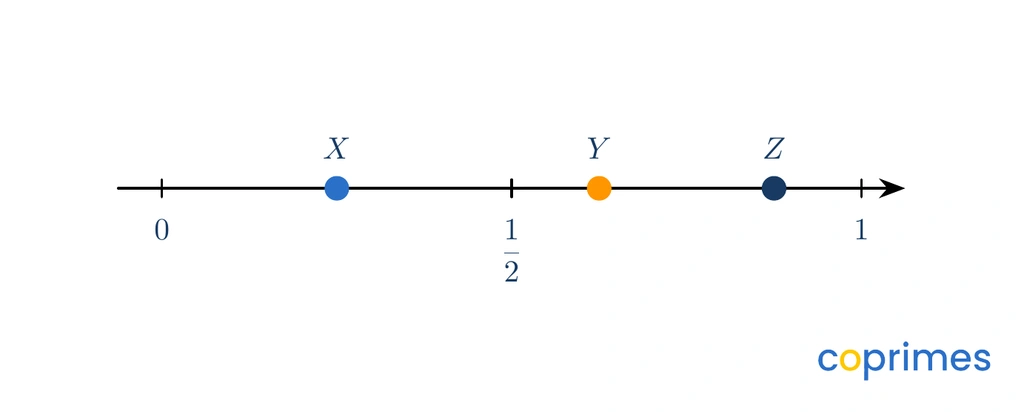
Which list of fractions could represent points , , and on the number line?
Which of the following sets of fractions is correctly ordered from greatest to least?