
Simplifying Radicals: Methods and Examples
Simplifying a radical rewrites it in an equivalent exact form by extracting perfect-power factors from the radicand. This means finding the largest perfect square factor inside a square root and moving it outside the radical symbol, leaving the smallest possible integer inside.
When simplifying square roots, the goal is to break down the number inside the root into smaller factors without changing its total value.
What Is Simplifying Radicals?
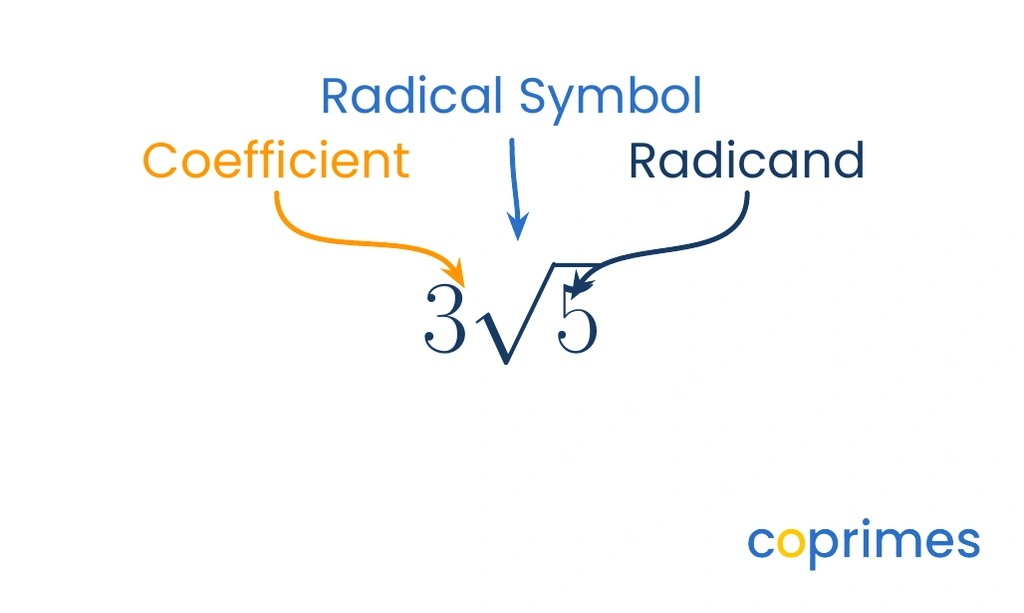
Simplifying radicals means reducing the number inside the root, known as the radicand, so that it contains no perfect square factors other than .
A perfect square is a number created by multiplying an integer by itself, such as , , , , or . If any of these numbers can divide evenly into the radicand, the radical is not yet completely simplified.
This concept is sometimes called simplifying surds and represents a foundational skill when working with radicals and surds.
A radical is completely simplified when its radicand has no perfect square factors remaining.
When to Use It
Radicals are simplified whenever exact mathematical values are required. Using a calculator provides a decimal approximation, which introduces rounding errors. Simplifying preserves the exact mathematical relationship.
Maintaining exact values is crucial for accurately scaling geometric shapes, analyzing exponents and powers, and estimating the order of magnitude of physical measurements without losing precision.
Step-by-Step Method
There are two primary methods used to simplify radicals: the largest perfect square method and the prime factorization method.
Both methods rely on the product property of square roots, which states that for non-negative values.
Method 1: Largest Perfect Square
- Find the largest perfect square that divides exactly into the radicand.
- Rewrite the radicand as the product of that perfect square and another integer.
- Separate the expression into two distinct roots using the product property.
- Evaluate the square root of the perfect square and place it outside the radical as the coefficient.
Method 2: Prime Factorization
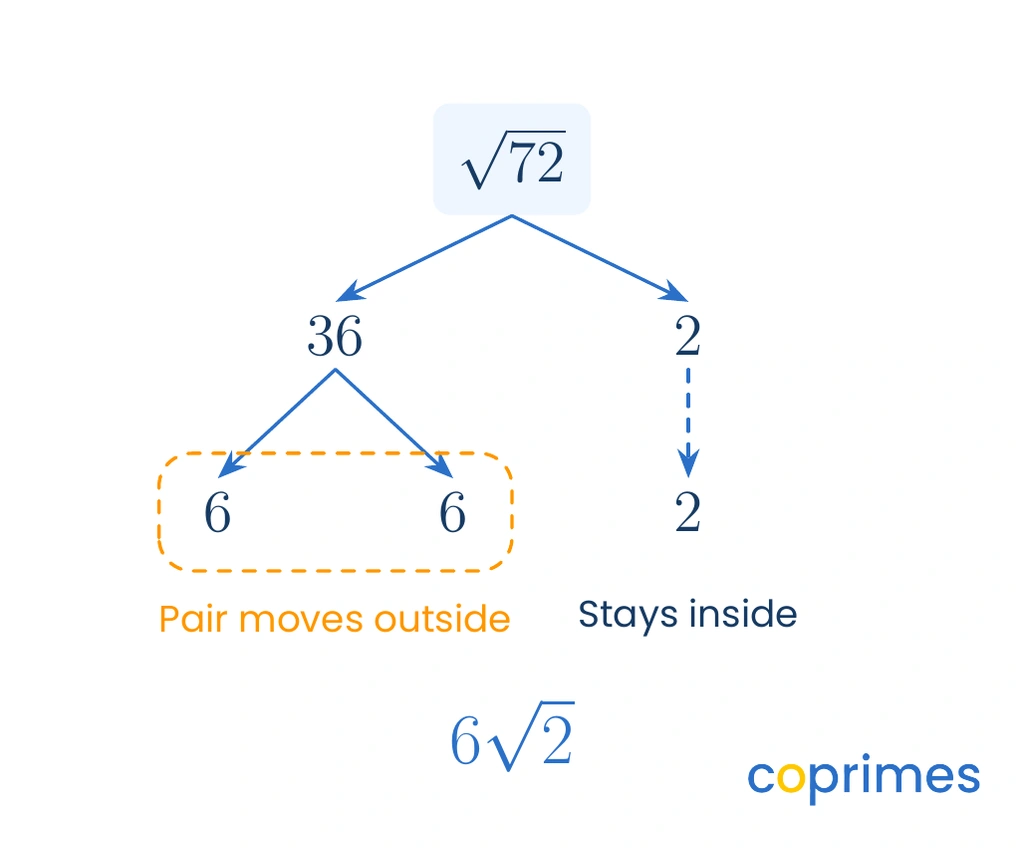
- Break the radicand down into its prime factors using a factor tree.
- Group identical prime factors into pairs.
- Move each pair outside the radical symbol as a single number.
- Multiply any numbers outside the radical together, and multiply any remaining unpaired numbers inside the radical together.

Visual Worked Examples
Using the methods introduced above, mathematical expressions containing square roots can be quickly simplified into their exact fractional or mixed representations.
Example 1: Using the largest perfect square
Question: Simplify the expression .
Method:
- Identify the perfect squares up to : .
- Find the largest one that divides evenly into . That number is .
- Rewrite the expression: .
- Separate the roots: .
- Simplify the perfect square: .
Answer: The simplified form is .
Check: Evaluate , which equals .
Example 2: Using prime factorization
Question: Simplify the expression .
Method:
- Break down into prime factors: .
- Group identical factors into pairs. There is one pair of s.
- Pull the pair of s outside the radical as a single .
- Leave the remaining unpaired factors, and , inside the radical.
- Multiply the numbers left inside: .
Answer: The simplified form is .
Check: Evaluate , which equals .
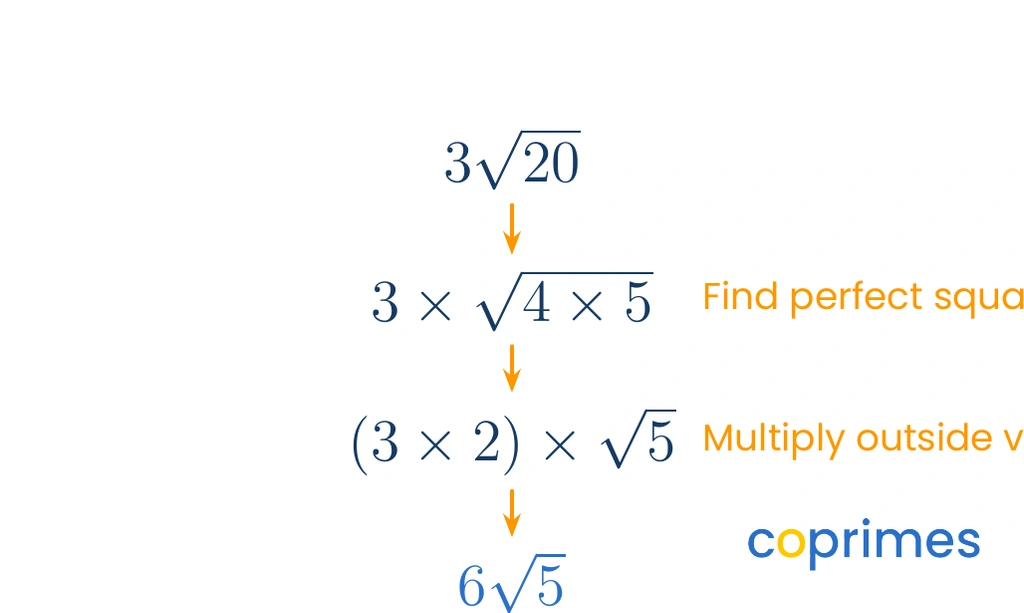
Example 3: Simplifying a radical with an existing coefficient
Question: Simplify the expression .
Method:
- Focus on the radicand first. The largest perfect square factor of is .
- Rewrite the root portion: .
- Simplify the root: .
- Multiply this result by the original coefficient that was already outside the radical: .
Answer: The simplified form is .
Check: Evaluate , which equals . The original expression's total value was . Both equal .
How to Check the Answer
Every simplified radical can be checked to ensure it retains its original value. The formula for verifying a simplified radical is straightforward: square the outside coefficient , and multiply that result by the radicand .
The final product must equal the original unsimplified radicand. If there was a coefficient on the original expression, verify that the total interior value matches. For example, if simplifies to , check it by calculating . The original expression was , which represents a total squared interior value of . The forms are equivalent.
Common Mistakes
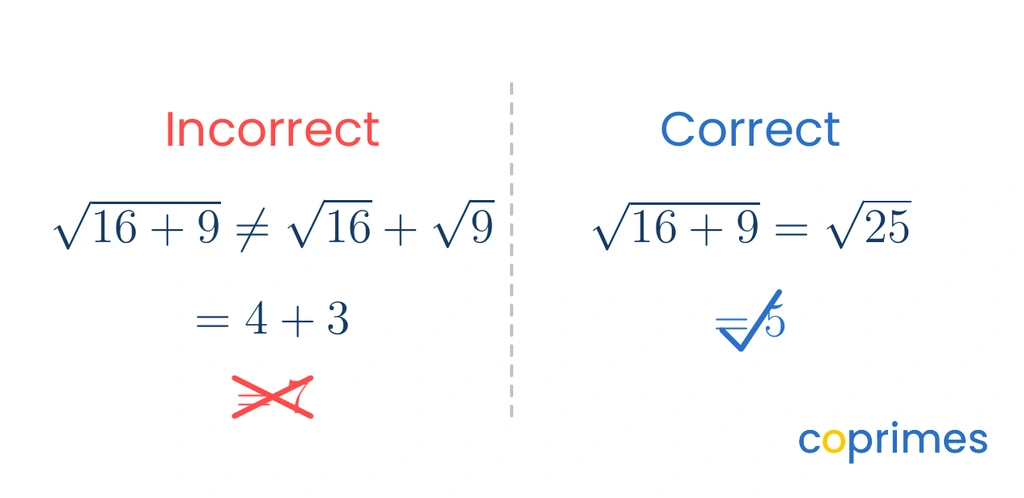
A frequent error occurs when evaluating radicals containing addition or subtraction. The sum inside a square root cannot be separated into two different roots.
For instance, does not equal . If separated incorrectly, it evaluates to . However, the correct method evaluates the addition first: . Because is not equal to , the individual terms cannot be separated across an addition sign.
Another common mistake is simplifying the radicand but forgetting to multiply by the coefficient that was already in front of the radical, which changes the total value of the expression completely.
A learning plan shaped by your child, not the class
State-aligned Math plus our own Logic and English curriculum. An adaptive baseline test finds the gaps and fills them.
Practice questions
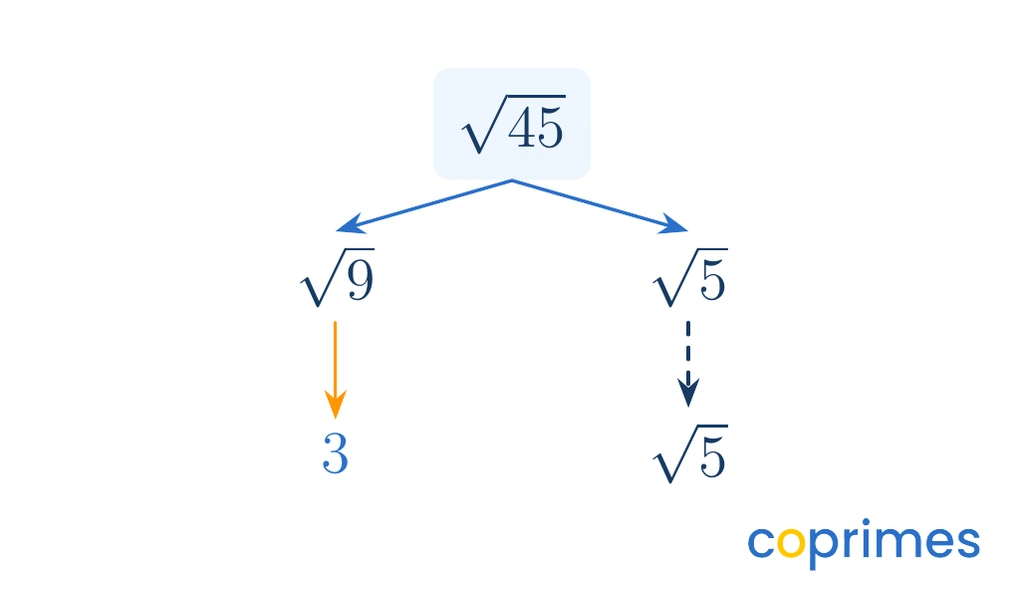
Based on the factor tree shown above, what is the completely simplified form of ?
Simplify the expression .
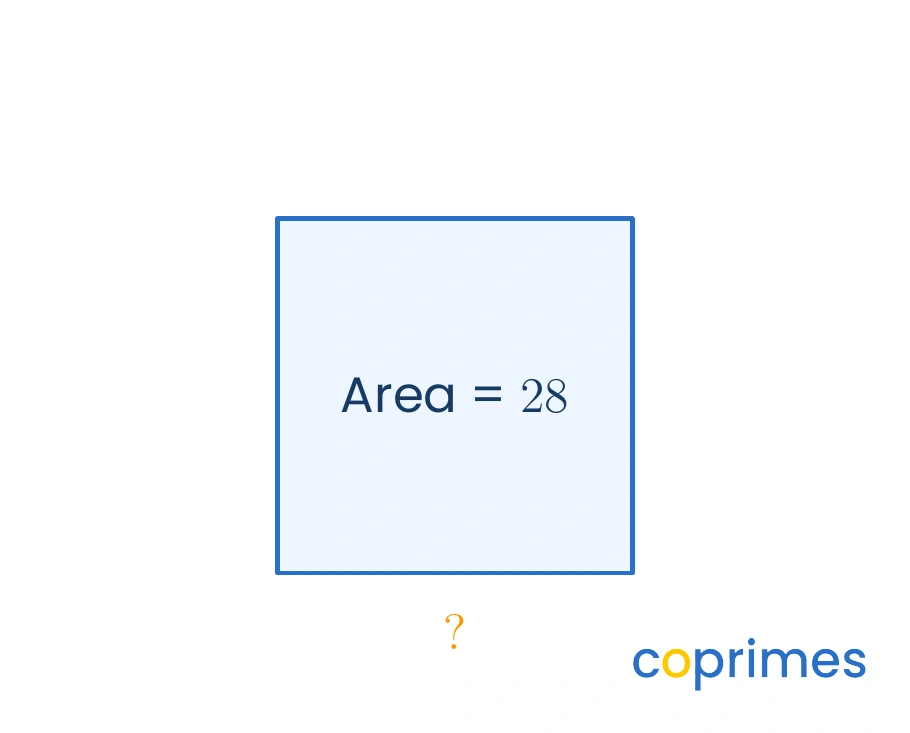
The area of the square is square units. The side length of any square is the square root of its area. What is the side length expressed as a simplified radical?
Which of the following radicals is already completely simplified?
Simplify the expression .