
Understanding Radicals and Surds in Grades 8-10
A radical expression contains a mathematical root, while a surd is a specific type of radical that represents an irrational root kept in its exact form. Terminology varies by region, but understanding how to simplify and calculate with radicals and surds is essential for algebra, geometry, and higher mathematics.
What Is Radicals and Surds?
A radical is any numerical expression or algebraic term that includes a root symbol. The most common radical is the square root, but radicals also include cube roots, fourth roots, and higher-order roots.
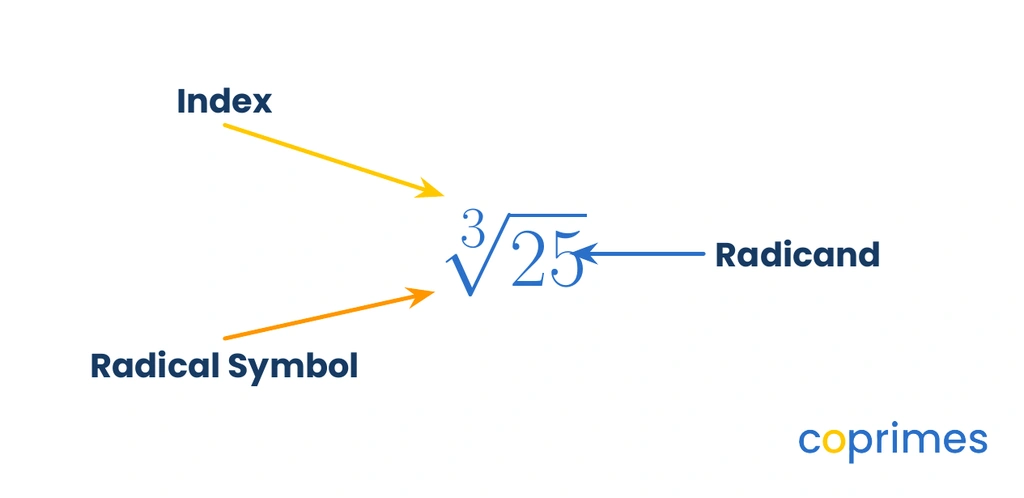
Every radical expression has three main components. The radical symbol indicates the root operation. The radicand is the number or expression written inside the root symbol. The index is the small number written outside the radical that determines the degree of the root. If no index is written, it is universally understood to be a square root, or an index of .
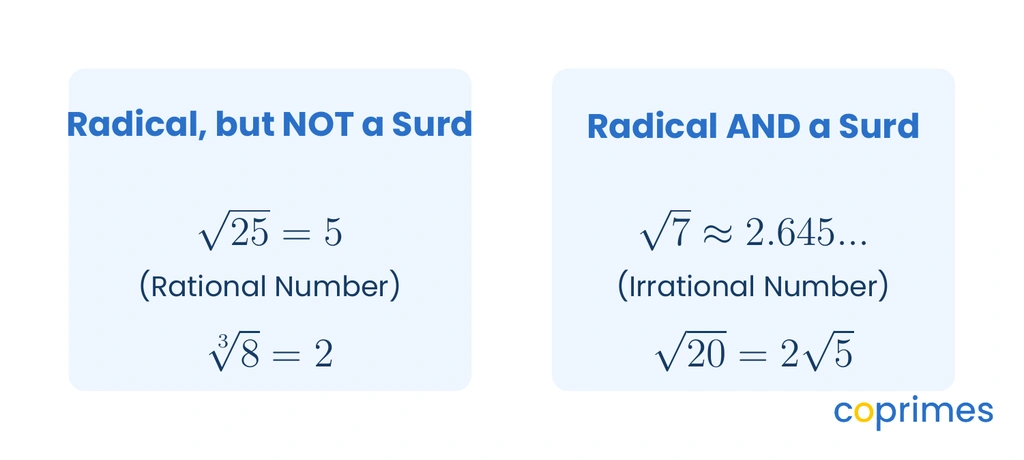
A surd is a special case of a radical. When a radical cannot be simplified into a rational number, it evaluates to a non-terminating, non-repeating decimal. Keeping this irrational root in its radical form provides a perfect, exact value. We call this exact irrational expression a surd.
All surds are radicals, but not all radicals are surds.
For example, is a radical, but because it simplifies perfectly to the whole number , it is not a surd. In contrast, cannot be simplified into a rational fraction, so it remains a surd.
Key Ideas and Vocabulary
The distinction between exact forms and approximate decimal values is the most important concept when calculating with radicals. Surds are a specific category of irrational numbers because their decimal expansions never terminate and never repeat.
When you calculate on a calculator, it displays an approximation like . If you use this rounded decimal in a multi-step engineering or physics calculation, your final answer will lose accuracy. Writing the value exactly as prevents this rounding error.
Because radicals are the inverse operations of exponents and powers, they follow strict algebraic rules. You can multiply and divide radicals with the same index by combining their radicands. For example, .
However, you can only add or subtract radicals if they have the exact same radicand, similar to combining like terms in algebra. You cannot combine into .
Visual Explanation
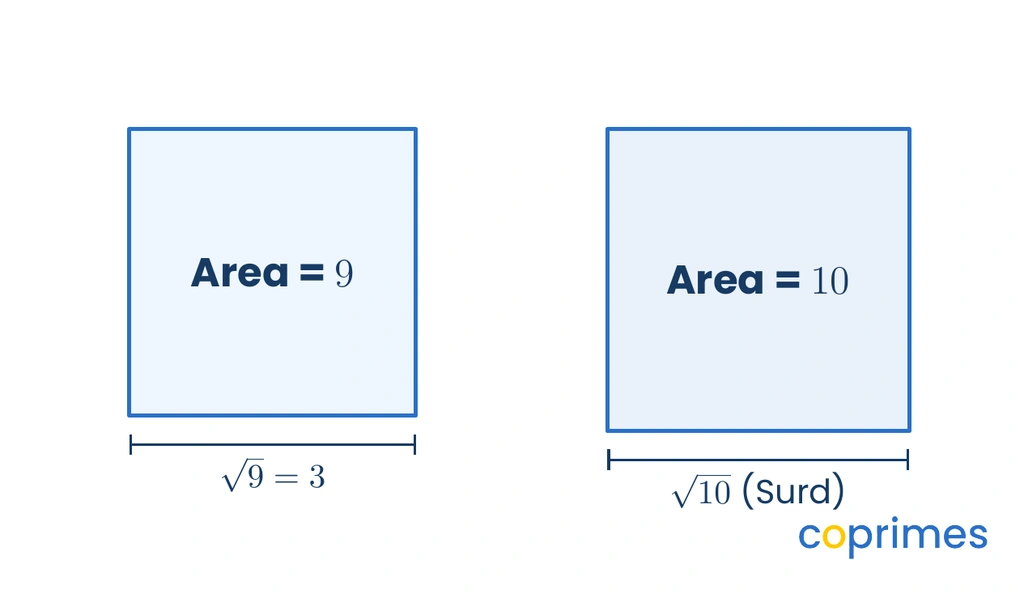
A geometric area model provides one of the clearest ways to understand the difference between rational roots and surds. When we find the square root of a number, we are mathematically calculating the side length of a square that has that number as its total area.
If a square has an area of square units, its side length is exactly units because . Because the area is a perfect square, the radical evaluates cleanly.
If a square has an area of square units, its side length is units. There is no rational fraction or terminating decimal that can be multiplied by itself to produce exactly . The length exists perfectly in the physical world, but numerically it can only be represented exactly as a surd.
A learning plan shaped by your child, not the class
State-aligned Math plus our own Logic and English curriculum. An adaptive baseline test finds the gaps and fills them.
Worked Examples
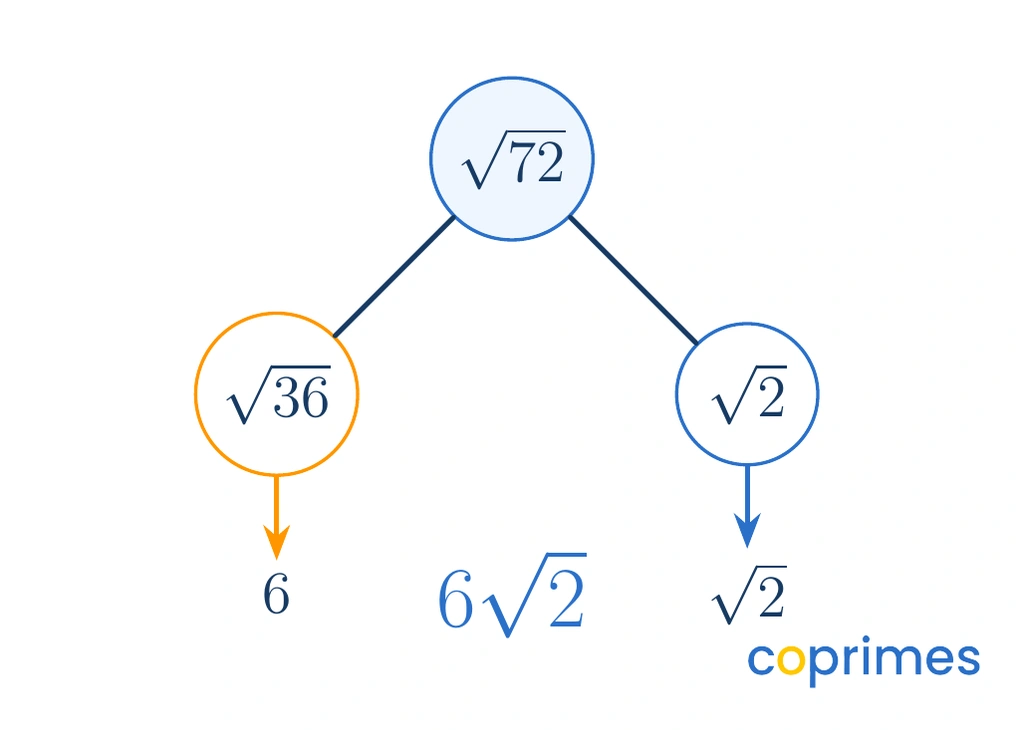
Before multiplying, adding, or dividing values, you should always master simplifying radicals. Factoring out the largest perfect square keeps your calculations manageable and helps you discover whether two expressions share the same radicand.
Example 1: Simplifying a radical expression
Question: Write the expression in its simplest surd form.
Given: The radical expression .
Method:
- Identify the largest perfect square that is a factor of the radicand. The factors of include , , and , which are all perfect squares. The largest is .
- Rewrite the radicand as a product of this perfect square and the remaining factor.
- Split the radical into separate roots using the multiplication property: .
- Evaluate the root of the perfect square.
Answer: .
Check: Square the outside number and multiply it by the inside number to ensure you return to the original radicand: .
Example 2: Adding and subtracting surds
Question: Simplify the expression .
Given: An expression containing two unlike radicals.
Method:
- Check if the radicands match. Because and are different, the terms cannot be combined yet.
- Simplify by factoring out the perfect square : .
- Multiply the outside coefficient by this new value: .
- Simplify by factoring out the perfect square : .
- Substitute the simplified surds back into the expression. Because the radicands now match, add their outside coefficients.
Answer: .
Check: Evaluate both the original expression and the final answer as decimals to verify they match. Both equal approximately .
Example 3: Rationalizing a binomial denominator
Question: Rationalize the denominator of .
Given: A fraction containing a binomial surd expression in the denominator.
Method:
- Identify the conjugate of the denominator by changing the sign between the terms. The conjugate of is .
- Multiply both the numerator and the denominator by this conjugate. This exploits the difference of squares pattern, , which will eliminate all radicals from the bottom.
- Expand the denominator: .
- Distribute or simplify the numerator: .
- Divide the outside coefficients if possible.
Answer: , which can also be written as .
Check: The final denominator is , confirming that no surd remains in the denominator position.
Common Mistakes and Non-Examples
The most frequent mistake in working with radicals is confusing the rules for addition with the rules for multiplication.
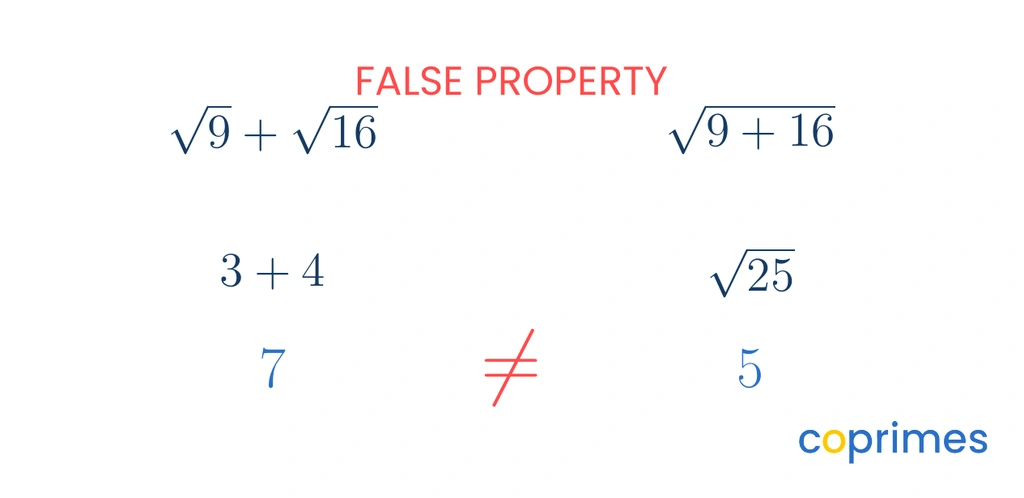
Because is a valid property, learners often incorrectly assume that . This addition property is mathematically false. You cannot split a sum inside a radical, and you cannot combine unlike radicands through addition.
Another common error is stopping the simplification process too early. If you rewrite as , the radical is smaller, but it is not fully simplified. The radicand still contains a perfect square factor of . You must continue until no perfect squares remain inside the root, yielding .
Real-World Connections
Surds play a critical role in exact engineering, architecture, and physics calculations. Just as scientific notation allows us to express astronomically large or small values compactly, leaving a value as a surd allows us to express an irrational number with absolute precision.
When dealing with scale in the physical world, knowing the order of magnitude of a surd helps you estimate its physical size immediately. For example, knowing that falls between and means the value must be between and meters long before you ever type it into a calculator.

Practice questions
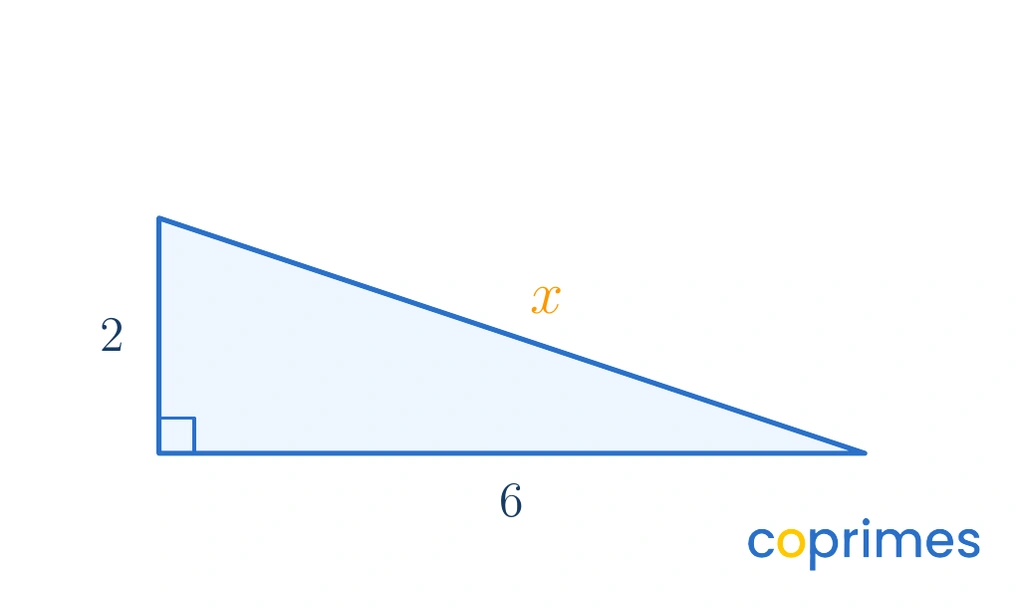
Using the Pythagorean theorem, what is the exact length of the hypotenuse in its simplest surd form?
Expand and simplify the expression .
Subtract the surds and simplify fully: .
Which of the following statements about operations with radicals is always mathematically true for positive numbers?
Rationalize the denominator of and simplify the answer fully.