
Subtraction With Regrouping: Definition, Method, and Examples
Subtraction with regrouping is a method used when a digit in the top number is smaller than the digit directly below it. It involves exchanging one unit from a higher place-value column for ten units in the next lower column to make the operation possible.
This process is a fundamental skill in multi-digit subtraction, allowing you to find the difference between any two numbers accurately.
What is subtraction with regrouping?
Regrouping subtraction is a technique used when subtracting numbers vertically in columns, and the top digit does not have enough units to subtract the bottom digit. Also known as borrowing in subtraction, renaming in subtraction, or exchanging in subtraction, the method adjusts the digits without changing the total value of the top number.
When you do not have enough ones, tens, or hundreds to complete the subtraction in a column, you must take from the next larger column to the left. This makes the smaller digit large enough to complete the calculation.
Why regrouping works
Regrouping works perfectly because of the base-ten number system. Every column to the left is exactly ten times larger than the column to its right.
When you take from the tens column, you are actually moving ones. When you take from the hundreds column, you are moving tens. The overall value of the number remains identical, but the amounts are shifted so that column subtraction with regrouping can proceed smoothly.
Place-value model
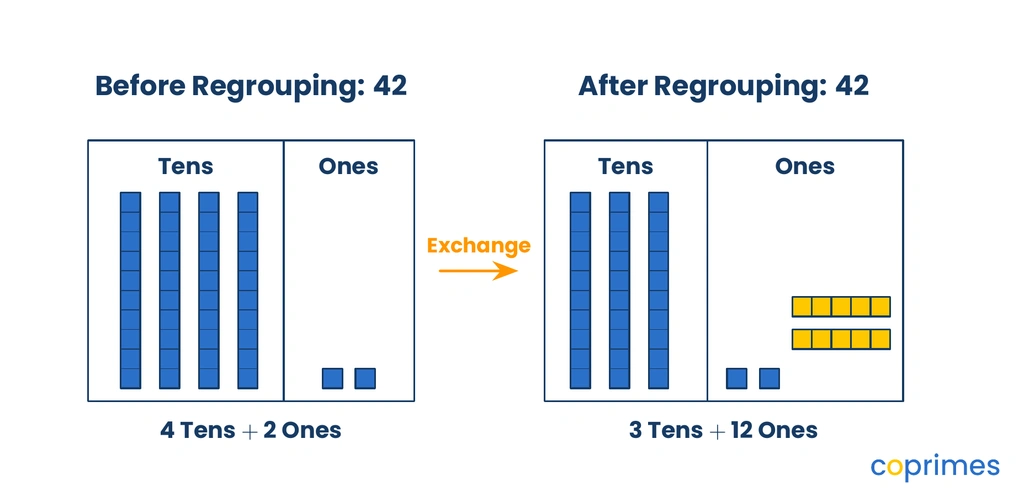
A place value chart is a visual way to understand how units are exchanged. When a number does not have enough ones for a subtraction step, you break apart one ten rod into ten separate ones.
One ten is exactly equal to ten ones.
A learning plan shaped by your child, not the class
State-aligned Math plus our own Logic and English curriculum. An adaptive baseline test finds the gaps and fills them.
Step-by-step method
When performing column subtraction, you must always work from right to left. Follow these numbered steps whenever a column requires regrouping.
- Stack the numbers vertically, aligning the ones, tens, and hundreds columns perfectly.
- Look at the rightmost column. If the top digit is smaller than the bottom digit, you must regroup.
- Cross out the digit in the top of the next column to the left. Decrease its value by and write the new number above it.
- Place a small next to the top digit in your current column, which increases its value by .
- Subtract the numbers in that column.
- Move left to the next column and repeat the entire process until the subtraction is complete.
Regrouping across zeros
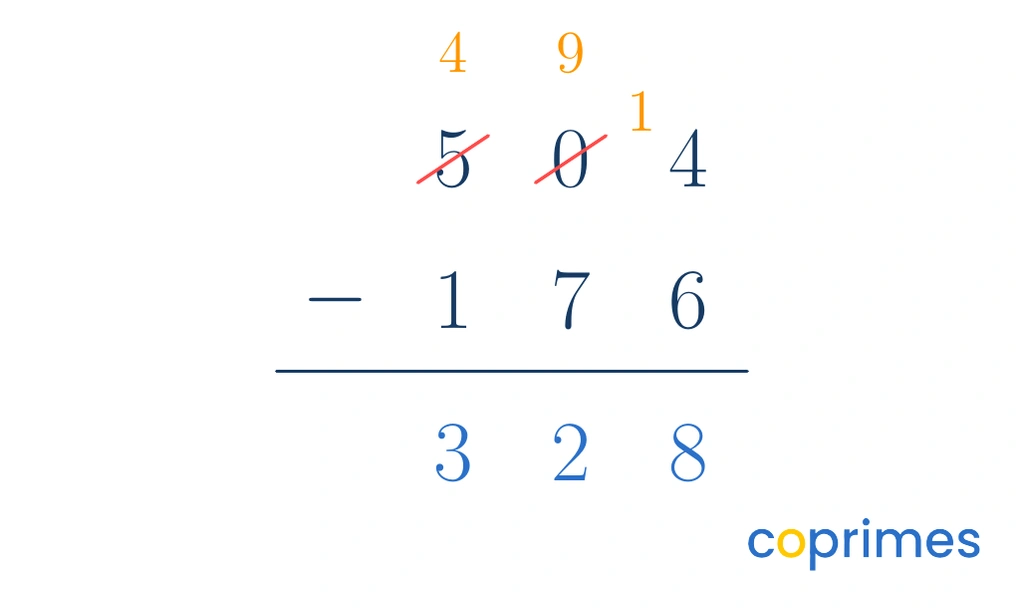
Sometimes, you need to regroup but the digit in the next column to the left is a . Because you cannot subtract from , you must move further to the left until you find a non-zero digit.
Cross out that non-zero digit and decrease it by . Give to the zero immediately to its right. Then, cross out that new , making it a , and pass to the original column that needed the regrouping. If there are multiple zeros, every middle zero becomes a .
Worked examples
Review these worked examples to see how subtraction with regrouping applies to different numbers.
Example 1: Regrouping the tens
Question: What is ?
Method:
- Line up the numbers vertically by place value.
- In the ones column, is smaller than . Regrouping is required.
- Take ten from the , leaving tens. Add that ten to the ones, making ones.
- Subtract the ones: .
- Subtract the tens: .
Answer: .
Check: Add the difference to the bottom number: . The calculation is correct.
Example 2: Regrouping multiple times
Question: Calculate .
Method:
- In the ones column, is smaller than . Take ten from the tens column (the becomes ) and add ones to the to make .
- Subtract the ones: .
- In the tens column, the top digit is now , which is smaller than .
- Take hundred from the hundreds column (the becomes ) and add tens to the to make .
- Subtract the tens: .
- Subtract the hundreds: .
Answer: .
Check: Add the parts: . The calculation is correct.
Example 3: Regrouping across zeros
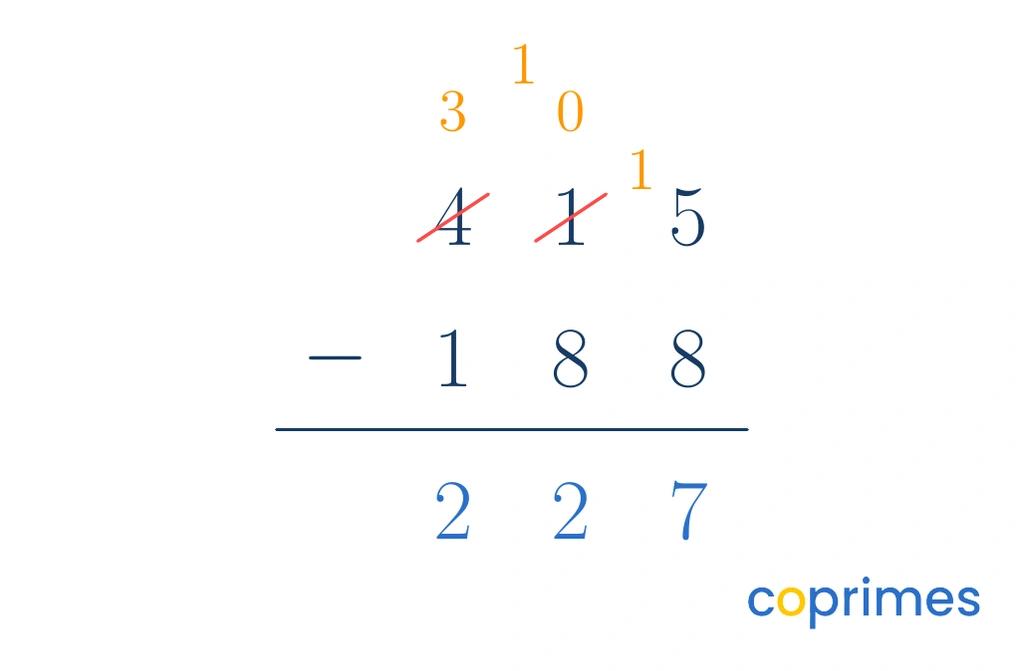
Question: Subtract .
Method:
- In the ones column, is smaller than . You must regroup, but the tens column is also .
- Move to the hundreds column. Cross out the and write . Give to the tens column.
- Now, cross out the in the tens column and write . Give to the ones column.
- Subtract the ones: .
- Subtract the tens: .
- Subtract the hundreds: .
Answer: .
Check: Add the answer to the subtracted amount: .

Common mistakes
Many learners make similar errors when learning this subtraction procedure. Be aware of these common traps.
Subtracting the bottom digit from the top digit incorrectly
When the top digit is smaller, some students mistakenly subtract the smaller top digit from the larger bottom digit to avoid regrouping entirely. For example, in , they might say and write as the answer. You must always subtract the bottom number from the top number.
Forgetting to reduce the left column
Another frequent mistake is adding to the target column but forgetting to subtract from the column to the left. This creates an answer that is exactly (or ) too large.
To catch these errors early, make a habit of checking subtraction by using addition. Add your final answer to the number you subtracted. If the math is correct, you will get the top starting number.
Frequently asked questions
Is subtraction with borrowing the same thing as regrouping?
Yes, they refer to the identical mathematical operation. Borrowing in subtraction is an older term, while renaming in subtraction or exchanging in subtraction are more modern descriptions. These terms accurately reflect that the total value of the top number stays the same—it is just grouped differently.
Can you regroup more than once in the same problem?
Yes. In multi digit subtraction regrouping, you often have to exchange multiple times. You might need to regroup from the hundreds to the tens, and then again from the tens to the ones, as long as the top digit in any column is smaller than the bottom digit.
Practice questions
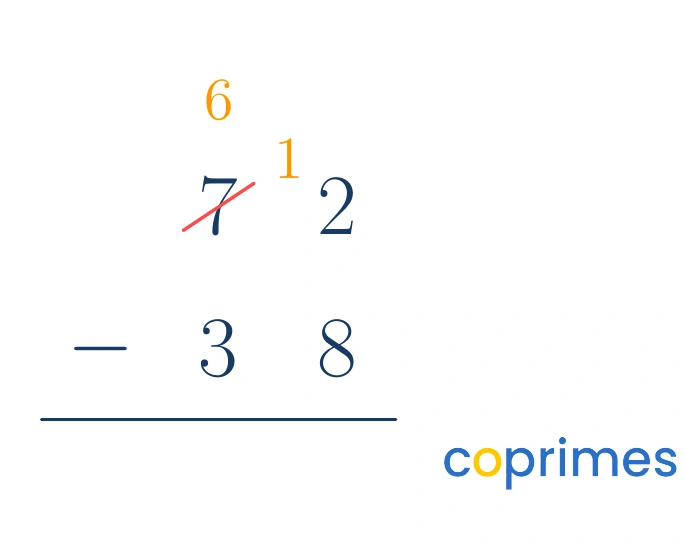
What is the final answer to the subtraction problem shown in the visual?
What is the result of ?
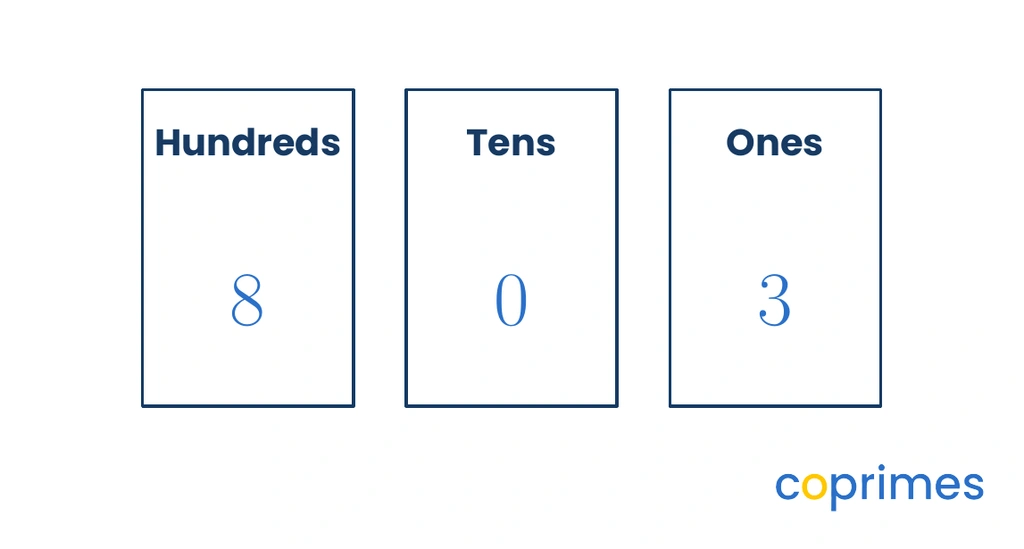
Using the number represented in the chart, what is ?
A student calculates . What mistake did they most likely make?
They forgot to cross out the tens column and reduce it by one.
They added the numbers together instead of subtracting.
They regrouped across a zero incorrectly.
They subtracted the top digit from the bottom digit in the ones column.
They subtracted the top digit from the bottom digit in the ones column.
A bakery baked muffins. By noon, they had sold muffins. How many muffins are left?