
Decimal Fractions: Definition, Method and Examples
A decimal fraction is a fraction whose denominator is a power of ten, such as , , or , so it can be written directly in decimal form using place value.
This mathematical structure seamlessly connects standard fractions to our base-ten number system, allowing for instant conversion and comparison.
What are decimal fractions?
Fractions with denominator 10 100 1000, and any higher power of ten, form a special category in mathematics known as decimal fractions. Because their denominators match the columns of our counting system, they translate directly into standard decimals without complex division.
Visual area models offer excellent decimal fraction examples. Below, the models demonstrate how shading parts out of ten, one hundred, or one thousand correlates directly to specific decimal values.
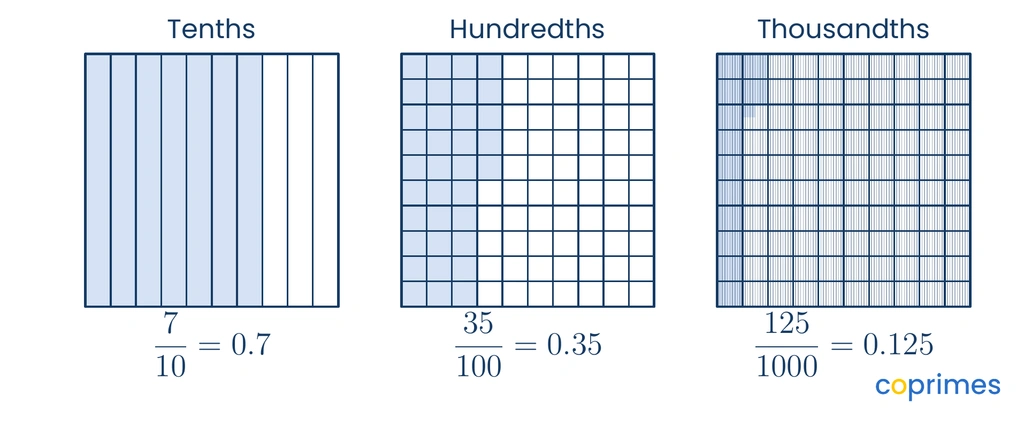
Denominators that are powers of ten
The defining rule of a decimal fraction is that its denominator must exactly be a perfect power of ten. Because our number system relies on tens, these are often referred to as base-ten fractions or powers-of-ten fractions.
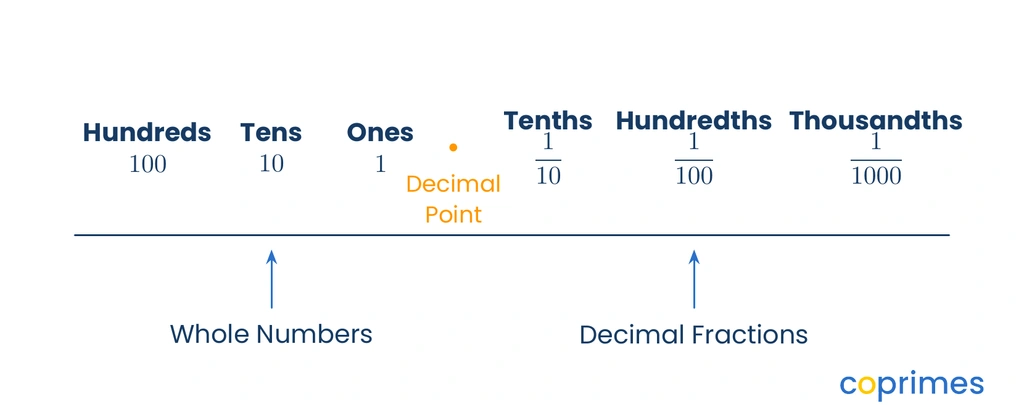
This strict requirement aligns them perfectly with standard decimal place value, allowing them to function as decimal place value fractions.
It is important to understand that an ordinary fraction is not automatically a decimal fraction. For example, a fraction containing a numerator of and a denominator of is not currently a decimal fraction because is not a power of ten.
However, because the prime factors of are strictly twos, we can multiply both the numerator and the denominator by . This creates an equivalent fraction with a numerator of and a denominator of . This newly scaled fraction qualifies fully as a decimal fraction.
Write decimal fractions as decimals
Converting a decimal fraction into a standard decimal is a simple matter of matching zeroes. The number of zeroes present in the denominator dictates exactly how many decimal places must follow the decimal point.
This direct relationship makes converting fractions to decimals highly efficient for these specific values.
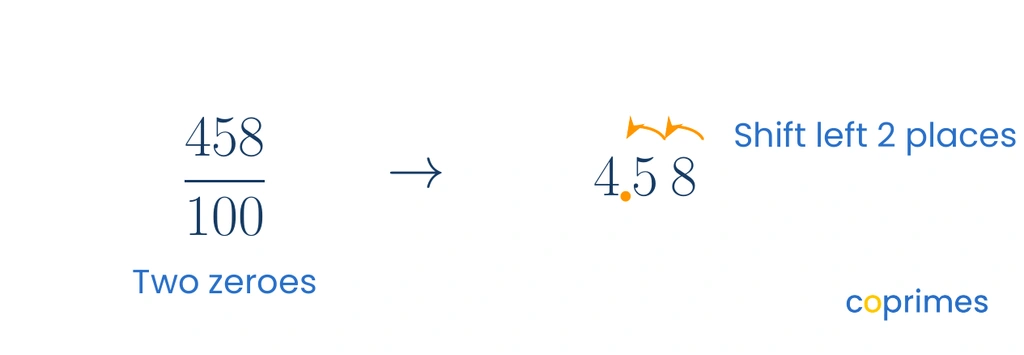
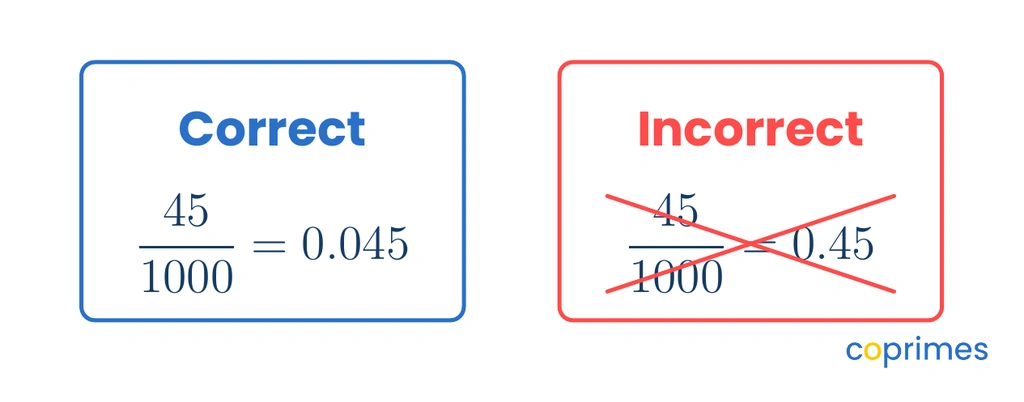
If the numerator possesses fewer digits than the required amount of decimal places, you must place placeholder zeroes immediately to the right of the decimal point. For example, a fraction with a numerator of and a denominator of has two zeroes in the denominator. Therefore, the decimal requires two decimal places, written correctly as .
A learning plan shaped by your child, not the class
State-aligned Math plus our own Logic and English curriculum. An adaptive baseline test finds the gaps and fills them.
Write decimals as decimal fractions
To write a standard decimal as a fraction, simply reverse the previous counting logic. The total number of digits located to the right of the decimal point determines how many zeroes will follow the in your new denominator.
Next, take the numerical digits from the decimal, drop the point, and write them directly as the numerator. This establishes the foundation for turning decimals to fractions.
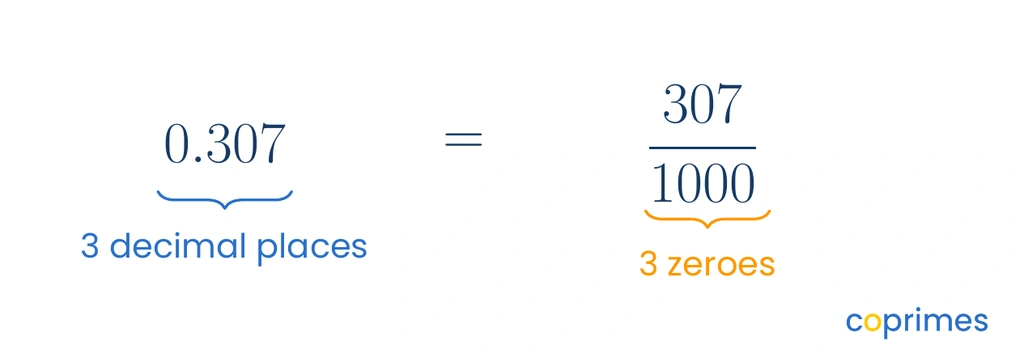
Once this conversion is complete, the resulting fraction fits the strict definition of a decimal fraction. You may choose to simplify it by dividing the numerator and the denominator by a common factor, but doing so often removes its status as a decimal fraction if the new denominator is no longer a perfect power of ten.
Simplify without changing value
Generating equivalent fractions is highly useful when managing operations. By multiplying both the numerator and the denominator by , the value of the fraction remains completely unchanged, but it is now expressed in smaller, more precise units.
Visually and mathematically, this is identical to attaching a zero to the far right end of a decimal number.
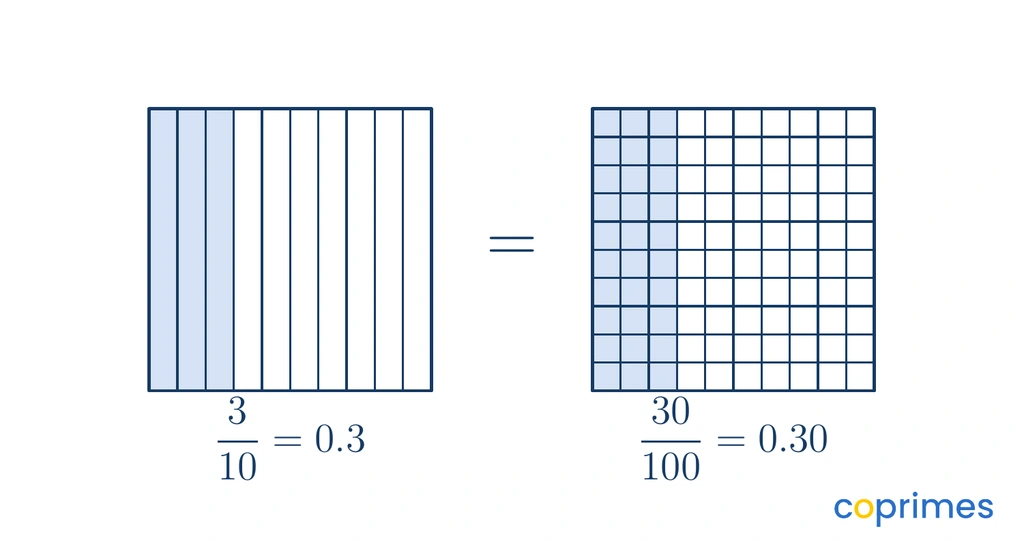
Consider a fraction with a numerator of and a denominator of . By multiplying the top and bottom by , it transforms into a numerator of and a denominator of . Expanding decimal fractions in this way is a mandatory step before adding or subtracting values that possess mismatched denominators.
Visual worked examples
Here are three progressively harder step-by-step examples demonstrating how to evaluate and compute with decimal fractions.
Example 1: Identifying decimal fractions
Question: Determine which of the following denominators belongs to a true decimal fraction: a denominator of , a denominator of , or a denominator of .
Given: Three fractions containing denominators of , , and .
Method:
- Recall that a decimal fraction must have a denominator that is exactly a perfect power of ten.
- Evaluate the denominator . It is a multiple of ten, but not a power of ten.
- Evaluate the denominator . It is a multiple of ten, but not a power of ten.
- Evaluate the denominator . It is exactly raised to the power of .
Answer: The correct decimal fraction is the one containing a denominator of .
Check: Verify that can be written using only a base of . .
Example 2: Adding with different denominators
Question: Find the sum of and .
Given: Two decimal fractions with mismatched denominators.
Method:
- Notice that the denominators and cannot be added directly.
- Multiply the first fraction's numerator and denominator by to establish a common denominator of .
- The first fraction becomes .
- Add the new numerators together over the shared denominator.
Answer: The sum is .
Check: Convert to standard decimals to confirm: .
Example 3: Converting a standard fraction
Question: A recipe calls for of a liter of water. Convert this measurement into a decimal fraction and then into a decimal.
Given: A standard fraction with a numerator of and a denominator of .
Method:
- Examine the denominator . Its prime factorization is strictly , meaning it can be logically scaled to a power of ten.
- Find a whole number multiplier that turns into . That multiplier is .
- Multiply the top and bottom by to get a numerator of and a denominator of .
- Because there are two zeroes in the denominator , place the decimal point two spaces to the left.
Answer: The decimal fraction is , which equals liters.
Check: Verify that means hundredths, which simplifies by dividing by back to .

Common mistakes
A frequent error is assuming that any fraction capable of being turned into a terminating decimal is automatically a decimal fraction in its current form. While fractions of ten can be built from other fractions, a fraction must physically display a power of ten in its denominator to be categorized correctly.
Another major pitfall happens when converting decimal fractions with small numerators into standard decimals. Students often fail to supply the mandatory placeholder zeroes. Neglecting placeholders completely alters the place value of the digits and drastically inflates the number's mathematical worth.
Frequently asked questions
What are decimal fractions?
A decimal fraction is any specific fraction where the denominator is exactly a power of ten, such as , , or . These specific denominators allow the fraction to be written directly into the standard base-ten decimal system.
Are all standard fractions considered decimal fractions?
No, a standard fraction is not a decimal fraction unless its written denominator is currently a power of ten. While many ordinary fractions can be mathematically scaled into decimal fractions, they do not inherently belong to the category.
What are base-ten fractions or powers-of-ten fractions?
These phrases are alternate, highly descriptive names for decimal fractions. Because our modern numerical system is fundamentally anchored by base-ten mathematics, fractions of ten map flawlessly into place value charts.
Can a decimal fraction be an improper fraction?
Yes, decimal fractions can certainly have numerators that are mathematically larger than their denominators. Improper decimal fractions translate seamlessly into standard decimals possessing a whole number portion greater than zero.
Practice questions
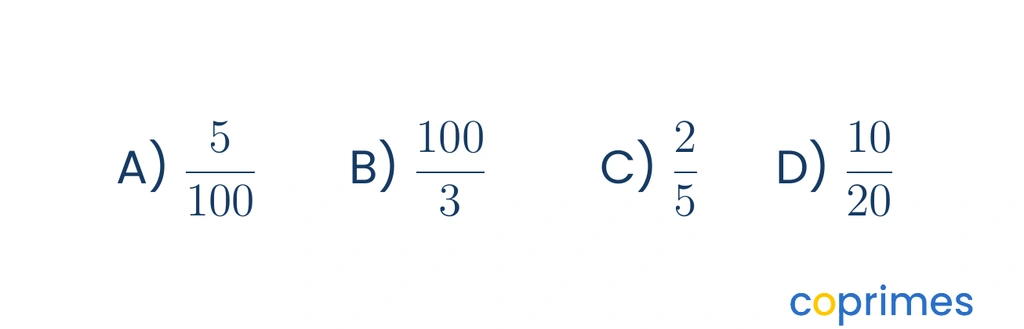
Which of the following examples mathematically qualifies as a decimal fraction?
Convert the decimal fraction directly into a standard decimal number.
Calculate the accurate sum of the following two decimal fractions: .
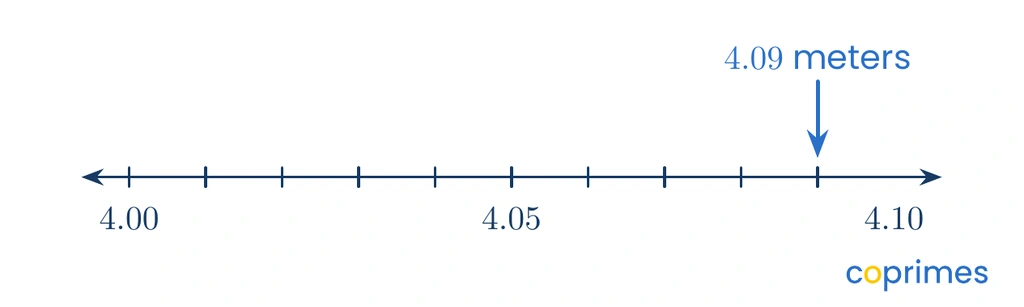
A length of copper wire measures meters. How is this exact length written correctly as an improper decimal fraction?
Which statement correctly explains why is not a decimal fraction but can be converted into one?
The denominator is an even number, which allows it to naturally become a decimal fraction.
The denominator is , which is not a power of ten, but it can be multiplied by to reach .
The fraction evaluates to a terminating decimal, meaning it is automatically classified as a decimal fraction.
The numerator is , which means it can be scaled to any power of ten required by the decimal system.
The denominator is , which is not a power of ten, but it can be multiplied by to reach .