
Fraction to Percent: Definition, Method and Examples
To convert a fraction to a percent, rewrite it as an equivalent fraction with a denominator of when practical, or divide the numerator by the denominator and multiply the resulting decimal by , then attach the percent symbol. Converting a fraction to a percent represents the fractional amount as a proportion out of without changing its overall value.
Mastering this skill is essential for fractions decimals and percents conversion. Before diving into this fraction percent conversion, it is helpful to be comfortable working with basic fractions and finding equivalent fractions.
How do you convert a fraction to a percent?
A percentage is simply a specific type of fraction where the denominator is always . The word "percent" literally means "for every ." Therefore, to convert any fraction to a percentage, your goal is to determine how many parts out of that fraction represents.
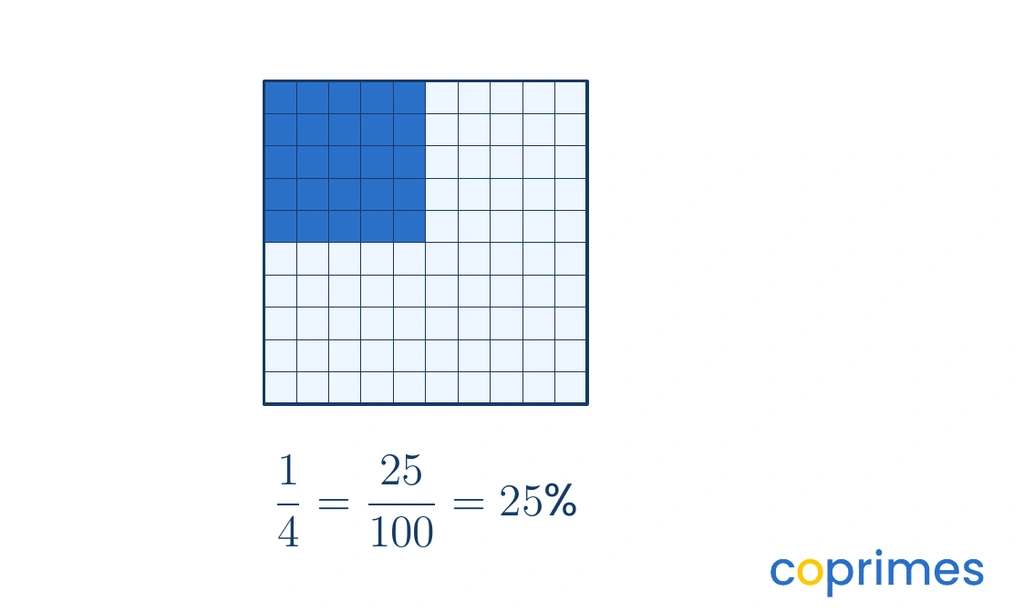
There are two primary methods to achieve this, and the best choice depends on the denominator of your starting fraction:
- When the denominator can be easily multiplied or divided to reach , use the equivalent fraction method.
- When the denominator does not easily scale to , use division to create a decimal first.
Make the denominator 100
If the denominator of your fraction is a factor of (such as , or ) or a multiple of (such as , or ), you can scale the fraction up or down to make the denominator exactly .
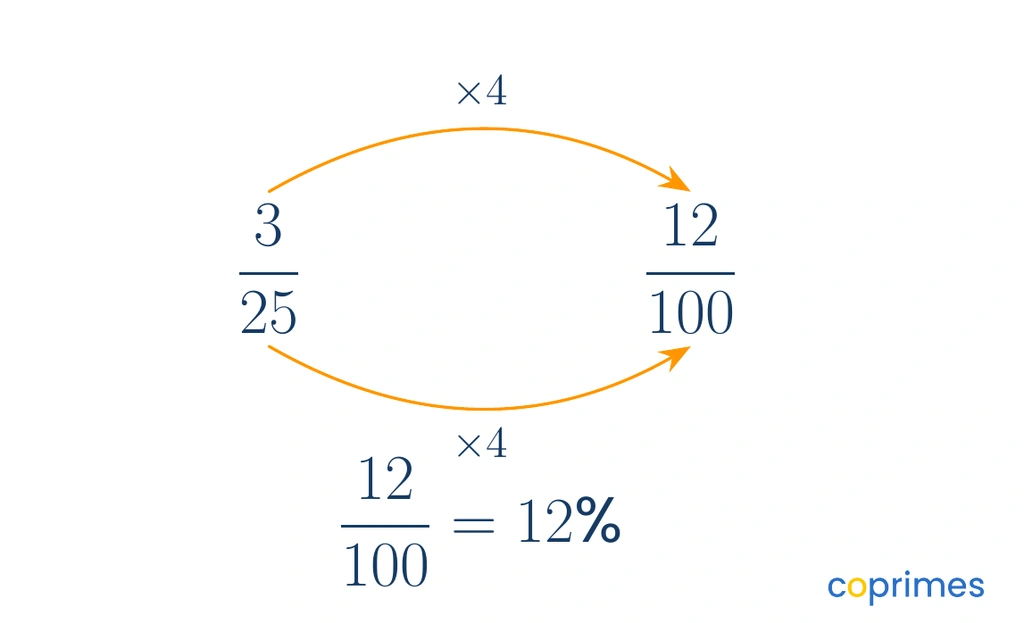
Steps for denominators that divide into 100:
- Determine what number you must multiply the current denominator by to get .
- Multiply the numerator by that exact same number.
- The new numerator is your percentage.
Steps for denominators that are multiples of 100:
- Determine what number you must divide the current denominator by to get .
- Divide the numerator by that exact same number.
- Write the result with a percent symbol.
Use division when needed
When a denominator is not a convenient factor or multiple of , such as with thirds, sixths, sevenths, or eighths, the most reliable method is division.
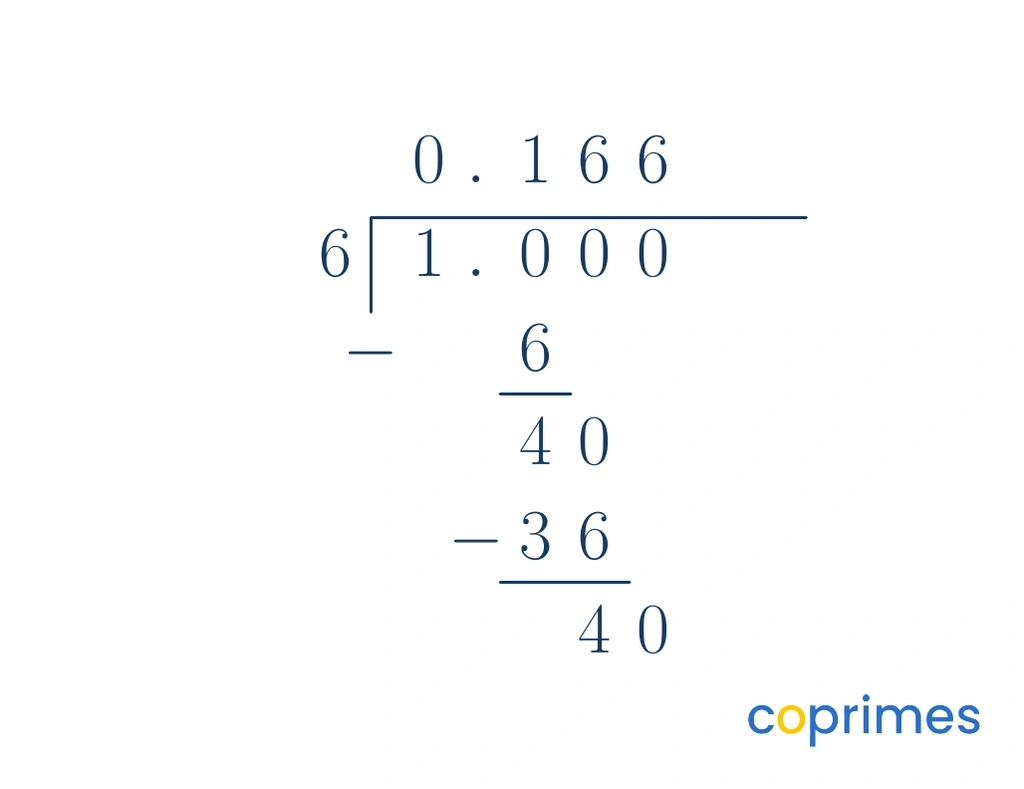
- Divide the numerator (the top number) by the denominator (the bottom number) using long division or a calculator.
- The result will be a decimal.
- Once you have this decimal, apply the standard rules for decimal to percent conversion by multiplying the decimal by . This physically moves the decimal point two spaces to the right.
- Add the percent symbol to finish the conversion.
A learning plan shaped by your child, not the class
State-aligned Math plus our own Logic and English curriculum. An adaptive baseline test finds the gaps and fills them.
Convert improper fractions and mixed numbers
Fractions that represent a value greater than one whole will result in a percentage greater than .
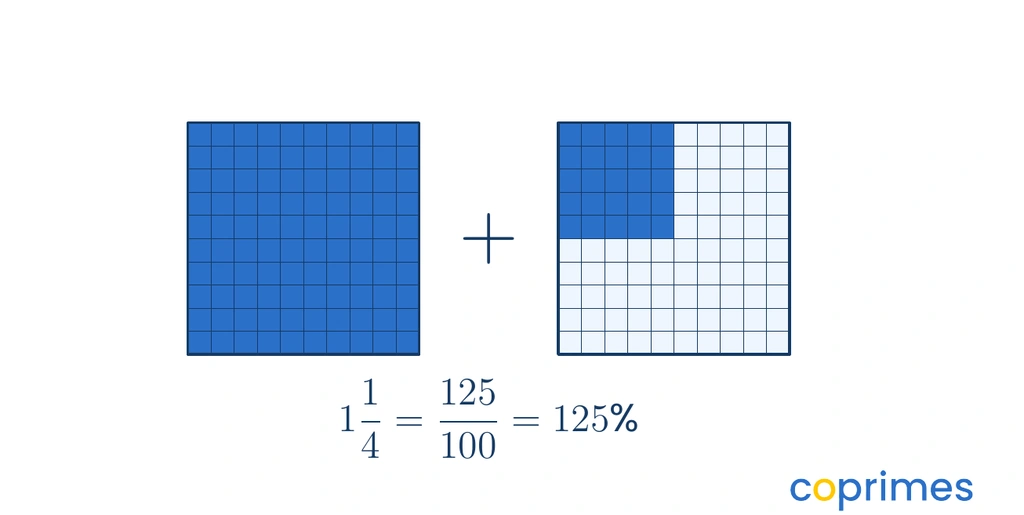
If you are working with a mixed number, an easy first step is to convert it into an improper fraction. From there, use either the equivalent fraction method or the division method. Because the numerator is larger than the denominator, calculating the percentage will consistently yield a value over .
Round repeating results appropriately
Division often produces repeating decimals. For instance, converting fractions with denominators of , or frequently leads to strings of repeating digits.
When you encounter a repeating decimal, you can either write the exact percentage using an overline notation, or you can round the percentage. If you round the percentage, always state that the value is approximate.
For example, the fraction one-sixth calculates exactly to , but it is commonly rounded to in real-world contexts.
Worked examples
Example 1: Denominator is a factor of 100
Question: Convert the fraction to a percent. This skill is vital when calculating a percent of a number in everyday problems.
Method:
- Identify the scale factor that turns the denominator into .
- Multiply both the numerator and the denominator by this factor.
- Write the resulting numerator with a percent symbol.
Answer: Since , multiply by to get . The result is .
Check: simplifies to by dividing both parts by .
Example 2: Using the division method
Question: Convert the fraction to a percent.
Method:
- Divide the numerator by the denominator. Since is not a factor of , divide by to get .
- Multiply the resulting decimal by to find the percentage.
- Add the percent symbol to the final value.
Answer: . The percentage is .
Check: is equivalent to . Multiplying by gives , which simplifies to .
Example 3: Mixed number with a repeating decimal
Question: Convert the mixed number to a percent.
Method:
- Convert the mixed number to an improper fraction. becomes .
- Divide the numerator by the denominator to find the decimal.
- Multiply the decimal by and format appropriately with a repeating bar or by rounding.
Answer: or approximately .
Check: represents wholes, and is known to be exactly , so adding them gives .

Common mistakes
- Multiplying only the numerator by 100: A popular shortcut is to convert a fraction to a percent by multiplying the entire fraction by . While mathematically sound, students often multiply only the numerator by and mistakenly stop there without performing the necessary division. If you multiply the numerator by , you must divide that large number by the original denominator to get the correct percent.
- Forgetting to multiply the decimal by 100: When using the division method, arriving at a decimal (like ) is only the first step. You must multiply that decimal by to shift the place value before adding the percent sign.
- Mixing up the divisor and dividend: In written division, always ensure the numerator goes "inside" the division bracket and the denominator goes "outside." Dividing the bottom number by the top number will yield an incorrect percentage.
Frequently asked questions
Can I always divide the numerator by the denominator, and then multiply my quotient by 100 to find the equivalent percentage?
Yes, the division method will work for every single fraction when you write fractions as percents. However, when the denominator is a clean factor of , using the equivalent fraction method is usually faster and less prone to calculation errors.
What if my numerator is not divisible by the scale factor I am using?
If you have a denominator like and need to divide it by to reach , you must also divide the numerator by . If the numerator is an odd number (like ), dividing it by will give a decimal (). This is perfectly fine; the resulting percentage is .
How many decimal places do I include in my percentage if the decimal is long?
If the decimal repeats infinitely, use a bar over the repeating digit to give an exact answer. If it does not repeat but is very long, check your assignment instructions for rounding rules; typically, rounding to one or two decimal places is standard practice.
Practice questions
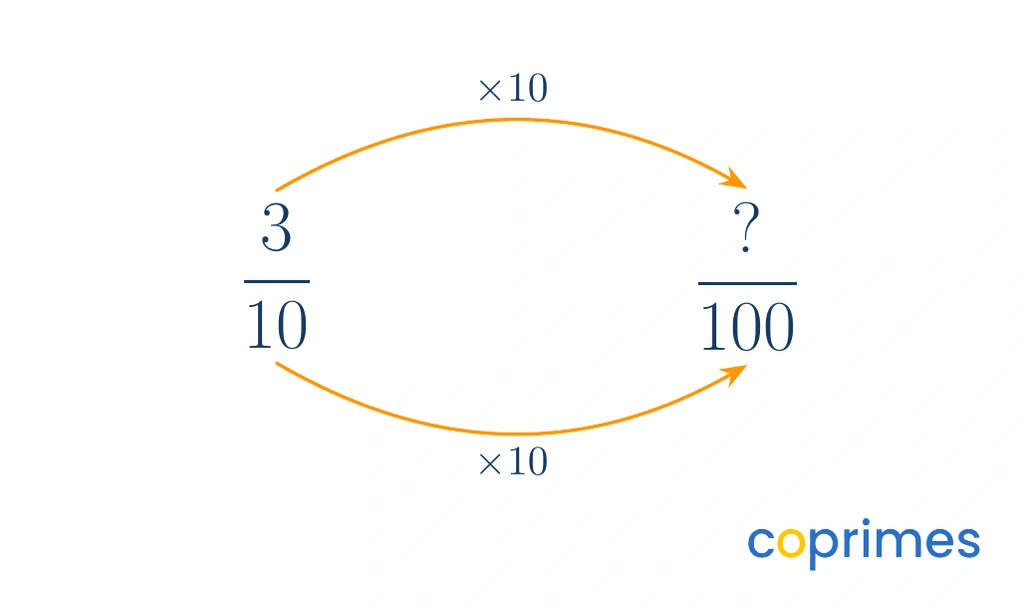
Use the equivalent fraction method shown in the visual to determine the correct percentage for .
What is the fraction expressed as a percent?
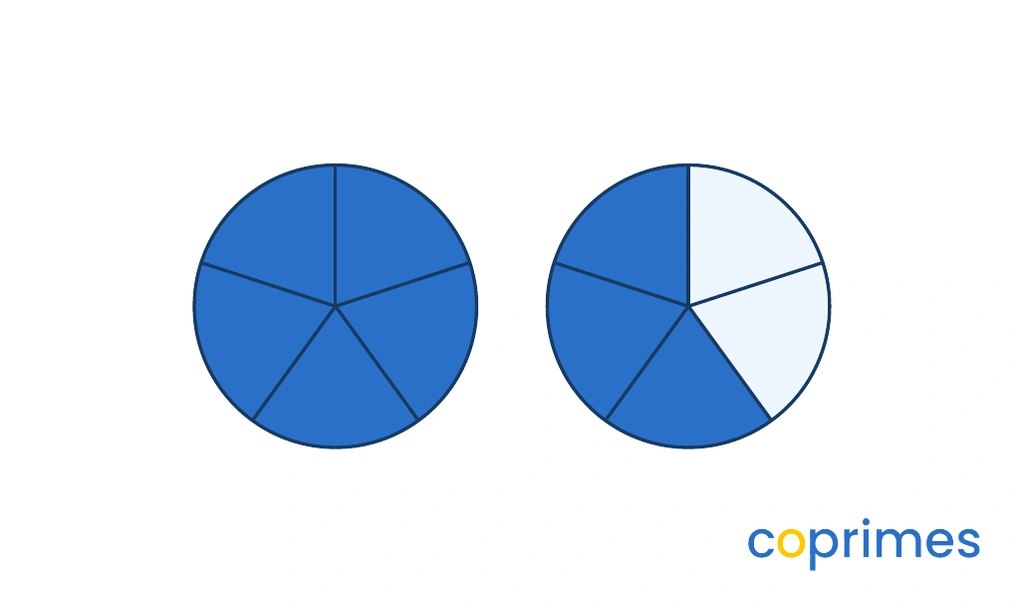
What percentage does the shaded region of the fraction models represent?
What is the fraction expressed as a percent?
A student incorrectly converts to a percentage and gets . What mistake did the student likely make?
They added the numerator and denominator together and multiplied by .
They multiplied the numerator by but neglected to divide that result by the original denominator.
They correctly calculated the decimal form but moved the decimal point in the wrong direction.
They multiplied the numerator by the denominator instead of finding an equivalent fraction.
They multiplied the numerator by but neglected to divide that result by the original denominator.