
Like and Unlike Fractions
Like fractions have the same denominator, meaning they are divided into parts of the exact same size. Unlike fractions have different denominators, meaning their parts are different sizes, and they usually need to be converted to equivalent fractions before they can be directly compared or combined.
What are like and unlike fractions?
Fractions are classified as like or unlike based entirely on their bottom numbers, or denominators.
Fractions with common denominators are grouped together because their fractional pieces represent the exact same proportion of a whole.
When the denominators do not match, the fractions belong to different families and their pieces are fundamentally different sizes.
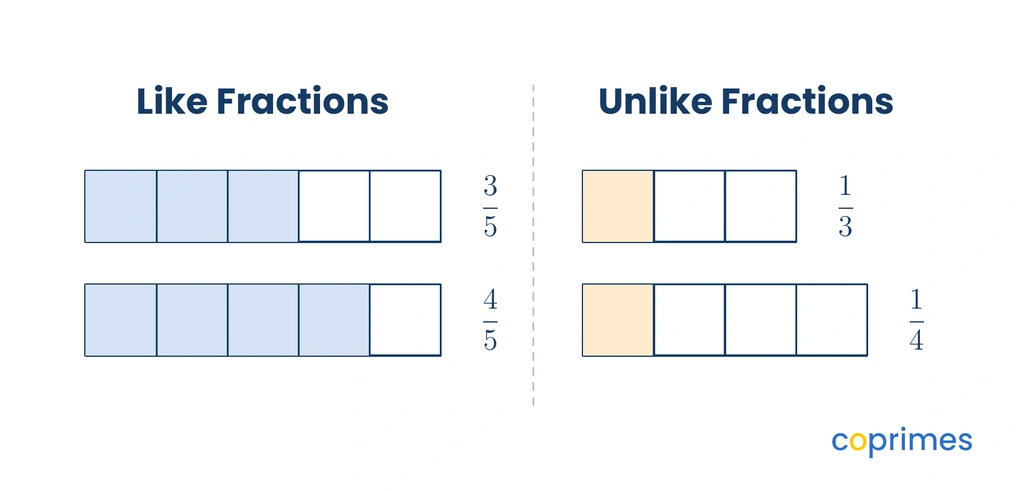
The numerators, which tell us how many parts we have, do not play a role in determining whether a set of fractions is like or unlike.
Identify like fractions
Same-denominator fractions are easy to identify because you only need to check the bottom number of each fraction.
If a group of fractions all share the exact same denominator, they are like fractions.
For example, , , and are all like fractions. Every whole is cut into exactly equal parts, making it easy to see which fraction represents the largest amount.
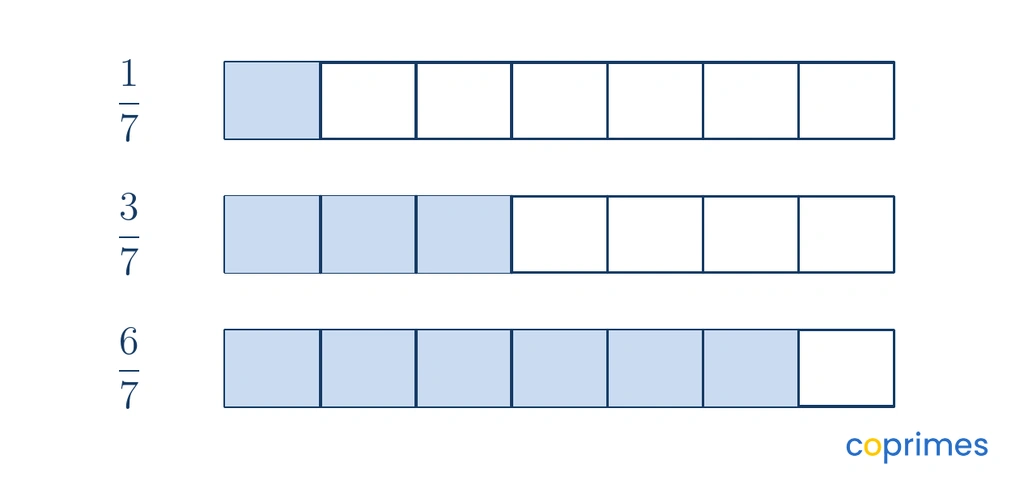
Because the pieces are identical in size, we can add, subtract, and compare these amounts smoothly without changing their format.
Identify unlike fractions
Different-denominator fractions are easy to spot because their bottom numbers do not match.
If you are given , , and , they are unlike fractions. Each fraction is built from pieces of an entirely different size. Halves are larger than thirds, and thirds are larger than fifths.
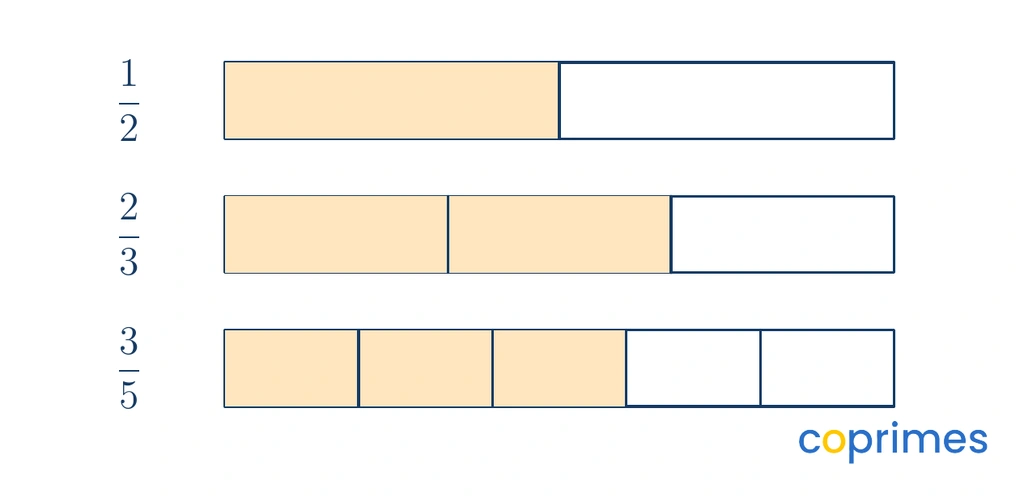
Whenever a set of fractions contains even one fraction with a different denominator, the entire set is considered unlike.
A learning plan shaped by your child, not the class
State-aligned Math plus our own Logic and English curriculum. An adaptive baseline test finds the gaps and fills them.
Why the denominator matters
The denominator defines the standard of measurement. Comparing fractions mathematically is only straightforward when both fractions use the same standard.
Imagine trying to compare meters to inches. Even though the number is the same, the units represent entirely different lengths. Fractions work the same way. You cannot easily add and together because you are adding two completely different sizes of pieces.
Converting unlike fractions into like fractions creates a shared standard, allowing you to count and combine the total number of parts accurately.
Change unlike fractions to like fractions
To convert unlike fractions into like fractions, you must find a common multiple for their denominators.
- Find the lowest common denominator (LCM) of the bottom numbers.
- Multiply the numerator and the denominator of each fraction by the factor needed to reach the common denominator.
- Write the new equivalent fractions, which are now like fractions.
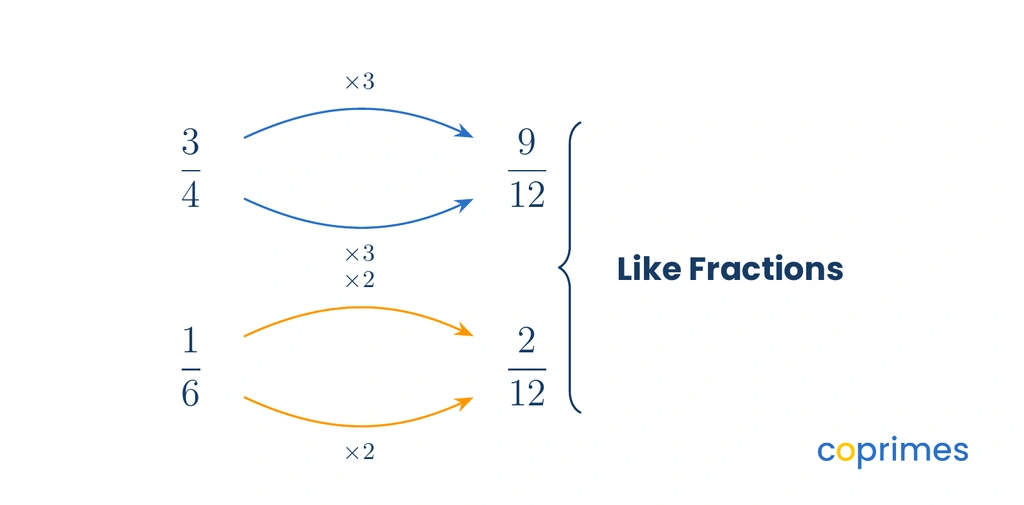
Once converted, you can add, subtract, and compare the numerators easily because the pieces are now exactly the same size.
Worked examples
Example 1: Identifying fraction types
Question: Are the fractions and like or unlike fractions?
Method:
- Look at the denominators of both fractions.
- Both fractions share the exact same denominator of .
Answer: They are like fractions.
Check: Because they share a denominator of , they represent parts of the same size, which perfectly meets the definition of like fractions.
Example 2: Grouping a set of fractions
Question: Is the set of fractions like or unlike?
Method:
- Check all the denominators in the set.
- The denominators are , , and .
- Because is different from , the fractions do not all share the same denominator.
Answer: The set is composed of unlike fractions.
Check: Even though is equivalent to , we classify fractions based entirely on their written denominators, not their values.
Example 3: Converting unlike to like fractions
Question: Convert and into like fractions.
Method:
- Identify the denominators: and .
- Find the lowest common multiple of and . Since they share no common factors other than , the LCM is .
- Convert by multiplying both parts by : .
- Convert by multiplying both parts by : .
Answer: The like fractions are and .
Check: When simplifying fractions, dividing by returns , and dividing by returns . The conversion is correct.

Common mistakes
A frequent misconception is assuming that fractions with the same numerator are like fractions. For example, and have the same top number, but they are absolutely unlike fractions. Having the same number of parts does not mean the parts are the same size.
Another common mistake is confusing equivalence with classification. The fractions and represent the exact same amount, but because their written denominators are different, they are technically unlike fractions until one is converted to match the other.
Frequently asked questions
Can like fractions have different numerators?
Yes. In fact, they almost always do. The defining rule for like fractions relies entirely on the denominators matching. The numerators can be any number.
Are whole numbers considered like fractions?
Whole numbers can be written as like fractions if they are given the same denominator. For example, the whole numbers and can be written as and , making them like fractions.
Practice questions
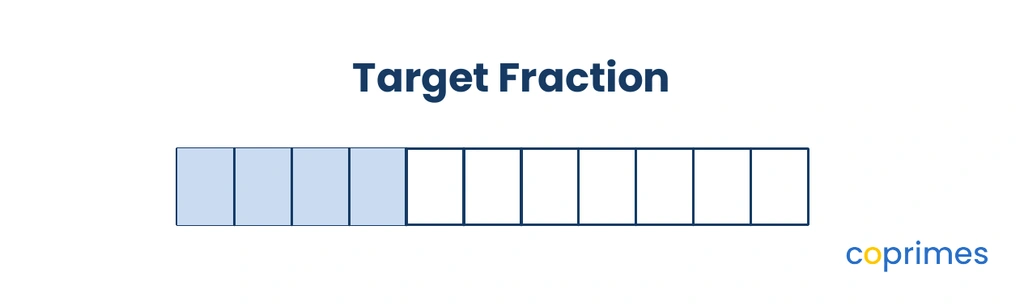
The visual model above represents a target fraction. Which of the following is a like fraction to the target fraction?
Which of the following pairs represents unlike fractions?
and
and
and
and
and
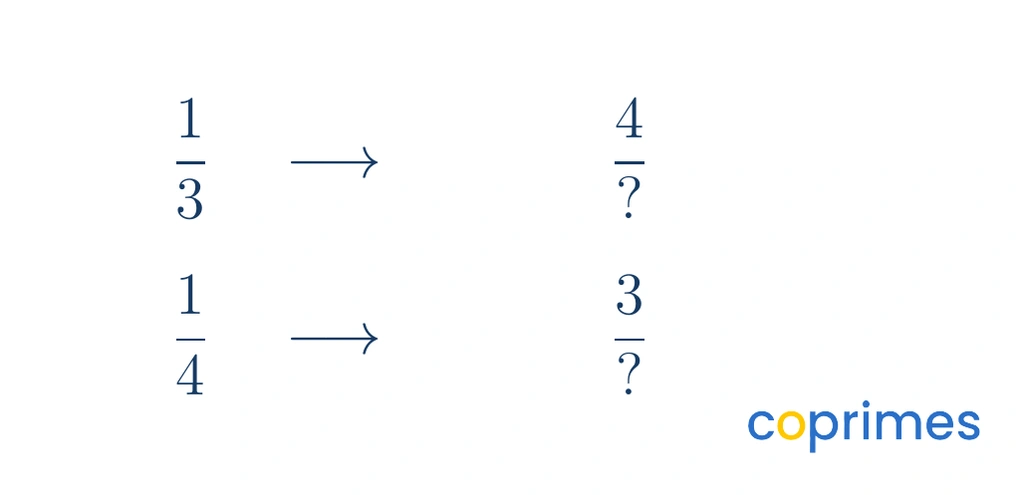
If you convert and into the simplest pair of like fractions, which pair do you get?
and
and
and
and
and
Why are and considered unlike fractions?
They are unlike fractions because their numerators are the same.
They are unlike fractions because they cannot be simplified any further.
They are unlike fractions because their denominators are different, meaning their parts are different sizes.
They are unlike fractions because and are both odd numbers.
They are unlike fractions because their denominators are different, meaning their parts are different sizes.
A student is given a list of fractions: , , , and .
If the student removes all fractions that are unlike , which fractions will remain on the list?
Only will remain.
Only and will remain.
All of the fractions will remain.
Only and will remain.
Only and will remain.