
Order of Operations With Integers: Rules and Step-by-Step Methods
Evaluating evaluating numerical expressions with positive and negative numbers requires combining two essential skills. Order of operations with integers uses the same grouping-symbol, exponent, multiplication-division, addition-subtraction sequence as any numerical expression, while applying integer sign rules at each calculation step. Understanding this process ensures that every expression has only one correct answer, regardless of the order in which the numbers are written.
Order of operations with integers
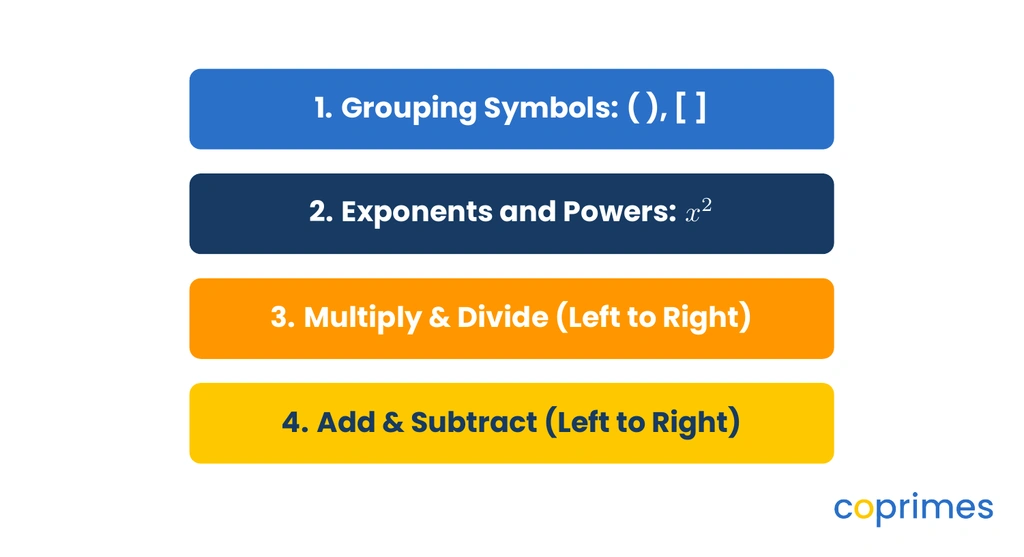
The standard order of operations applies to all real numbers, including integers. Whether using the acronym PEMDAS or BODMAS, the sequence of evaluation remains identical.
- Parentheses or Brackets: Evaluate operations inside grouping symbols first.
- Exponents or Orders: Evaluate powers and roots.
- Multiplication and Division: Evaluate these from left to right.
- Addition and Subtraction: Evaluate these from left to right.
When working with negative numbers, track the sign of each term carefully. The order tells you what operation to perform, while the integer rules tell you how to calculate the result.
Apply sign rules inside each step
At each stage of the evaluation, you must apply the correct sign rules. Combining multiple operations requires precision when multiplying and dividing integers.
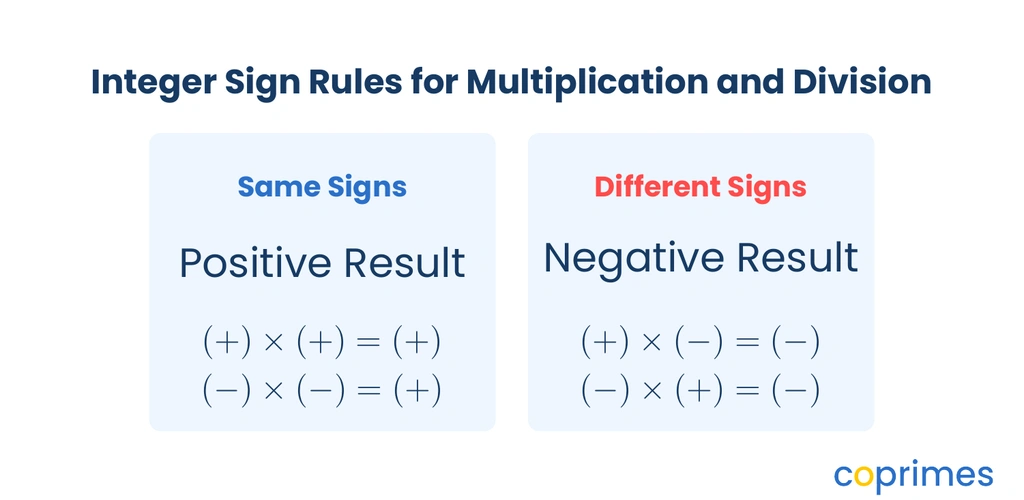
When multiplying or dividing two integers:
- If the signs are the same, the result is positive.
- If the signs are different, the result is negative.
When adding and subtracting positive and negative numbers, remember that subtracting an integer is exactly the same as adding its opposite.
Always resolve the signs for the specific operation before moving to the next step.
Grouping symbols and powers
Grouping symbols such as parentheses, brackets, and braces define the first layer of operations. Fraction bars also act as grouping symbols, meaning you must evaluate the complete numerator and complete denominator before dividing.
After grouping symbols, evaluate exponents and powers. Pay close attention to negative signs attached to bases.
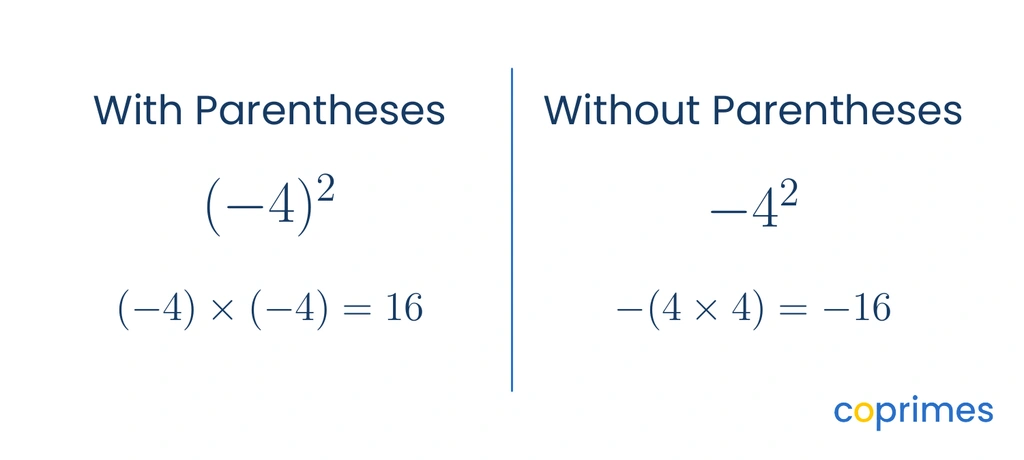
Parentheses around a negative base mean the negative sign is part of the base being multiplied. A negative sign without parentheses applies only after the exponent is calculated.
A learning plan shaped by your child, not the class
State-aligned Math plus our own Logic and English curriculum. An adaptive baseline test finds the gaps and fills them.
Multiply and divide left to right
Multiplication and division share the same priority level. You do not always multiply before you divide. Instead, perform whichever operation appears first when reading the expression from left to right.
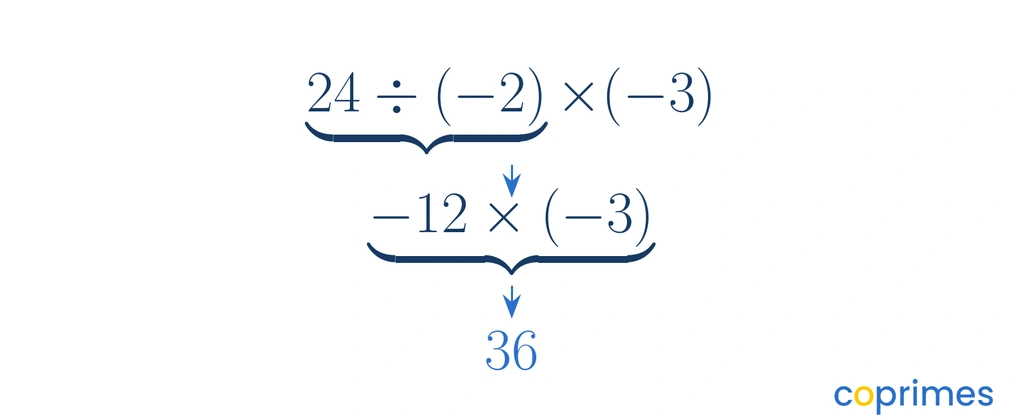
A number written immediately next to a grouping symbol with no operator between them indicates multiplication. For example, means multiply by .
Add and subtract left to right
Addition and subtraction also share a priority level and are evaluated from left to right.
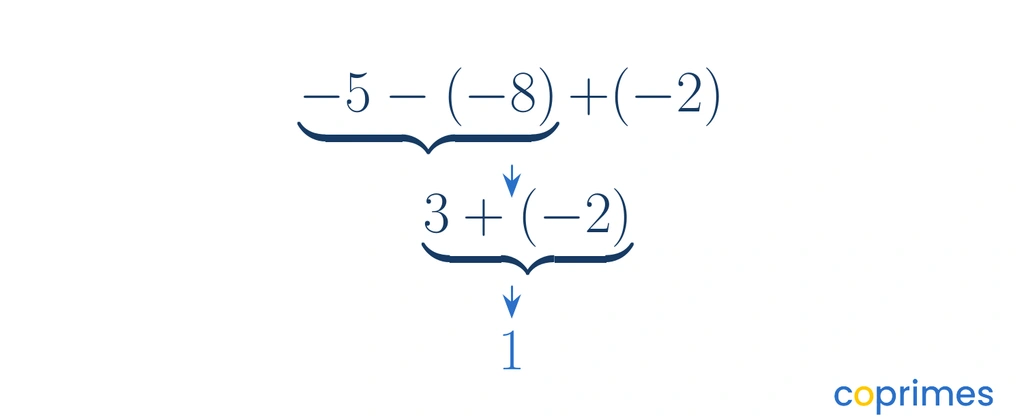
To avoid confusion, change subtraction of a negative into addition. For instance, rewrite as before calculating.
Worked examples
Example 1: Basic operations with signs
Question: Evaluate .
Method:
- Identify the operations: subtraction and multiplication.
- Multiply first: .
- Substitute the result back into the expression: .
- Subtract by adding the opposite: .
Answer:
Check: The multiplication step correctly results in a negative, and adding opposites yields zero.
Example 2: Grouping symbols and exponents
Question: Evaluate .
Method:
- Evaluate inside the parentheses: .
- The expression is now .
- Evaluate the exponent: .
- The expression is now .
- Divide from left to right: .
- Substitute back: .
- Subtract by adding the opposite: .
Answer:
Check: Tracking the subtraction sign separately from the division result ensures the double negative is handled correctly.
Example 3: Complex fraction with nested operations
Question: Evaluate .
Method:
- Treat the numerator and denominator as separate groups.
- In the numerator, evaluate the exponent first: .
- Multiply: .
- Subtract in the numerator: .
- Evaluate the denominator: .
- Divide the numerator by the denominator: .
- Dividing two negative numbers yields a positive result.
Answer:
Check: Recalculate as adding two negatives to get , and correctly yields positive .

Common mistakes
Mistakes often occur when learners confuse negative numbers with subtraction operations.
- Treating a unary negative as a separate subtraction operation: In the expression , the negative sign belongs to the . It is not an instruction to subtract from .
- Multiplying before dividing: Multiplication does not always come before division. Evaluate them left to right. Evaluating as is incorrect. The correct order is .
- Exponent sign errors: Applying an exponent to a negative sign when there are no parentheses. equals , not .
Frequently asked questions
Does BODMAS change for negative numbers? No. The priority of operations is exactly the same for negative numbers, fractions, decimals, and algebraic terms.
How do I handle double negatives? When subtracting a negative number, the two consecutive negative signs become an addition operation. For example, becomes .
This simplifies the expression before you perform the final calculation.
Practice questions
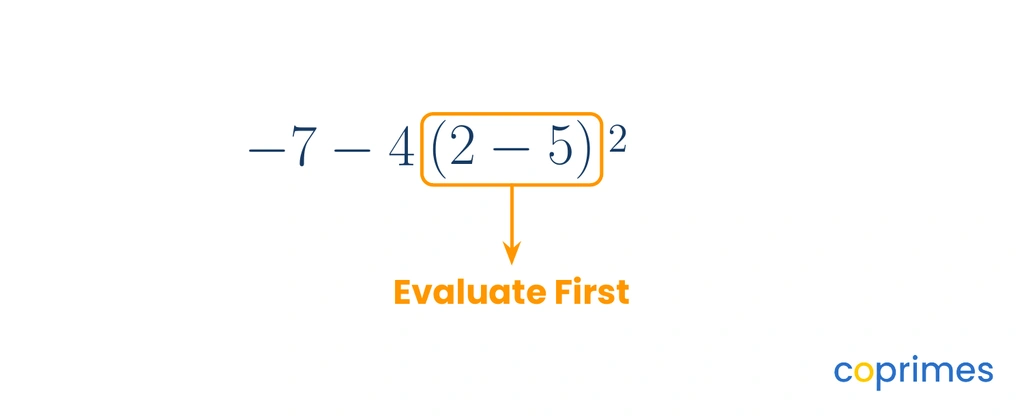
Which operation must be evaluated first in the expression shown?
Multiply by
Square the binomial
Subtract inside parentheses
Subtract first
Subtract inside parentheses
Evaluate .
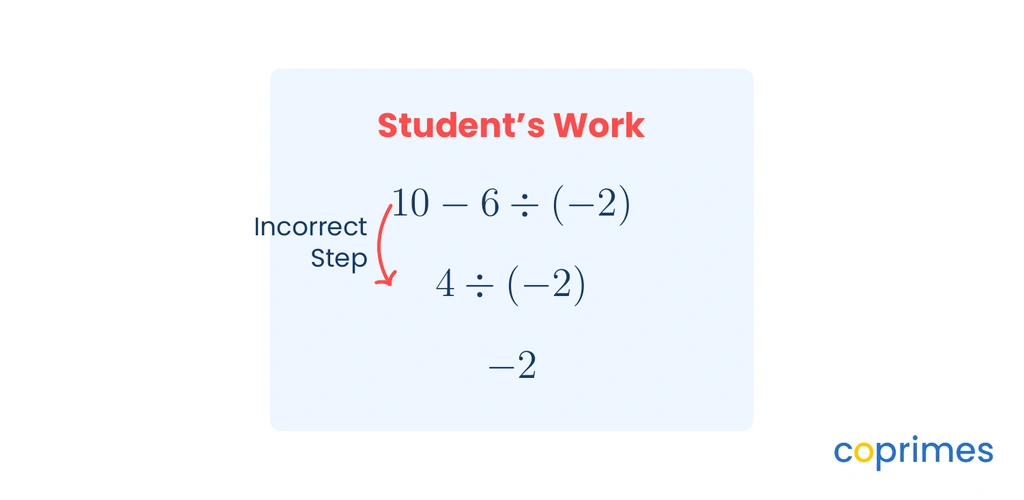
Identify the exact error in the student's work shown in the visual.
Subtracted before dividing.
Divided before subtracting.
Divided a positive by a negative incorrectly.
Subtracted a negative incorrectly.
Subtracted before dividing.
Evaluate .
Evaluate .